Simple Savings Calculator: Plan Your Financial Goals
Calculate savings growth with deposits, interest rates, and time periods effortlessly.
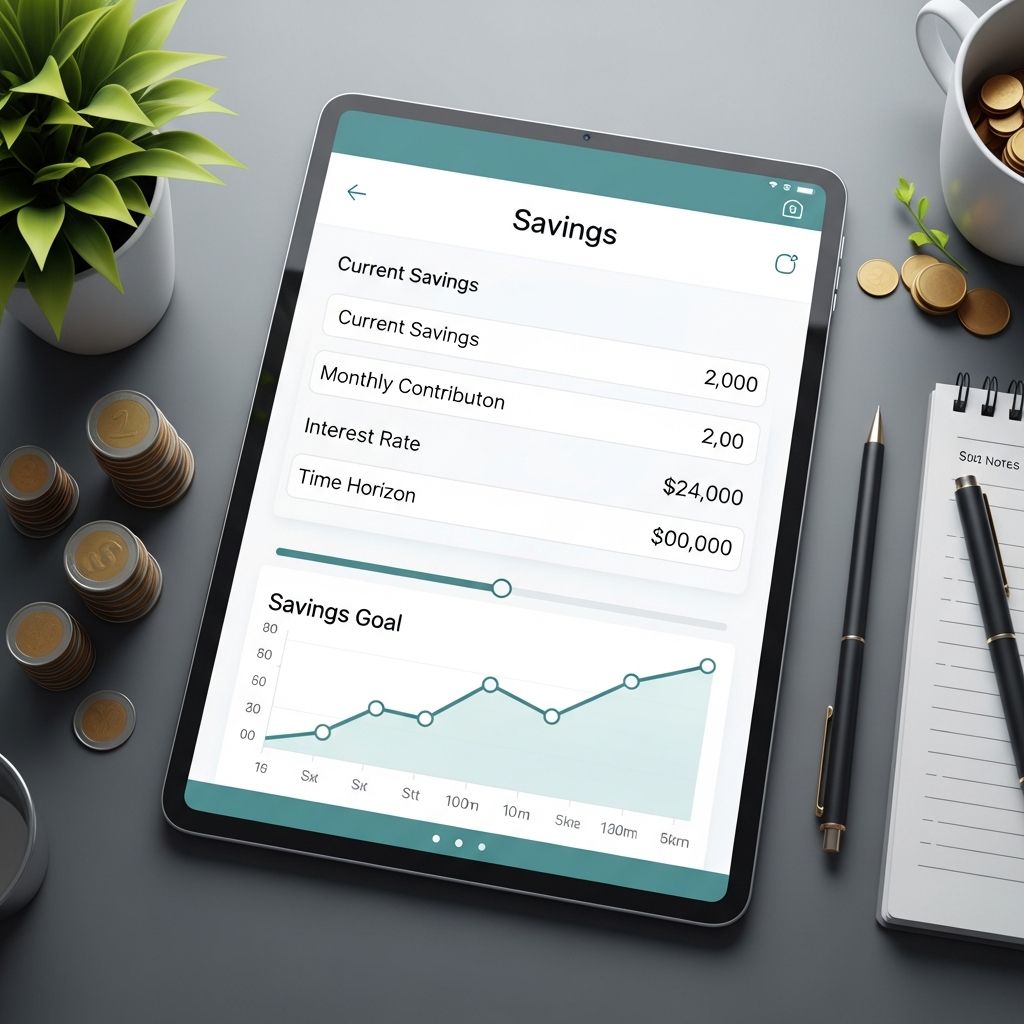
Building wealth and achieving financial security requires a strategic approach to savings. Whether you’re saving for an emergency fund, a down payment on a home, a vacation, or retirement, understanding how your money can grow over time is essential. A simple savings calculator is a powerful tool that helps you visualize your financial future and make informed decisions about your savings strategy. By entering a few key pieces of information, you can see exactly how your savings could accumulate and grow through the power of compound interest.
The savings calculator takes the guesswork out of financial planning by providing accurate projections based on your specific circumstances. Instead of wondering whether your current savings habits will get you to your goals, you can use concrete numbers and timelines to create a realistic plan. This article explores how to use a simple savings calculator, what information you need to provide, and how to interpret the results to make better financial decisions.
How to Use This Savings Calculator
Using a savings calculator is straightforward, but understanding each input will help you get the most accurate results. The calculator requires several key pieces of information to project your savings growth:
Starting Amount (Initial Deposit)
The first input is your starting amount, also known as your initial deposit or principal. This is the amount of money you currently have available to place in a savings account or investment vehicle. Your starting amount can range from just a few dollars to thousands of dollars—there’s no minimum requirement. Even if you’re just beginning your savings journey, entering whatever amount you have available will give you a more accurate projection. The larger your starting amount, the more interest you’ll earn right from the beginning, thanks to compound interest working in your favor from day one.
Planned Monthly Savings Contribution
Your planned monthly savings contribution is the amount you commit to depositing into your savings account each month. This regular contribution is crucial because consistent deposits make a significant difference in your long-term savings growth. For example, starting with just $100 and adding $50 monthly can yield impressive results over five to ten years. The key is to choose an amount that fits comfortably into your monthly budget so you can maintain consistency without strain. Even small monthly contributions, when combined with time and compound interest, can result in substantial savings.
Time Horizon in Months or Years
Your time horizon is how long you plan to keep your money in savings before you need it. You can enter this as either months or years, depending on what’s convenient for you. A longer time horizon generally results in more substantial growth because compound interest has more time to work its magic. For example, saving for five years will typically result in much more growth than saving for one year, even with the same deposit amounts and interest rates. Understanding your realistic timeline is important—don’t choose a timeframe that’s too short if your actual goal is years away.
Expected Interest Rate (APY)
The annual percentage yield (APY) is the interest rate you expect to earn on your savings annually. This rate varies depending on the type of account you choose and current market conditions. To estimate the rate you’ll earn, check rate tables for certificates of deposit (CDs), savings accounts, and money market accounts. If you already know what interest rate you’ll be receiving, enter that directly into the calculator. It’s important to note that APY accounts for compound interest, so it’s typically higher than the stated interest rate.
Compounding Frequency
Compounding frequency refers to how often interest is calculated and added to your account. Options typically include daily, monthly, quarterly, semi-annually, or annually. The more frequently interest compounds, the faster your money grows because you earn interest on your interest. For instance, daily compounding will result in slightly more growth than annual compounding with the same interest rate. Make sure to specify the correct compounding frequency for your account, as this affects your final balance.
What the Calculator Shows You
Once you’ve entered all the necessary information, the savings calculator provides three key outputs:
Total Savings at End of Period
This is your projected final balance after your savings period ends. This number represents your starting amount plus all your monthly contributions plus all the interest you’ve earned. This is the amount you’ll have available when you reach your savings goal date.
Total Contributions
This shows the combined total of your starting amount and all your monthly contributions throughout the savings period. For example, if you start with $1,000 and contribute $200 monthly for five years, your total contributions would be $13,000 ($1,000 initial plus $200 × 60 months).
Interest Earned
This final output shows how much money you earned purely from interest. This represents the “free money” your savings generated without requiring additional work from you. The interest earned is calculated by subtracting your total contributions from your total savings at the end of the period.
Understanding Your Savings Potential
Time and consistency are your biggest allies when building savings. While your starting amount matters, regular deposits make a significantly bigger difference over extended periods. Consider this real-world example: starting with $1,000 and adding $200 monthly at a 4.5% annual percentage yield will grow to $14,644.53 in five years. In contrast, without the monthly contributions, your ending balance would be only $1,246.18—a difference of over $13,000. This dramatic difference illustrates why consistent saving habits are so powerful.
The Impact of Interest Rates
Interest rates significantly impact your long-term savings results. Consider two scenarios with the same $10,000 deposit and no additional contributions over five years. At 1% APY, your money would grow to $11,046.22. However, at 4.5% APY, the same amount grows to $15,529.69—almost $4,500 more in interest earnings. This substantial difference demonstrates why shopping around for the best interest rates is worthwhile, especially when saving larger amounts or for longer periods. Even a difference of 1-2% in interest rates can result in thousands of dollars in additional earnings over time.
The Power of Time
The longer you save, the more your money can grow, thanks to compounding interest. Time is perhaps the most valuable factor in building wealth because compound interest accelerates growth exponentially. Starting to save even a few years earlier can result in significantly larger final balances due to the additional compounding periods. This is why financial experts often recommend starting your savings efforts as early as possible, even with small amounts.
High-Yield Savings Accounts: Maximizing Your Returns
A high-yield savings account can serve as an excellent vehicle for your savings goals. These accounts typically offer significantly higher interest rates than traditional savings accounts, allowing your money to grow faster while remaining easily accessible for emergencies or other expenses. High-yield savings accounts are FDIC-insured, meaning your deposits are protected up to $250,000, providing both growth potential and security.
Frequently Asked Questions
Q: How often should I check my savings progress?
A: You can check your progress monthly or quarterly to stay motivated and on track. However, avoid checking too frequently, as daily fluctuations due to compounding frequency may be minimal. Use the calculator periodically to recalibrate your projections based on any changes to your interest rate or contribution amounts.
Q: What if I can’t contribute the amount I planned?
A: If your circumstances change, adjust your projected contribution amount in the calculator. Even reducing your contributions slightly is better than stopping altogether. Consistency matters more than perfection, so continue saving what you can and update your timeline if necessary.
Q: Should I consider inflation when calculating my savings goals?
A: Yes, inflation can affect the purchasing power of your savings. If you’re saving for a future purchase, research how inflation might impact the cost of that item and adjust your goal accordingly. For long-term goals, a higher savings target accounts for inflation.
Q: What’s the difference between APR and APY?
A: APR (Annual Percentage Rate) is the stated interest rate, while APY (Annual Percentage Yield) accounts for how often interest compounds. APY is typically higher and is the more accurate representation of your earnings. Always use APY when calculating your savings growth.
Q: Can I withdraw money before my goal date?
A: Yes, but it will reduce your final balance. Some accounts like CDs may have penalties for early withdrawal. Make sure you understand any restrictions before opening an account, and consider building an emergency fund separately from your long-term savings goals.
Q: How do I automate my savings contributions?
A: Most banks allow you to set up automatic transfers from your checking account to your savings account on a specific date each month, typically around payday. This automation ensures you don’t forget to save and removes the temptation to spend that money elsewhere.
Tips for Maximizing Your Savings Growth
Automate Your Savings
Set up automatic transfers to your savings account on payday. This “pay yourself first” approach ensures you save consistently without relying on willpower or remembering to make manual transfers each month.
Keep Your Money Accessible
Use a savings account or money market account that allows easy access for emergencies. High-yield savings accounts offer the perfect balance of growth potential and liquidity, ensuring you can access funds when needed without penalties.
Separate Accounts for Different Goals
Many banks allow you to create multiple savings accounts for different purposes. Having separate accounts for your emergency fund, vacation fund, and down payment fund helps you stay organized and motivated as you track progress toward each specific goal.
Look for Additional Savings Opportunities
Beyond your regular contributions, explore ways to boost your savings power. This might include cutting back on nonessential expenses like subscription services or dining out, or pursuing a side hustle for additional income that you direct entirely toward savings.
Review and Adjust Regularly
Periodically review your savings plan using the calculator. If your income increases, try boosting your monthly contributions. If interest rates rise, you might switch to an account with better rates. If circumstances change, adjust your timeline or goal amount accordingly.
Choosing the Right Savings Vehicle
Different savings tools offer varying levels of growth and accessibility. Traditional savings accounts offer liquidity and FDIC protection but typically lower interest rates. High-yield savings accounts provide higher returns while maintaining accessibility. Certificates of deposit (CDs) often offer higher rates but lock your money away for a set period. Money market accounts combine features of savings and checking accounts. Your choice depends on your timeline, goal, and need for accessibility.
Conclusion
A simple savings calculator is an invaluable tool for anyone serious about building wealth and achieving financial goals. By understanding how to input your information and interpret the results, you can create realistic, achievable savings plans tailored to your specific situation. Whether you’re saving for an emergency fund, a down payment, a vacation, or any other goal, the combination of consistent contributions, time, favorable interest rates, and compound interest can help you reach your targets. Start using a savings calculator today to visualize your financial future and take the first step toward achieving your goals.
References
- Simple Savings Calculator — Bankrate. 2025. https://www.bankrate.com/banking/savings/simple-savings-calculator/
- Compound Interest Calculator — Bankrate. 2025. https://www.bankrate.com/banking/savings/compound-savings-calculator/
- Save Money Calculator — Bankrate. 2025. https://www.bankrate.com/banking/savings/save-money-calculator/
- How do you calculate interest on a savings account? — NerdWallet. 2025. https://www.nerdwallet.com/banking/calculators/savings-calculator
- Savings Income Calculator — Bankrate. 2025. https://www.bankrate.com/banking/savings/savings-income-calculator/
Similar Articles








Read full bio of Sneha Tete