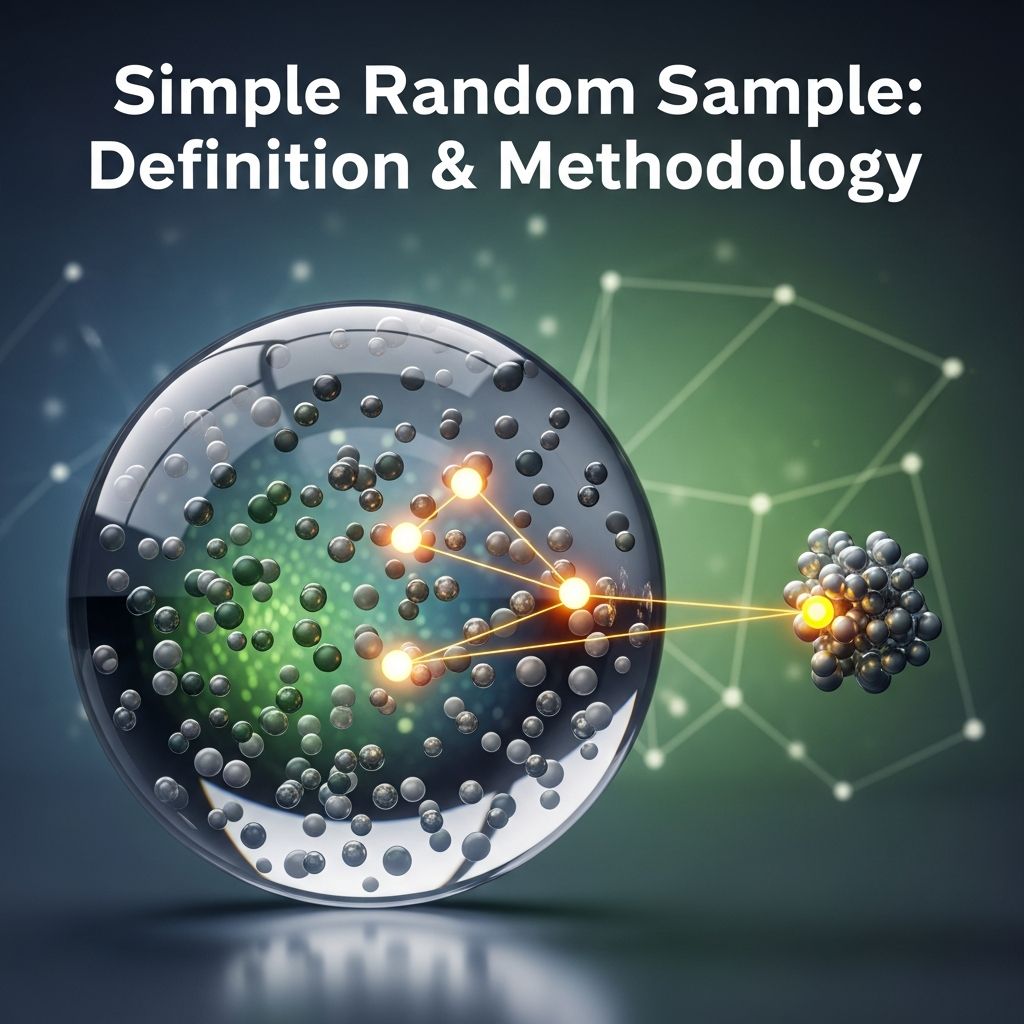
Simple Random Sample: Definition & Methodology
Master simple random sampling: the foundation of unbiased statistical research and data collection.
A simple random sample (SRS) represents one of the most fundamental and widely used sampling techniques in statistics and research. Understanding this concept is essential for anyone involved in data collection, analysis, or research design. Whether you’re conducting academic research, market surveys, or quality assurance testing, simple random sampling provides a foundational method for selecting representative data from larger populations.
What Is a Simple Random Sample?
A simple random sample is a subset of individuals or items selected from a larger population in such a way that every possible combination of subjects has an equal probability of being chosen. In statistical terms, if a population contains N individuals and you need to select a sample of n individuals, each possible sample of size n has the same chance of being selected as any other sample of the same size.
The key distinguishing characteristic of a simple random sample is the equality of selection probability. This means that not only does each individual member have an equal chance of being selected, but every conceivable grouping of individuals has an equal likelihood of forming the sample. This fundamental principle ensures that the sampling process remains unbiased and objective.
Core Principles of Simple Random Sampling
The foundation of simple random sampling rests on several critical principles that distinguish it from other sampling methods:
Equal Probability of Selection: Every member of the population has an identical and known probability of being included in the sample. This probability can be calculated using the formula: P = n/N, where n represents the sample size and N represents the total population size.
Random Selection Process: The selection mechanism must be genuinely random, eliminating any systematic bias or predictable patterns. Whether using random number generators, lottery methods, or other randomization techniques, the process cannot favor certain individuals over others.
Independence of Selections: The selection of one individual should not influence the probability of selecting another individual, ensuring that each draw remains independent of previous selections.
How Simple Random Sampling Works
Understanding the practical implementation of simple random sampling helps clarify why this method remains so valuable in research and statistics.
Step 1: Define the Population Begin by clearly identifying and defining the complete population from which you will draw your sample. The population must be well-defined, finite, and clearly understood. For example, in medical research, the population might consist of all adults over age 50 with high blood pressure, or it could be all hospitals in the United States that perform specific surgical procedures.
Step 2: Create a Sampling Frame Develop a comprehensive list containing all members of the population. This list, called the sampling frame, serves as the source from which you randomly select your sample. Assign a sequential number to each member, beginning with 1 and continuing through N.
Step 3: Determine Sample Size Calculate the appropriate sample size needed for your research objectives. Statistical formulas and power analyses help determine the minimum sample size required to achieve desired confidence levels and margins of error.
Step 4: Select Randomly Use a random selection method to choose your sample members. This might involve using a random number generator, drawing names from a hat, using lottery software, or consulting random number tables. The critical requirement is that each selection must be truly random and independent.
Methods for Conducting Simple Random Sampling
Several practical techniques enable researchers to implement simple random sampling effectively:
Random Number Generator Method: Computer-based random number generators can produce random selections from your sampling frame. This method works well for large populations and ensures consistency in the randomization process.
Lottery or Drawing Method: When populations are smaller, physical lottery methods work effectively. Write each population member’s name or identifier on a slip of paper, place all slips in a container, and draw out the required sample size without replacement.
Random Number Tables: Traditional statistical tables of random numbers allow manual selection of sample members by cross-referencing population identifiers with randomly arranged numbers.
Systematic Random Sampling Hybrid: While technically different from pure simple random sampling, some researchers use a hybrid approach where they randomly select a starting point and then select every kth individual thereafter.
Advantages of Simple Random Sampling
Simple random sampling offers numerous benefits that explain its continued popularity in research and statistical applications:
Eliminates Bias: By removing researcher discretion from the selection process, simple random sampling prevents intentional or unintentional bias. The random nature of selection ensures objective sample formation.
Ensures Representativeness: When properly executed with adequate sample sizes, simple random samples reliably represent the population’s characteristics. This representativeness enables researchers to make valid generalizations about the larger population based on sample findings.
Simplicity and Cost-Effectiveness: Compared to complex sampling designs, simple random sampling requires minimal training, planning, and resources. It’s straightforward to explain, implement, and justify to stakeholders.
Valid Statistical Inference: The random nature of sample selection provides a strong foundation for statistical testing and confidence interval estimation. Most parametric and non-parametric statistical tests assume random sampling.
Higher Internal and External Validity: Research conducted on simple random samples typically demonstrates better internal validity (accurate measurement of intended variables) and external validity (ability to generalize findings to the broader population).
Limitations of Simple Random Sampling
Despite its advantages, simple random sampling has several important limitations that researchers must consider:
Requires Complete Population List: Obtaining a comprehensive sampling frame for large or dispersed populations can prove difficult or impossible. In some cases, the complete population cannot be enumerated, making simple random sampling infeasible.
Potential Sample Unrepresentativeness: While random sampling generally produces representative samples, occasionally random selection may produce samples that differ significantly from the population, particularly with small sample sizes.
Inefficiency with Heterogeneous Populations: When populations contain distinct subgroups with different characteristics, simple random sampling may not allocate sufficient samples to important subgroups, making stratified sampling more appropriate.
Geographic or Practical Constraints: For geographically dispersed populations or hard-to-reach groups, the practical costs of locating and contacting randomly selected individuals may outweigh the methodological benefits.
Loss of Information: Simple random sampling doesn’t leverage any prior knowledge about population structure or characteristics that might improve sampling efficiency or precision.
Simple Random Sample vs. Other Sampling Methods
Understanding how simple random sampling compares to alternative approaches helps researchers select the most appropriate technique for their needs:
| Sampling Method | Selection Process | Best Used When | Advantage | Disadvantage |
|---|---|---|---|---|
| Simple Random | Every member has equal probability of selection | Population is homogeneous | Unbiased, simple, valid inference | Requires complete population list |
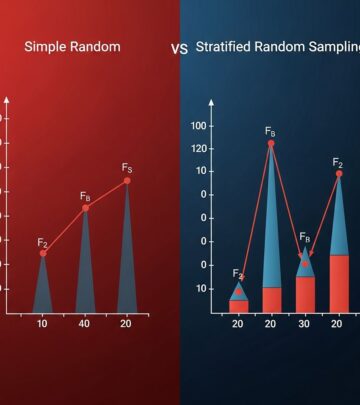
| Stratified Random | Population divided into strata; random samples from each stratum | Population has distinct subgroups | Better representation of subgroups | More complex to implement |
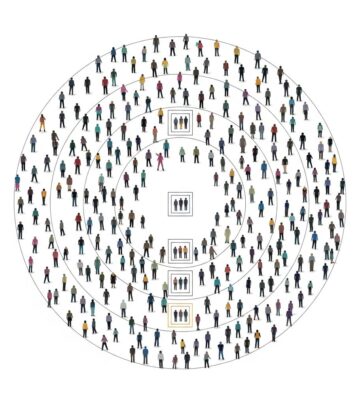
| Cluster | Population divided into clusters; clusters randomly selected | Population is geographically dispersed | Cost-effective for large areas | May miss important variations |
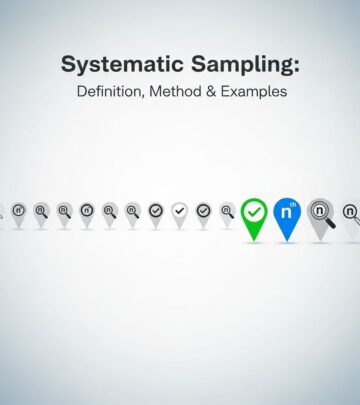
| Systematic Random | Random start point, then every kth member selected | Population has natural ordering | Simple to execute | May miss patterns in population |
Real-World Applications and Examples
Simple random sampling appears throughout numerous practical applications:
Census and Survey Work: The U.S. Census Bureau employs simple random sampling in the American Community Survey, randomly selecting 3.5 million households annually to gather detailed demographic, social, and economic data. This large-scale application demonstrates how simple random sampling enables efficient collection of population-wide information.
Medical Research: Clinical trials and epidemiological studies frequently use simple random sampling to select patient participants, ensuring that study results apply broadly to patient populations rather than reflecting characteristics of specific clinics or hospitals.
Quality Assurance Testing: Manufacturing and service industries use simple random sampling to select products or transactions for quality inspection, ensuring that testing procedures remain objective and unbiased.
Academic Research: University researchers across disciplines employ simple random sampling in social sciences, psychology, education, and numerous other fields where unbiased sample selection is essential.
Calculating Sample Size and Selection Probability
Practical implementation of simple random sampling requires understanding sample size determination and selection probability calculations.
Selection Probability Formula: The probability that any individual member will be selected equals: P = n/N, where n is the sample size and N is the population size. For example, if you select 1,500 individuals from a population of 15,000, the selection probability is (1,500 ÷ 15,000) × 100% = 10%.
Sample Size Determination: Researchers must balance several factors when determining sample size, including desired confidence level (typically 95 percent), acceptable margin of error, population variability, and available resources. Larger samples generally produce more precise estimates but require greater resources.
Common Mistakes in Simple Random Sampling
Researchers should avoid several common pitfalls when implementing simple random sampling:
Incomplete Sampling Frame: Using a sampling frame that doesn’t truly represent the entire population introduces systematic bias. Always verify that your list includes all population members.
Pseudo-Random Selection: Selection methods that appear random but contain hidden patterns (like birthdays or sequential lists) can introduce bias. Use genuine randomization methods.
Inadequate Sample Size: Selecting too small a sample may not adequately represent the population. Statistical power analysis helps determine minimum appropriate sample sizes.
Confusing with Random Sampling: Random sampling doesn’t necessarily mean every individual has equal selection probability. Simple random sampling specifically requires equal probability for all members.
Frequently Asked Questions
Q: Why is simple random sampling considered the best sampling method?
A: Simple random sampling isn’t always “best,” but it’s often preferred because it eliminates bias, ensures equal selection probability, produces representative samples, and provides a strong foundation for statistical inference. However, other methods like stratified sampling may be more appropriate for heterogeneous populations.
Q: What size should my simple random sample be?
A: Sample size depends on your desired confidence level, acceptable margin of error, population variability, and practical constraints. Statistical formulas and power analysis software help determine appropriate sample sizes. Generally, larger samples produce more reliable results but require more resources.
Q: How do I know if my sampling frame is complete?
A: Verify that your sampling frame includes all population members by comparing it against multiple sources, checking for duplicates or omissions, and confirming that definitions of the population and frame align perfectly.
Q: Can I use simple random sampling for small populations?
A: Yes, simple random sampling works well for small populations. With small populations, methods like the lottery approach become practical, and you can ensure your sampling frame is complete and accurate.
Q: What’s the difference between simple random sampling and convenience sampling?
A: Simple random sampling uses objective randomization ensuring equal selection probability, while convenience sampling selects individuals based on ease of access. Convenience sampling introduces bias and shouldn’t be used for research requiring valid statistical inference.
Q: How does simple random sampling ensure representativeness?
A: Random selection eliminates systematic bias and ensures that each possible sample has equal probability of selection. With adequate sample sizes, this process produces samples that reliably reflect population characteristics.
References
- Simple Random Sample — Wikipedia. Retrieved from https://en.wikipedia.org/wiki/Simple_random_sample
- Simple Random Sample: Definition and Examples — Statistics How To. Retrieved from https://www.statisticshowto.com/probability-and-statistics/statistics-definitions/simple-random-sample/
- Simple Random Samples — University of Texas at Austin Department of Mathematics. Retrieved from https://web.ma.utexas.edu/users/mks/statmistakes/SRS.html
- Simple Random Sampling: Definition, Steps & Examples — Scribbr. Retrieved from https://www.scribbr.com/methodology/simple-random-sampling/
- Simple Random Sampling — Better Evaluation. Retrieved from https://www.betterevaluation.org/methods-approaches/methods/simple-random-sampling
- Simple Random Sampling: Definition & Guide — Qualtrics. Retrieved from https://www.qualtrics.com/articles/strategy-research/simple-random-sampling/
- Simple Random Sampling — Yale University Department of Statistics. Retrieved from http://www.stat.yale.edu/Courses/1997-98/101/sample.htm
Similar Articles








Read full bio of medha deb