SIMPLE IRA vs. SIMPLE 401(k): Choose the Right Plan
Understand key differences between SIMPLE retirement plans for small business owners
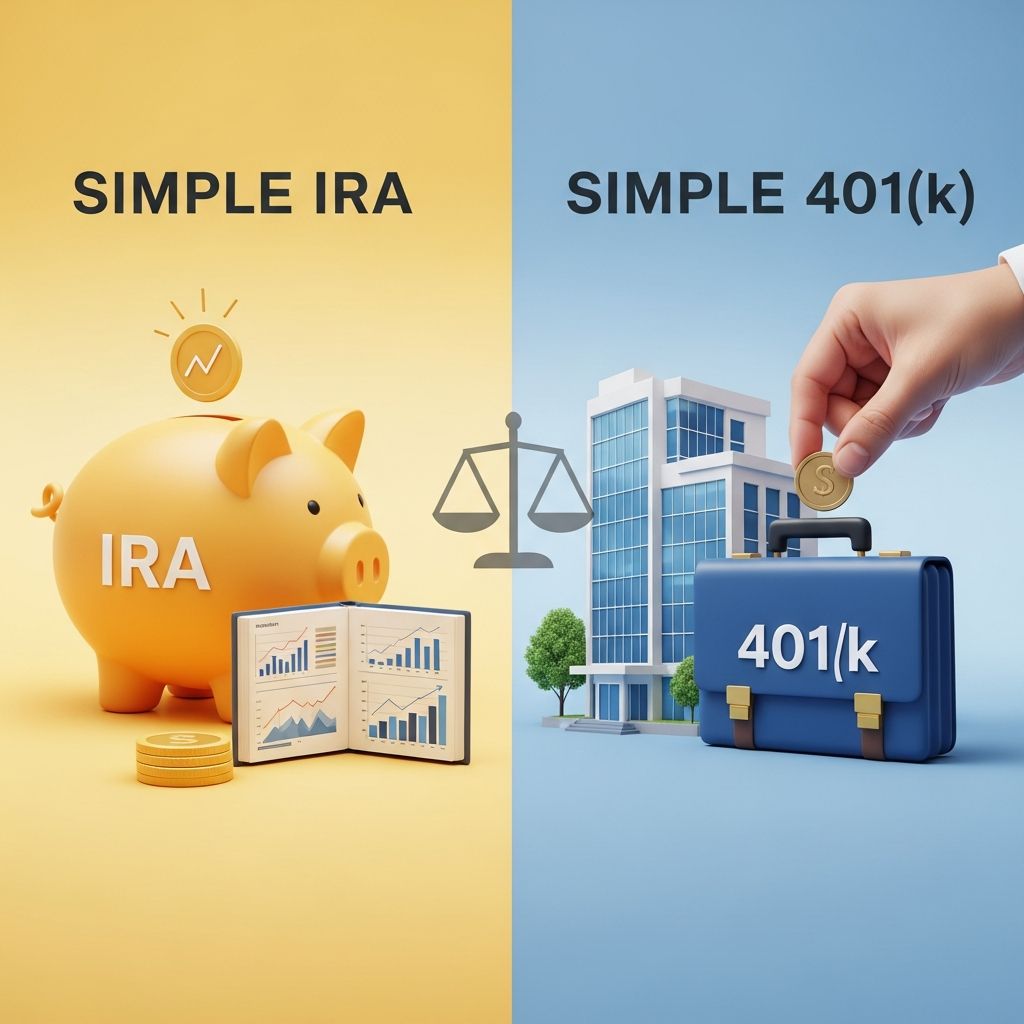
Small business owners face numerous decisions when establishing employee benefits, and selecting the appropriate retirement plan represents one of the most significant choices. For companies with fewer than 100 employees, two primary options emerge as particularly attractive: the SIMPLE IRA and the SIMPLE 401(k). Both plans offer streamlined administration compared to traditional 401(k)s, yet they differ substantially in their features, costs, and operational requirements. Understanding these distinctions enables business owners to align their retirement offering with their financial capacity, workforce needs, and long-term objectives.
Understanding the Foundational Differences Between Plan Types
The distinction between a SIMPLE IRA and a SIMPLE 401(k) extends beyond their names to their fundamental legal structure. A SIMPLE IRA functions as an Individual Retirement Account that employers establish for their workforce, whereas a SIMPLE 401(k) qualifies as a qualified retirement plan with a formal trust structure.This structural difference influences how each plan operates and what features they can offer. The SIMPLE IRA represents the less complex option, making it appealing to employers seeking minimal administrative burden. Conversely, the SIMPLE 401(k), despite its relative simplicity compared to traditional 401(k)s, offers additional flexibility through plan design options.
Eligibility Requirements and Employee Participation
Both plan types limit participation to employers with 100 or fewer employees. However, their eligibility criteria for workers differ meaningfully. SIMPLE IRA plans require employees to have earned $5,000 during any of the two prior years and be expected to earn $5,000 in the current year. This approach prioritizes historical earnings patterns over age considerations.
SIMPLE 401(k) plans generally require participants to be at least 21 years old, and employees typically must complete one year of service, defined as 1,000 hours during a 12-month period. Employers can exclude certain categories of workers, including temporary staff, in both plan structures.
Contribution Limits and Catch-Up Provisions
Contribution capacity significantly influences retirement savings accumulation. For 2026, both SIMPLE IRA and SIMPLE 401(k) plans allow employees to defer $18,100 annually through salary reduction, with catch-up contributions of $3,850 for individuals aged 50-59 and 64 and older, plus an enhanced $5,250 catch-up for those aged 60-63. These matching limits apply identically to both plan types.
The contribution structure varies based on employer size and contribution election. Employers with 25 or fewer employees accessing higher contribution amounts can defer up to $18,100 in 2026, while those with 26 to 100 employees face a base limit of $17,000. This tiered approach encourages participation across diverse business sizes.
Mandatory Employer Contribution Requirements
A critical operational distinction emerges in employer contribution obligations. SIMPLE IRA sponsors must provide either a dollar-for-dollar match up to 3% of compensation or a 2% nonelective contribution to all eligible employees earning at least $5,000 during the year. These requirements apply uniformly; employers cannot skip contributions during lean financial periods without formal plan amendment.
SIMPLE 401(k) plans impose identical mandatory contribution structures, requiring either a 3% dollar-for-dollar match or 2% nonelective contributions. Both plan types additionally permit employers to provide nonelective contributions up to 10% of compensation, though this remains optional rather than mandated.
Cost Structure and Administrative Burden
SIMPLE IRA plans typically feature lower costs, with a $10 one-time setup fee and $10 annual maintenance fee per Social Security number. This affordability makes SIMPLE IRAs particularly attractive to startups and lean organizations managing tight budgets.
SIMPLE 401(k) plans involve higher fees, generally ranging from recordkeeper to recordkeeper. SIMPLE IRA plans require minimal administrative management and offer lower setup and maintenance costs compared to traditional 401(k)s.
Loan Provisions and Participant Flexibility
Access to plan assets during employment represents a meaningful distinction. SIMPLE 401(k) plans may permit loans to participants, providing emergency access to retirement savings. SIMPLE IRA plans do not allow loans, restricting participant access to their accumulated balances.
This difference impacts employee satisfaction and financial flexibility. Participants facing unexpected expenses may prefer SIMPLE 401(k)s due to loan availability, while conservative savers might appreciate SIMPLE IRA restrictions that discourage early withdrawals.
Early Withdrawal Penalties and Distribution Rules
SIMPLE IRA distributions taken before age 59½ face an additional 10% tax, which increases to 25% if the withdrawal occurs within the first two years of plan participation. This progressive penalty structure discourages early access while accommodating genuine hardships after extended plan tenure.
These withdrawal rules reflect the plans’ foundational purpose: accumulating retirement security rather than serving as accessible emergency funds. Participants must understand these restrictions before enrolling and maintain appropriate emergency reserves outside their retirement accounts.
Roth Option Availability
Both SIMPLE IRA and SIMPLE 401(k) plans offer Roth options, allowing employees to make after-tax contributions with tax-free growth and distributions. This feature provides valuable flexibility for employees anticipating higher tax brackets during retirement or preferring tax diversification across their retirement portfolio.
Roth options become increasingly important for younger workers with decades of earning potential ahead. By electing Roth contributions during their peak earning years, employees can potentially minimize lifetime tax obligations.
Plan Restrictions and Employer Limitations
Employers considering SIMPLE IRAs must recognize an important constraint: companies with SIMPLE IRAs cannot sponsor another retirement plan, with one exception for employees covered by collective bargaining agreements. This exclusivity requirement means businesses cannot offer multiple retirement options to different employee groups.
SIMPLE 401(k) plans operate under standard qualified plan guidelines, permitting greater flexibility in plan design and employer contribution strategies. However, this flexibility comes with corresponding increases in administrative complexity and potential compliance responsibilities.
Comparison Table: Quick Feature Reference
| Feature | SIMPLE IRA | SIMPLE 401(k) |
|---|---|---|
| Maximum Employee Deferrals (2026) | $18,100 (up to 25 employees) | $18,100 (up to 25 employees) |
| Catch-up Contributions | $3,850-$5,250 depending on age | $3,850-$5,250 depending on age |
| Setup Fees | $10 | Varies by recordkeeper |
| Annual Maintenance Fees | $10 per SSN | Varies by recordkeeper |
| Loan Provisions | Not allowed | Permitted |
| Roth Option | Available | Available |
| Early Withdrawal Penalty | 10% (25% within 2 years) | 10% standard |
| Other Plan Sponsorship | Prohibited (with exceptions) | Permitted |
Selecting the Right Plan for Your Business
Determining whether a SIMPLE IRA or SIMPLE 401(k) better serves your organization requires evaluating multiple dimensions. Budget-conscious employers with minimal administrative resources should strongly consider SIMPLE IRAs. The lower startup and maintenance costs create minimal financial barriers to implementation, while streamlined administration reduces ongoing compliance obligations.
Conversely, organizations prioritizing employee flexibility and planning for future growth might prefer SIMPLE 401(k)s. The availability of plan loans addresses employee financial needs beyond retirement, potentially improving benefit satisfaction and retention. Additionally, SIMPLE 401(k)s offer greater design flexibility as your business evolves and adds additional retirement vehicles.
Employers unable to commit to mandatory employer contributions should carefully reconsider both options. These contribution requirements represent substantial ongoing obligations that affect cash flow forecasting and business budgeting. Underestimating these costs can strain finances during economic downturns.
Implementation and Ongoing Management Considerations
After selecting your plan structure, successful implementation requires coordinated effort among management, human resources, and financial advisors. Plan sponsors must establish procedures for employee enrollment, contribution collection, and distribution processing. Documentation must clearly communicate plan features, eligibility requirements, and participant responsibilities to all workers.
Annual compliance reviews ensure continued adherence to IRS regulations and plan document requirements. Plan sponsors should maintain detailed records of all contributions, distributions, and plan amendments. Consulting with qualified retirement plan professionals helps navigate complex requirements and avoid costly errors.
Frequently Asked Questions
Can employees participate in both a SIMPLE IRA and SIMPLE 401(k)?
No. Each individual can participate in only one SIMPLE plan per employer during any given calendar year. However, individuals may maintain balances in multiple SIMPLE plans from prior employers or concurrent service with multiple employers offering different plan types.
What happens to SIMPLE plan balances if an employee leaves the company?
Upon separation, employees retain ownership of their account balances, including employer contributions. Employees may roll these funds into traditional or Roth IRAs, though certain restrictions apply during the two-year initial participation window. Plan administrators must provide distribution information and rollover instructions to departing employees.
Are SIMPLE plans subject to nondiscrimination testing?
SIMPLE plans are exempt from most nondiscrimination requirements that apply to traditional 401(k)s. However, plans must satisfy composition tests, and employers cannot establish eligibility criteria that discriminate based on protected characteristics.
Can self-employed individuals establish SIMPLE plans?
Yes. Self-employed business owners with no employees except a spouse may establish SIMPLE plans, though solo 401(k)s typically offer higher contribution limits and greater flexibility.
What recordkeeping obligations apply to plan sponsors?
Sponsors must maintain records of plan establishment, all contributions, investment transactions, distributions, and participant communications. Documentation must support compliance with IRS requirements and plan document provisions.
References
- Compare SIMPLE IRA, SIMPLE IRA Plus, and SIMPLE 401(k) Plans — Capital Group. 2026. https://www.capitalgroup.com/advisor/account-resource-center/simple-plan-comparison.html
- SIMPLE 401(k) vs. SIMPLE IRA vs. Traditional 401(k) Plans — Human Interest. 2026. https://humaninterest.com/learn/articles/differences-between-simple-401k-simple-ira-traditional-401k/
- SIMPLE IRA vs. 401(k) Plans — Paychex. 2026. https://www.paychex.com/articles/employee-benefits/401k-vs-simple-ira-plans
- SIMPLE IRA vs. 401(k): The Pros and Cons of Each Plan — NerdWallet. 2026. https://www.nerdwallet.com/retirement/learn/simple-ira-vs-401k-comparison-how-to-pick-the-right-plan
- Why Choose a Solo 401(k) vs. SIMPLE IRA? — IRA Financial. 2026. https://www.irafinancial.com/blog/why-choose-a-solo-401k-plan-vs-a-simple-ira/
Similar Articles








Read full bio of medha deb