Should Your Standard Of Living Rise? Practical Guide
Explore whether increasing your standard of living is always wise, or if maintaining frugality unlocks greater freedom and happiness in life.

The conventional wisdom in personal finance suggests that as your income increases, so should your standard of living. Buy a bigger house, drive a nicer car, and enjoy more luxuries. But is this always the best path? This article challenges that notion, arguing that keeping your standard of living stable or even lowering it intentionally can lead to greater financial freedom, happiness, and productivity. Drawing from frugal living principles, we’ll explore why rising standards of living often trap people in a cycle of work and debt, while simplicity offers liberation.
What Is ‘Standard of Living’?
Your
standard of living
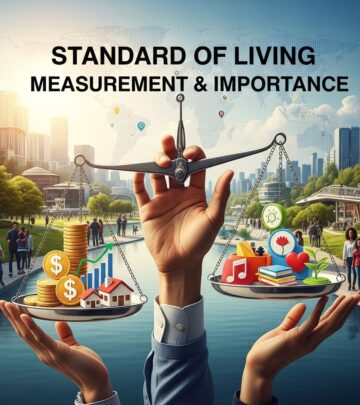
refers to the level of wealth, comfort, material goods, and necessities available to a certain socioeconomic class or geographic area. It includes housing, food, transportation, healthcare, education, and discretionary spending on entertainment or luxuries. However, it’s not just about absolute spending—it’s subjective, influenced by expectations, location, and personal values.In affluent societies, standard of living is often measured by consumption levels. Yet, as noted in frugality discussions, true quality of life hinges more on fulfilling core wants efficiently rather than endlessly escalating consumption. For instance, the U.S. Bureau of Labor Statistics tracks household expenditures, showing that average families spend heavily on housing (33% of income) and transportation (16%), leaving less for savings or experiences.
The Trap of Lifestyle Inflation
**Lifestyle inflation**, or keeping up with the Joneses, occurs when rising income leads to proportionally higher spending. A promotion means a larger mortgage; a raise funds lavish vacations. This erodes savings and binds you to your job—what economists call the ‘hedonic treadmill,’ where happiness returns to baseline despite gains.
Consider this: The prototypical American Dream—big house, new cars, college for kids—is unaffordable on median household income (~$74,000 in 2024 per Census data). Debt fills the gap, turning wage earners into debt slaves. Graduates face student loans, then mortgages and car payments, delaying life milestones like travel or entrepreneurship.
- Housing creep: Upgrading from a $1,500/month apartment to a $3,000 house in suburbs.
- Car upgrades: Trading a paid-off beater for a $40,000 SUV lease.
- Social pressure: Dinners out, gadgets, and hobbies scaled to peers’ levels.
Result? You’re working longer hours for ‘more,’ but with less time and freedom. Frugal thinkers argue satisfaction comes from needs vs. wants clarity—needs are minimal (shelter, basic food), while wants drive 90% of spending.
Benefits of Keeping Your Standard of Living Flat
Maintaining a constant standard of living as income rises builds wealth exponentially. If your expenses stay at $40,000/year but income jumps to $80,000, you save 50%. Compound that over decades via index funds, and you’re set for early retirement.
Real-world example: A writer in Champaign, IL, pays rent 326% less than Manhattan equivalents, with groceries 57% cheaper. This enables full-time creative work without a day job. Productivity soars; happiness follows from autonomy.
| Location | Avg. Rent (1BR) | Groceries Index | Salary Needed for Same Lifestyle |
|---|---|---|---|
| Manhattan, NY | $4,200 | 157 | $150,000+ |
| Champaign, IL | $1,000 | 100 | $50,000 |
| Rural Midwest | $600 | 90 | $35,000 |
Data adapted from cost-of-living calculators; living cheap amplifies income’s power.
Live Where It’s Cheap: The Ultimate Hack
The most potent frugality tool? Relocate to low-cost areas. Basic costs like rent and food double or triple in expensive cities. Rural spots offer near-free housing (caretaker gigs) or tiny homes.
Downsides exist: Fewer amenities, but internet bridges gaps—online shopping, streaming erase isolation. For remote workers (writers, designers), earnings are location-independent. Personal services (hairdressers) pay more in high-cost areas due to clientele wealth, but calculate net after expenses.
- Remote pros: Same pay, lower costs = surplus.
- Local jobs: Higher wages offset costs? Run numbers.
- Exurbs strategy: Commute from cheap fringes with efficient cars.
One family chose a modest home near essentials, trading school districts for homeschooling and walkability. Savings funded gardens, bikes—enhancing life without inflation.
Work Less, Live More
Books like Work Less, Live More advocate mini-retirements over endless grinding. Use savings to sabbatical, travel, or pursue passions. The 95% rule: Withdraw 95% of expenses in down markets, cushioned by part-time work.
Self-sufficiency options: Freelance, grow food, craft goods. Off-grid living minimizes utilities; regulated basics stay affordable for low-income setups. Historical homesteaders achieved modest self-reliance with minimal cash inputs.
Opting Out of the Money Economy
Escape wage/debt slavery via bartering, sharing, homesteading. Households sharing resources (cars, tools) boost efficiency. Single adults must earn all; multiples divide labor.
Freeganism satisfies basics gratis (dumpster diving), freeing cash for joys. Minimalism—small digs, conscious spending—cleared $60k debt on $65k salary.
Skilled Trades and Realistic Expectations
Undervalued trades (plumbers, mechanics) pay well, resist offshoring. Past generations started small—beaters, hand-me-downs—building up debt-free. Today’s grads demand instant luxury, accruing unprecedented debt.
Calculating Your True Standard of Living
Details matter: Skiers need slope proximity; casuals vacation cheaper. Use calculators for personalized math. Prioritize high-impact wants (time near family) over low-use luxuries.
Move far from Joneses to dodge envy. Goal-set across short-, medium-, long-term savings[10].
Frequently Asked Questions (FAQs)
Should I always increase my spending with raises?
No. Bank raises for savings or debt payoff to build freedom faster.
Can I maintain city perks in cheap areas?
Yes—internet, occasional trips suffice for most.
What’s the 95% rule?
Spend 95% of portfolio safe withdrawal in bad markets.
Is rural living isolating?
Often not—communities thrive; drives to cities are affordable splurges.
How do I fight lifestyle inflation?
Track spending, define wants, automate savings first.
Conclusion: Choose Freedom Over Flash
Rising standards promise happiness but deliver chains. Frugality—living cheap, sharing, self-relying—elevates true living standards: time, health, pursuits. Run your numbers; opt out of the rat race.
References
- Live Where It’s Cheap — Wise Bread. 2007 (evergreen frugality advice). https://www.wisebread.com/live-where-its-cheap
- Book Review: Work Less, Live More — Wise Bread. N/A. https://www.wisebread.com/book-review-work-less-live-more
- Wage Slave, Debt Slave — Wise Bread. N/A. https://www.wisebread.com/wage-slave-debt-slave
- Opting Out of the Money Economy — Wise Bread. N/A. https://www.wisebread.com/opting-out-of-the-money-economy
- What I’ve Been Trying to Say — Wise Bread. N/A. https://www.wisebread.com/what-ive-been-trying-to-say
- Consumer Expenditure Survey — U.S. Bureau of Labor Statistics (official .gov). 2024-09-10. https://www.bls.gov/cex/
Similar Articles








Read full bio of Sneha Tete