Should You Wait for Mortgage Rates to Go Down?
Analyzing whether waiting for lower mortgage rates is wise amid forecasts of 6% averages and economic uncertainties in 2026.

In early 2026, 30-year fixed mortgage rates have dipped to a 15-month low of 6.24%, sparking hope among prospective homebuyers. Yet, with forecasts predicting rates hovering around 6% throughout the year, the question remains: should you lock in now or hold out for further declines? This decision hinges on economic forecasts, personal finances, housing market dynamics, and opportunity costs.
Current Mortgage Rates and Recent Trends
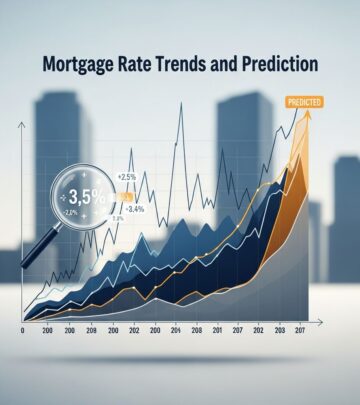
Mortgage rates have eased from peaks above 7.79% in late 2023, when they bottomed out at 2.65% in early 2021. As of January 7, 2026, Bankrate reports the 30-year fixed rate at 6.24%, down from 6.34% four weeks prior and significantly lower than 7.08% a year ago. The 15-year fixed rate stands at 5.54%, while jumbo loans average 6.42%.
| Loan Type | Current | 4 Weeks Ago | One Year Ago | 52-Week Average | 52-Week Low |
|---|---|---|---|---|---|
| 30-year fixed | 6.24% | 6.34% | 7.08% | 6.65% | 6.24% |
| 15-year fixed | 5.54% | 5.59% | 6.30% | 5.88% | 5.50% |
| 30-year jumbo | 6.42% | 6.52% | 7.07% | 6.71% | 6.31% |
These rates include an average of 0.31 discount and origination points, which buyers can pay to lower their effective rate. Recent Federal Reserve rate cuts have influenced this decline, though long-term rates like mortgages respond more to market forces and inflation expectations.
Mortgage Rate Forecasts for 2026
Experts offer varied outlooks for 2026. Bankrate forecasts an average 30-year rate of 6.1%, with a low of 5.7% and high of 6.5%. Senior analyst Ted Rossman predicts rates could fall below 6%—potentially to 5.5%—due to anticipated Fed cuts and recession risks, though inflation may push them higher. Conversely, the Mortgage Bankers Association expects rates to hold steady at 6.4%, citing economic growth and persistent inflation.
Other surveys align with volatility: Money reports 30-year rates at 6.349% as of January 9, 2026, with Freddie Mac noting 6.16% for the week ending January 8. Long-term bonds, which drive mortgage pricing, suggest rates may fluctuate around 6% without dramatic drops.
- Optimistic view: Fed cuts and economic softening could push rates under 6% by mid-2026.
- Pessimistic view: Inflation and growth keep rates elevated near 6.4%.
- Consensus: Expect volatility, not a return to sub-5% levels seen pre-2022.
Pros and Cons of Waiting for Lower Rates
Pros of Waiting
- Lower monthly payments: A drop from 6.24% to 5.5% on a $400,000 loan reduces principal and interest (P&I) by about $200 monthly.
- Improved affordability: Rates below 6% could ease the burden, where current payments on a median $409,200 home with 20% down total $2,013—23% of median family income ($104,200).
- Refinancing potential: Recent buyers at 7%+ could refinance if rates fall further.
Cons of Waiting
- Home prices may rise: Median existing home prices hit $409,200 in November 2025; further increases could offset rate savings.
- Rent escalation: Renters waiting pay more as rents outpace wage growth.
- Missed equity growth: Delaying forfeits home appreciation; prices rose despite high rates post-2021.
- Rate uncertainty: Forecasts show no guaranteed plunge; rates could rebound on inflation.
Weighing these, waiting suits those with stable housing and low rent costs, but risks higher future prices eroding gains.
Impact of Rates on Affordability
Higher rates since 2021 have slashed affordability. On a $400,000 loan, P&I jumped from $1,612 at 2.65% to $2,877 at 7.79%, a 78% increase. Even at 6.2%, it’s $2,450—$838 more than lows. Combined with rising prices (median from $355,000 to $412,300), payments on a median home with 5% down surged 77-113%.
| Date | Interest Rate | P&I on $400,000 Loan | Median Sales Price | P&I on Median Home (5% Down) |
|---|---|---|---|---|
| Jan 2021 | 2.65% | $1,612 | $355,000 | $1,359 |
| Oct 2023 | 7.79% | $2,877 | $423,200 | $2,891 |
| Sep 2024 | 6.20% | $2,450 | $412,300 | $2,399 |
Today, payments consume 36% of median income versus 23% in 2021; a 25% budget requires 59% higher income or rates at 2.5%. National median income ($104,200) underscores strain.
Refinancing Opportunities
Nearly 60% of 50.8 million active mortgages are below 4%, locking owners in place (“lock-in effect”). However, 20%+ are at 5%+, with 14.3% at 6%+—mostly recent originations ripe for refinance if rates drop. Late 2023 buyers at 8% stand to save significantly at 6%.
Refi potential grows as rates ease, but requires 0.5-1% drop for meaningful savings after closing costs (2-5% of loan). Current spread over Treasuries (250 bps) remains elevated, signaling caution.
Strategies if You Can’t Wait
- Buy points: Pay upfront to reduce rate by 0.25% per point.
- Shorter terms: 15-year at 5.54% saves interest long-term.
- Adjustable-rate mortgages (ARMs): Lower initial rates like 5.859% for 7/1 ARM, if planning short stay.
- Increase down payment: Lowers loan size, payments.
- Shop lenders: Rates vary; compare multiple quotes.
Consider total costs: At 6.24% with 20% down on $409,200, monthly P&I is $2,013.
Alternatives to Traditional Mortgages
- FHA/VA/USDA loans: Lower rates/requirements for eligible buyers.
- Assumable mortgages: Take over seller’s low-rate loan.
- Builder incentives: Rate buydowns in new constructions.
- HELOCs/home equity loans: Bridge if owning current home.
Frequently Asked Questions (FAQs)
Q: Will mortgage rates go below 6% in 2026?
A: Likely yes, per Bankrate (low of 5.7%), but averages may stay near 6.1%; inflation could prevent sustained drops.
Q: How much do rates affect monthly payments?
A: On $400,000, 1% drop saves ~$250/month; from 6.24% to 5.5%, ~$200.
Q: Is now a good time to buy a home?
A: Depends; rates are down from peaks, but prices high. Act if qualified, as waiting risks appreciation outpacing rate drops.
Q: Should I refinance my high-rate mortgage?
A: Yes, if drop exceeds 0.5-1% and you plan long-term stay; 14% of loans at 6%+ qualify.
Q: What drives mortgage rates?
A: Fed funds rate, inflation, Treasury yields, economy; mortgages lag Fed moves.
Final Considerations
Waiting for rates to plummet ignores rising prices and personal timelines. Current 6.24% offers entry vs. recent highs; forecasts suggest modest relief, not revolution. Consult a lender for personalized math—weigh renting vs. owning, equity buildup, and tax benefits. In 2026’s volatile market, timing perfection is elusive; strategic action prevails.
References
- Mortgage Rates Dip To 15-Month Low — Bankrate. 2026-01-07. https://www.bankrate.com/mortgages/analysis/mortgage-rates-january-7-2026/
- Data Spotlight: The Impact of Changing Mortgage Interest Rates — Consumer Financial Protection Bureau. 2024-09-12. https://www.consumerfinance.gov/data-research/research-reports/data-spotlight-the-impact-of-changing-mortgage-interest-rates/
- Mortgage Interest Rate Forecast For 2026 — Bankrate. 2025-12. https://www.bankrate.com/mortgages/mortgage-rates-forecast/
- Current Mortgage Rates: January 9, 2026 — Money.com. 2026-01-09. https://money.com/current-mortgage-rates/
- How the December Fed Rate Cut Will Affect Your Savings, CDs, and Mortgages — MoneyRates. 2025-12. https://www.moneyrates.com/research-center/how-the-december-fed-rate-cut-will-affect-your-savings-cds-and-mortgages.htm
Similar Articles








Read full bio of medha deb