Should You Use Peer-to-Peer Lending to Pay Down Credit Card Debt?
Discover if peer-to-peer lending can help you escape high-interest credit card debt with lower rates and smarter repayment strategies.

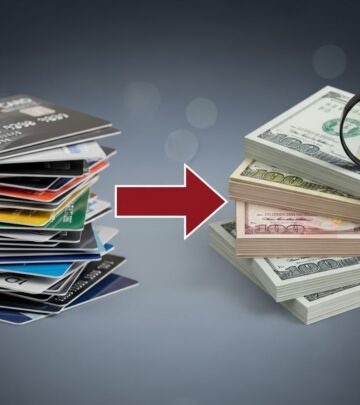
High-interest credit card debt can trap borrowers in a cycle of payments that barely dent the principal. Peer-to-peer (P2P) lending platforms promise a way out by offering personal loans at lower rates than credit cards, allowing consolidation into fixed monthly payments. But is this strategy right for everyone? This article examines the mechanics, benefits, risks, and alternatives to help you decide.
What Is Peer-to-Peer Lending?
Peer-to-peer lending connects borrowers directly with individual investors through online platforms, bypassing traditional banks. Major players like LendingClub and Prosper facilitate unsecured personal loans ranging from $1,000 to $50,000, with terms of 3 to 5 years. Funds are typically used for debt consolidation, with credit card payoff being the most common purpose.
Platforms use proprietary algorithms to assign risk grades based on credit score (minimum 640-660), debt-to-income ratio, and payment history. Investors fund loans in portions, earning interest, while borrowers receive competitive rates. Origination fees (1-8%) are deducted upfront, and APRs range from 5.3% for top-tier borrowers to nearly 30% for riskier profiles.
How Peer-to-Peer Lending Compares to Credit Cards
Credit card debt averages 15% interest nationally, with many rates exceeding 20%. P2P loans often beat this: A-rated borrowers secure 6-10% APRs, even after fees. Federal Reserve analysis confirms P2P rates are substantially lower than credit card offers across all credit score bins.
| Credit Score Bin | Avg. Credit Card Rate | LendingClub Avg. Rate | Prosper Avg. Rate |
|---|---|---|---|
| Excellent (740+) | 11-15% | 5.3-8% | 6-9% |
| Good (700-739) | 15-20% | 8-12% | 9-13% |
| Fair (640-699) | 20-25% | 12-20% | 14-22% |
Data adapted from Federal Reserve analysis (2016-2017, trends stable). Lower scores face higher P2P rates but still often undercut cards.
The Pros of Using P2P Lending for Credit Card Debt
- Lower Interest Rates: Save thousands versus 15-25% card APRs. A $10,000 balance at 18% takes 30+ years with minimum payments; a 3-year P2P loan at 8% costs far less total interest.
- Fixed Payments: Predictable monthly amounts simplify budgeting, unlike variable card minimums.
- Debt Consolidation: Combine multiple cards into one loan, reducing management hassle.
- No Collateral: Unsecured, preserving assets.
- Fast Funding: Approval in days, funds direct to payees.
The Cons and Risks
- Origination Fees: 1-8% upfront reduces proceeds (e.g., $10,000 loan yields $9,200 at 8% fee).
- Credit Requirements: Needs 640+ score; poor credit disqualified or faces 25-30% rates.
- Higher Monthly Payments: Shorter terms mean larger payments. $2,000 at 18% card: $40/month min. P2P at 8%: $161/month—risk default if cash flow tight.
- Default Risk: Late payments hurt credit; no forgiveness like federal student loans.
- Platform Risks: Investor funding dries up in downturns, though rare post-2020 maturity.
Who Should Consider P2P Lending?
Ideal for good-credit borrowers (660+) with $5,000-$35,000 in high-rate card debt and stable income to afford higher payments. Example: $20,000 at avg. 20% card vs. 10% P2P saves ~$4,000 interest over 3 years.
Avoid if: debt exceeds loan limits, income unstable, or rates not meaningfully lower. High-debt individuals may need $50K+ loans; some platforms cap at $35K.
Step-by-Step: How to Get a P2P Loan
- Check Credit: Pull free report; aim for 660+ FICO.
- Pre-qualify: Soft pulls on LendingClub/Prosper show rates without ding.
- Compare Offers: Shop 3+ platforms; note APR, fees, terms.
- Apply: Hard pull; provide income/debt docs.
- Fund & Payoff: Direct deposit; immediately pay cards.
- Automate: Set autopay to avoid late fees.
Real-World Example: Debt Payoff Calculation
| Scenario | Loan Amount | Rate/APR | Term | Monthly Payment | Total Interest |
|---|---|---|---|---|---|
| Credit Card (Min. Pays) | $10,000 | 18% | 30+ years | $200 | $25,000+ |
| P2P Loan (Good Credit) | $10,000 | 8% (9.5% APR) | 3 years | $323 | $1,628 |
| P2P Loan (Fair Credit) | $10,000 | 18% (20% APR) | 5 years | $254 | $5,240 |
Assumes 5% origination fee deducted. P2P wins for qualified borrowers.
Alternatives to P2P Lending
- Balance Transfers: 0% intro APR cards (12-21 months), but 3-5% fee; needs excellent credit.
- Debt Management Plans: Non-profits negotiate lower rates (5-10%); fees ~$20/month.
- Personal Loans from Banks: Similar rates, but slower process.
- Debt Settlement: Risky; hurts credit, taxes on forgiven debt.
- Bankruptcy: Last resort; Chapter 7/13 wipes debt but long-term damage.
Tax and Legal Considerations
P2P interest isn’t tax-deductible like mortgages. Forgiven debt via settlement is taxable income. Platforms report to IRS; track 1099 forms.
Platform Comparison: LendingClub vs. Prosper
| Feature | LendingClub | Prosper |
|---|---|---|
| Loan Max | $40,000 | $50,000 |
| Min Credit Score | 660 | 640 |
| APR Range | 7.9%-35.99% | 8%-35.99% |
| Origination Fee | 0-8% | 1-7.99% |
| Terms | 2-5 years | 2-5 years |
Both strong; LendingClub edges for high-credit rates.
Frequently Asked Questions (FAQs)
Q: Is P2P lending safe?
A: Regulated platforms like LendingClub (SEC-registered) are secure, but review terms and borrower protections.
Q: Can I pay off P2P loans early?
A: Yes, no prepayment penalties on major platforms.
Q: What if I miss payments?
A: Late fees apply; defaults reported to credit bureaus, impacting scores for 7 years.
Q: Are P2P loans better than bank loans?
A: Often yes for speed and rates, but compare APRs.
Q: Does P2P affect credit score?
A: Hard inquiry drops score 5-10 points temporarily; on-time payments boost it long-term.
Final Thoughts: Is P2P Right for Your Debt?
P2P lending shines for disciplined borrowers seeking rate relief on manageable debt loads. Calculate savings, ensure affordability, and explore options. Consult a financial advisor for personalized advice. With rates stable into 2026, it’s a viable tool in the debt-fighting arsenal.
References
- Debt Consolidation With Peer-To-Peer Lending — Michael Kitces, Kitces.com. 2016 (authoritative analysis, principles enduring). https://www.kitces.com/blog/debt-consolidation-strategies-using-peer-to-peer-lending-platforms/
- Do Marketplace Lending Platforms Offer Lower Rates to Consumers? — Federal Reserve Board (FEDS Notes). 2018-10-22. https://www.federalreserve.gov/econres/notes/feds-notes/do-marketplace-lending-platforms-offer-lower-rates-to-consumers-20181022.html
- Prosper vs LendingClub: Comparing Options — Cherry.com. 2024 (recent platform data). https://withcherry.com/blog/prosper-vs-lendingclub
Similar Articles








Read full bio of medha deb