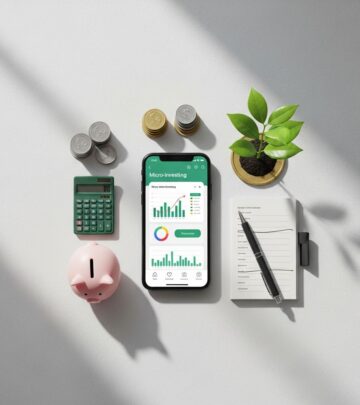
Micro-Investing: 5 Steps To Start And Decide If It’s Worth It
Discover if micro-investing suits your financial goals: low entry barriers, automation, but watch for fees and limited growth.

Micro-investing enables individuals to invest tiny amounts, often spare change or as little as $1, into diversified portfolios via user-friendly mobile apps, making wealth-building accessible without large upfront capital.
This approach leverages fractional shares, automation, and predefined portfolios to lower traditional barriers, appealing especially to beginners, young adults, or those with limited funds. While it fosters investing habits, its suitability depends on balancing convenience against fees and growth limitations.
What Is Micro-Investing?
Micro-investing involves regularly allocating small sums—frequently just a few dollars or rounded-up purchase change—into financial assets like stocks, ETFs, or managed funds through digital platforms.
Unlike conventional investing requiring hundreds or thousands to start, micro-investing democratizes access by allowing fractional ownership of expensive assets, such as buying a slice of a high-priced stock for pennies.
Key features include:
- Small Incremental Contributions: Manual or automated deposits of $1–$5 weekly/monthly build portfolios gradually.
- Fractional Investing: Purchase portions of shares, enabling diversification without full asset prices.
- Portfolio Simplicity: Pre-built, diversified options matching risk levels, no need for stock-picking expertise.
- Automation Tools: Round-ups (e.g., $4.50 purchase rounds to $5, investing $0.50) and recurring transfers promote consistency.
Platforms like those offering these tools aim to simplify market entry, particularly for the unbanked or low-income groups, turning everyday spending into long-term savings.
Benefits of Micro-Investing
Micro-investing shines in accessibility and behavioral nudges, ideal for novices building financial discipline.
Low Barrier to Entry: Start with $1 or no minimum (e.g., Webull, Interactive Brokers), versus traditional brokers’ $100–$500 thresholds, empowering those with modest incomes.
Simplicity and Automation: Intuitive apps handle round-ups and recurring investments, minimizing effort and encouraging regularity without market monitoring.
Access to Diversification: Fractional shares spread risk across assets, mimicking professional portfolios affordably.
Behavioral and Educational Gains: Automations build saving habits; tools track performance and teach basics, boosting literacy and confidence.
Over time, compounding turns small inputs substantial: $5 weekly at 7% annual return grows to ~$30,000 in 30 years (hypothetical, past performance no guarantee).
| Pro | Benefit | Example Platforms/Features |
|---|---|---|
| Low Entry | $1 start | Acorns, Stash |
| Diversification | Fractional ETFs | Vanguard funds via apps |
| Habit Building | Auto round-ups | Daily purchase triggers |
| Education | Trackers/Insights | Portfolio analytics |
These advantages make it a gateway, reducing intimidation and promoting participation.
Disadvantages of Micro-Investing
Despite appeal, micro-investing’s scale amplifies certain drawbacks, potentially eroding value.
Limited Growth Potential: Tiny contributions yield slow accumulation; short-term returns feel insignificant without scaling up.
High Relative Fees: Monthly/subscription fees (e.g., $1–$5) or per-trade costs disproportionately hit small balances, sometimes exceeding 1–2% annually.
Market Risks: Volatility affects all investments; small stakes don’t immunize against losses during downturns.
Limited Options: Fewer account types (e.g., rare IRAs) and asset choices compared to full brokers.
Not ideal standalone for retirement or major goals—better as supplement.
| Con | Impact | Mitigation |
|---|---|---|
| Slow Growth | Small sums compound slowly | Increase contributions over time |
| Fees | Eat into tiny portfolios | Choose fee-free platforms |
| Volatility | Full market exposure | Diversify, long-term hold |
| Options | Basic accounts/assets | Graduate to brokers |
Fees can negate benefits if unchecked; always review expense ratios.
Is Micro-Investing Worth It?
Micro-investing suits beginners testing waters, habit-formers, or diversifiers with spare change, but not wealth accelerators seeking rapid growth.
Worth it if: low-risk tolerance, learning curve needed, automation valued. Less so for experienced investors or fee-sensitive ones.
Compare via pros/cons balance: excels entry/education, lags scale/efficiency. Pair with budgeting for best results.
How Does Micro-Investing Work?
1. Sign up on app (e.g., link bank).
2. Choose portfolio (risk-based ETFs).
3. Enable round-ups/recurrings.
4. Invest fractions automatically.
5. Monitor via dashboard.
Funds pool into diversified holdings, growing via compounding.
Micro-Investing Apps and Platforms
- Acorns: Round-ups, automated portfolios.
- Stash: Fractional stocks, education.
- Robinhood/Webull: Commission-free fractions, no min.
Evaluate fees, assets, security (SIPCs/FDIC).
Micro-Investing vs. Traditional Investing
| Aspect | Micro-Investing | Traditional |
|---|---|---|
| Minimum | $1–$5 | $100–$1000s |
| Ease | App-automated | Manual research |
| Fees | Subscription/high relative | Commissions lower % |
| Growth | Slow start | Faster with lumps |
| Suitability | Beginners | Experienced |
Micro eases entry; traditional scales better long-term.
Who Should Try Micro-Investing?
- Beginners/young adults.
- Low-income savers.
- Habit builders.
- Avoid if: fee-averse, large capital ready.
Frequently Asked Questions
What is the minimum for micro-investing?
As low as $1 or spare change; some no minimum.
Are micro-investing fees high?
Often yes relatively; seek $0 commission options.
Can micro-investing build wealth?
Yes via compounding, but scale up for major goals.
Is it safe?
Regulated platforms yes, but markets fluctuate.
Best for retirement?
Supplement, not primary.
(Word count: 1678)
References
- What Is Micro-Investing? | FINRA.org — FINRA. 2023. https://www.finra.org/investors/insights/micro-investing
- Pros and Cons of Micro Investing – SmartAsset — SmartAsset. 2024-10-15. https://smartasset.com/investing/is-micro-investing-worth-it
- Micro Investing: How it Works, Key Pros and Cons — Straits Financial. 2024. https://www.straitsfinancial.com/insights/micro-investing-pros-cons
- The pros and cons of micro-investing | Money magazine — Money Magazine. 2024. https://www.moneymag.com.au/the-pros-and-cons-of-micro-investing
- What is Micro-Investing and How Do I Start? | Stash Learn — Stash. 2024. https://www.stash.com/learn/micro-investing/
Similar Articles








Read full bio of medha deb