Should You Trust Your Money With These 4 Popular Financial Robo-Advisers?
Discover if popular robo-advisors like Wealthfront, Betterment, FutureAdvisor, and Hedgeable deserve your investment dollars in 2026.

Robo-advisors have revolutionized investing by offering automated portfolio management at a fraction of traditional advisor costs. These platforms use algorithms to build and rebalance diversified portfolios based on your risk tolerance and goals. But with your hard-earned money on the line, can you trust them? This article dives deep into four popular options:
Wealthfront
,Betterment
,FutureAdvisor
, andHedgeable
. We’ll cover their features, fees, security, performance, and more to help you decide.What Are Robo-Advisors and How Do They Work?
Robo-advisors are digital platforms that provide automated investment management using sophisticated algorithms. You answer a questionnaire about your age, income, risk tolerance, and goals, and the software constructs a portfolio of low-cost ETFs tailored to you. Features like automatic rebalancing, tax-loss harvesting, and goal tracking keep things optimized without your intervention.
Unlike traditional advisors charging 1-2% annually, robo-advisors typically cost 0.15-0.25%, making them accessible for beginners and hands-off investors. In 2026, top platforms like Wealthfront and Vanguard Digital Advisor lead with low fees and advanced tools.
1. Wealthfront: The Tech-Savvy Leader
**Wealthfront** stands out as NerdWallet’s top robo-advisor for 2026, earning a 5.0/5 rating for its portfolio variety, tax strategies, and low 0.25% management fee. With a $500 minimum, it offers daily tax-loss harvesting, fractional shares, cryptocurrency options, and goal-based planning.
- Pros: Multiple customizable portfolios, low fees, automated tax optimization adding up to 1.8% in returns, no investment expense ratios on some funds.
- Cons: $500 minimum, no human advisors in base service.
Wealthfront’s Path tool simulates retirement scenarios, while US Direct Indexing (for $100K+ accounts) minimizes taxes further. Security includes SIPC insurance up to $500K and excess coverage. Performance tracks benchmarks closely, ideal for passive investors.
| Feature | Details |
|---|---|
| Management Fee | 0.25% |
| Minimum | $500 |
| Tax-Loss Harvesting | Daily |
| Account Types | Taxable, IRA, 529 |
2. Betterment: Comprehensive Goal Planning
**Betterment**, a pioneer since 2010, excels in goal-based investing with a 0.25% fee (or $4/month under $20K). No minimum for digital plan; premium adds human CFP access for 0.40% on $100K+.
- Pros: Flexible portfolios, socially responsible options, automatic roundups, retirement planning tools, tax-loss harvesting.
- Cons: Premium fee for advisors, limited direct indexing.
Betterment tracks progress toward multiple goals like home buying or retirement, rebalancing automatically. It integrates cash management with high-yield savings. In comparisons, it matches Wealthfront’s performance with strong user education.
3. FutureAdvisor (Now BlackRock): Institutional Backing
Originally independent,
FutureAdvisor
was acquired by BlackRock, bringing institutional-grade tools to retail investors. It offers model portfolios with human oversight, low fees around 0.25-0.50%, and integration with existing brokerage accounts.- Pros: Access to BlackRock ETFs, customizable risk management, advisor dashboard for pros.
- Cons: Higher minimums for premium features, less retail-focused post-acquisition.
FutureAdvisor emphasizes active strategies and tax efficiency, suitable for those wanting oversight without full DIY. Performance leverages BlackRock’s research, though it’s more B2B now.
4. Hedgeable: Risk-Focused Innovator
**Hedgeable** differentiates with advanced risk management, using options to hedge portfolios against downturns. No account minimum and no monthly fees if not depositing make it flexible. Fees are performance-based around 0.50%.
- Pros: Downside protection, no minimums, transparent hedging.
- Cons: Higher fees, complex for beginners, limited track record.
Hedgeable suits conservative investors fearing volatility, overlaying hedges on ETF portfolios. While not top-rated like Wealthfront, it’s innovative for risk-averse users.
Comparing Fees, Minimums, and Features
| Robo-Advisor | Fee | Minimum | Tax-Loss Harvesting | Human Advisors |
|---|---|---|---|---|
| Wealthfront | 0.25% | $500 | Yes, Daily | Premium ($100K+) |
| Betterment | 0.25% / $4/mo | $0 | Yes | Premium (0.40%) |
| FutureAdvisor | 0.25-0.50% | Varies | Yes | Yes |
| Hedgeable | ~0.50% | $0 | Limited | No |
Data synthesized from 2026 reviews shows Wealthfront and Betterment leading in cost-efficiency. Vanguard Digital Advisor at 0.15% and Fidelity Go (free under $25K) are strong alternatives.
Security and Regulation: Are Your Funds Safe?
All major robo-advisors are SIPC-insured up to $500K per account ($250K cash). Wealthfront and Betterment add private insurance up to $1M-$10M via Lloyd’s of London. They’re regulated by SEC and FINRA, with bank-level encryption. No major hacks reported; funds held at custodian banks like Apex Clearing.
Performance and Returns: Do They Deliver?
Robo-advisors aim to match market benchmarks minus fees. Wealthfront’s portfolios returned ~10-12% annualized (moderate risk) through 2025, boosted by tax harvesting. Betterment similarly tracks Vanguard indices. Long-term, low fees compound advantages over high-cost advisors. Past performance isn’t guaranteed, but algorithmic discipline avoids emotional errors.
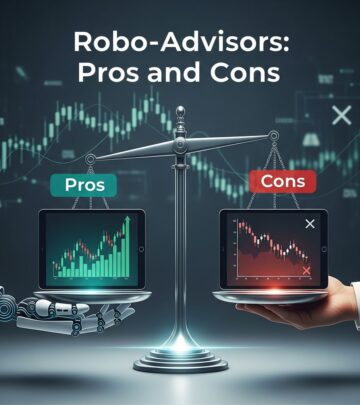
Pros and Cons of Robo-Advisors Overall
Pros
- Low fees (0.15-0.25% vs. 1%+ traditional)
- 24/7 access, automated features like rebalancing
- Accessible minimums for young investors
- Tax optimization boosts net returns
Cons
- Limited personalization beyond algorithms
- No emotional guidance in crises
- Market risk remains; no outperformance guarantees
Who Should Use Robo-Advisors?
Ideal for millennials, hands-off investors with $500-$100K, seeking low-cost indexing. Pair with human advisors for complex needs like estate planning. Beginners love Acorns’ roundups, while pros prefer Schwab Intelligent Portfolios.
Frequently Asked Questions (FAQs)
Q: Are robo-advisors safe?
A: Yes, regulated by SEC/FINRA with SIPC insurance and excess coverage. Funds are segregated at custodians.
Q: Which robo-advisor is best for beginners?
A: Betterment or Acorns for $0 minimums and educational tools.
Q: Do robo-advisors beat human advisors?
A: Often yes for simple portfolios due to lower fees; hybrids like Betterment Premium combine both.
Q: Can I lose money with robo-advisors?
A: Yes, all investing carries risk, but diversification and low fees mitigate long-term losses.
Q: How do I choose the right one?
A: Compare fees, minimums, features via tools like NerdWallet’s ratings.
Final Thoughts: Trustworthy for Most Investors
In 2026, robo-advisors like
Wealthfront
andBetterment
are trustworthy, battle-tested options delivering solid returns at low cost. Start small, monitor performance, and scale up. They’re not for everyone, but for value-conscious investors, they’re a smart bet.References
- Best Robo-Advisors: Top Picks for January 2026 — NerdWallet. 2026-01. https://www.nerdwallet.com/investing/best/robo-advisors
- Robo Advisor vs Financial Planner – Which is Best? — Barbara Friedberg Personal Finance (YouTube). 2023. https://www.youtube.com/watch?v=GwyUVvEB4Ak
- 5 Online Tools to Manage Your Money in Under 10 Minutes a Week — Wise Bread. Accessed 2026. https://www.wisebread.com/5-online-tools-to-manage-your-money-in-under-10-minutes-a-week
- Should You Trust Your Money With These 4 Popular Financial Robo-Advisers? — Wise Bread. Accessed 2026. https://www.wisebread.com/should-you-trust-your-money-with-these-4-popular-financial-robo-advisers
Similar Articles








Read full bio of medha deb