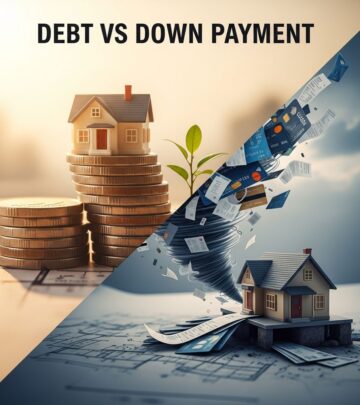
Should You Sell Your Home to Pay Down Debt?
Explore whether selling your home is the right drastic step to eliminate overwhelming credit card debt and regain financial control.

Owning a home while drowning in high-interest credit card debt presents a tough dilemma: sell the property to wipe out the debt or explore other paths? This drastic move can provide immediate relief if you have substantial equity, but it involves significant costs, market risks, and lifestyle changes like renting at potentially higher rates. Experts agree it’s a last resort after exhausting budgeting, income boosts, and professional debt help.
The Debt Crisis: When Credit Cards Overwhelm Homeowners
High-interest credit card debt grows relentlessly, often outpacing income for many households. Average credit card rates exceed 20% APR, compounding monthly and turning manageable balances into crises. Homeowners facing this may eye their property equity as a lifeline, especially post-2008 recovery where values rebounded.
Peter Grabel, managing director at Luxury Mortgage Corp., notes: “If there is no light at the end of the tunnel, or game plan to pay it off, the best solution might be to sell your home and rent.” Rising property taxes and maintenance further burden owners, making renting appealing for debt-laden families.
Do You Have Enough Equity? The Key Calculation
For selling to work, your home must yield net proceeds covering the debt after mortgage payoff and fees. Equity is home value minus outstanding mortgage. Example: A $220,000 home with $150,000 owed yields $70,000 gross equity.
Joe Parsons, senior loan officer at PFS Funding, highlights post-crisis gains: “Many homeowners discover that they have equity where before they had none.” Yet, not all qualify—underwater mortgages or low equity doom the plan.
| Scenario | Home Value | Mortgage Balance | Gross Equity | Est. Net After 6% Fees |
|---|---|---|---|---|
| Strong Equity | $300,000 | $220,000 | $80,000 | $44,000 |
| Marginal | $300,000 | $270,000 | $30,000 | <$15,000 |
| None | $300,000 | $310,000 | Negative | Not Viable |
This table illustrates viability; always get a professional appraisal.
The High Costs of Selling: Fees Eat Into Proceeds
Selling isn’t free—expect 6-10% of sale price in costs. Realtor commissions (5-6%), closing fees, staging, repairs, and taxes erode equity. In Parsons’ example, a $300,000 sale with $270,000 mortgage nets under $15,000 after 6% commission.
- Realtor Commission: 5-6% split between agents.
- Closing Costs: 1-3% including title insurance, escrow.
- Repairs/Staging: $5,000-$20,000 to maximize price.
- Capital Gains Tax: Possible if profits exceed $250K single/$500K married (primary residence exclusion).
These expenses mean only high-equity homes deliver meaningful debt relief.
Renting After Selling: A New Set of Challenges
Post-sale, you’re a renter facing soaring rents, especially in metros. Parsons warns: “In many areas, owning a home is less expensive than renting an equivalent property, even without tax advantages.” Rents rise annually, eroding savings from debt payoff.
Factor total costs: Rent + utilities + transport vs. former mortgage + taxes + maintenance. In hot markets, equivalent rentals may exceed prior ownership costs by 20-50%.
Alternatives to Selling: Stop the Bleeding First
Greg Cook, mortgage consultant at First Time Home Buyers Network, urges: “Stop the bleeding as soon as possible.” Prioritize non-sale options.
- Debt Management Programs: Credit counseling agencies negotiate lower rates (often <10%) and consolidate payments. Reputable non-profits like those accredited by NFCC create affordable plans.
- Budget Overhaul: Track spending, cut non-essentials, build emergency fund. Tools like 50/30/20 rule (50% needs, 30% wants, 20% savings/debt).
- Boost Income: Side gigs, rent a room/garage, downsize vehicles.
- Debt Consolidation: Lower-rate personal loans or balance transfers if credit allows.
- Home Equity Options: HELOC or cash-out refinance at 7-9% rates vs. 20%+ cards—but only if affordable to avoid foreclosure risk.
Cook seen successes with counseling before sales.
Real-Life Success Stories and Lessons
Cook recounts clients who sold, netting $78,000 to erase debt. As military veterans, they used VA loans for no-down-payment repurchase post-recovery. Key: Address spending habits to prevent recurrence.
Others regret sales due to rent hikes outpacing savings. Lesson: Project 3-5 year costs; if renting exceeds projected mortgage, reconsider.
Steps Before Listing Your Home
- Assess Equity: Free Zestimate or agent CMA.
- Build Budget: Include potential rent, utilities, no tax deductions.
- Consult Experts: Non-profit credit counselor for full review.
- Explore Aid: Hardship programs, VA/FHA options if eligible.
- Fix Habits: Commit to no new debt via tracking apps.
Frequently Asked Questions (FAQs)
What if I have low equity?
Selling likely won’t clear debt; pursue counseling or consolidation first. Equity below 20% post-fees rarely justifies sale.
Is renting always cheaper post-sale?
No—rents in many areas surpass ownership costs. Research local markets; metros often favor keeping homes.
Can I buy back later?
Possible with savings discipline, but expect higher prices/rates. Veterans: VA loans aid re-entry.
What about foreclosure risk?
Selling preempts it if payments falter. But stabilize via budgeting first.
Tax implications?
Primary homes exclude up to $250K/$500K gains; consult IRS Publication 523.
Final Thoughts: Last Resort Only
Selling succeeds for high-equity, no-plan households but fails for marginal cases due to fees and rents. Exhaust alternatives; many thrive via counseling without uprooting. Your call hinges on numbers, market, and discipline.
References
- Should You Sell Your Home to Pay Down Debt? — Wise Bread. 2014 (timeless financial advice). https://www.wisebread.com/should-you-sell-your-home-to-pay-down-debt
- What to Do Before Selling a Home to Pay Off Debt — Nomoredebts.org (non-profit credit counseling). 2023-11-01. https://nomoredebts.org/blog/dealing-with-debt/sell-home-to-pay-off-debt
- Consumer Credit Counseling Service of Ventura County Annual Report — NFCC-affiliated (official non-profit stats on debt plans). 2024-09-15. https://www.nfcc.org/resources/
- Home Equity Line of Credit (HELOC) Statistics — Federal Reserve (gov primary). 2025-01-01. https://www.federalreserve.gov/econres/notes/feds-notes/home-equity-lines-of-credit-20250110.htm
- Capital Gains Exclusion for Home Sales — IRS Publication 523 (gov official). 2025-06-01. https://www.irs.gov/publications/p523
Similar Articles








Read full bio of Sneha Tete