Refinance Your Student Loan: 5 Steps To Decide In 2026
Discover if refinancing your student loans is the right move to save money and pay off debt faster amid rising rates.

Refinancing student loans can potentially lower your interest rates and monthly payments, helping you pay off debt faster, but it comes with trade-offs like losing federal borrower benefits. This decision hinges on your financial situation, loan types, and long-term goals, especially as rates fluctuate and federal protections remain valuable.
What Is Student Loan Refinancing?
Student loan refinancing involves taking out a new private loan to pay off your existing federal or private student loans, often at a lower interest rate. Unlike federal consolidation, which keeps loans federal, refinancing replaces them with a private loan from banks, credit unions, or online lenders like SoFi or Earnest.
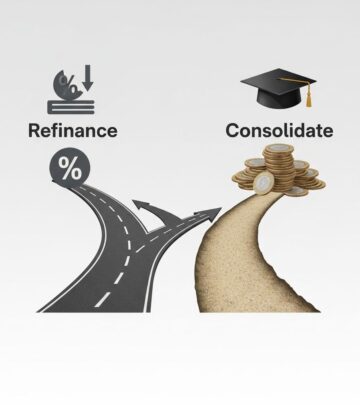
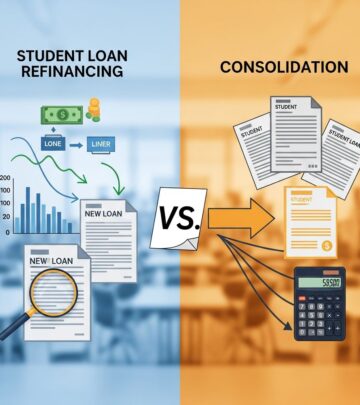
- Key Difference from Consolidation: Consolidation combines federal loans into one but retains federal status and rates; refinancing optimizes rates but shifts to private terms.
- Process Overview: Apply with lenders, undergo credit check, and use new funds to discharge old loans.
According to Experian, refinancing suits borrowers with strong credit seeking rate reductions, but it may extend terms, increasing total interest.
Pros and Cons of Refinancing Student Loans
Weighing benefits against risks is crucial before proceeding.
Pros
- Lower Interest Rates: Qualified borrowers can drop from 5-8% federal rates to 3-6% private fixed rates, saving thousands.
- Reduced Monthly Payments: Shorter or fixed terms ease budgeting; some lenders offer 0.25% autopay discounts.
- Simplified Repayment: One payment replaces multiple, reducing administrative hassle.
- Variable Rate Options: Potential for even lower initial rates, though risky if rates rise.
- Cash-Out Potential: Some refinancers allow extra funds for other debts.
Cons
- Loss of Federal Benefits: Forgo income-driven repayment (IDR), Public Service Loan Forgiveness (PSLF), and deferment/forbearance.
- Credit Requirements: Needs 680+ FICO score; poor credit disqualifies or raises rates.
- No Forgiveness: Private loans ineligible for federal relief programs.
- Fees and Closing Costs: Origination fees (0-5%) can offset savings.
- Prepayment Penalties: Rare but check terms; most allow extra principal payments penalty-free.
| Feature | Federal Loans | Private Refinance |
|---|---|---|
| Interest Rates | Fixed 5-8% | Fixed 3-6% or Variable |
| Forgiveness Options | PSLF, IDR | None |
| Repayment Plans | 10+ Flexible | Fixed Term |
| Protections | Deferment | Lender-Specific |
Who Should Refinance Their Student Loans?
Not everyone benefits; ideal candidates have high credit, stable income, and non-federal reliance.
- Strong Candidates:
- High earners (>$50K) with 690+ credit scores.
- Private loan holders or fully repaid federal subsidized portions.
- Those not pursuing PSLF or IDR.
- Avoid If:
- Low income qualifying for IDR (15% of discretionary income).
- Pursuing public service careers for forgiveness.
- Uncertain job stability needing forbearance.
The U.S. Department of Education notes federal loans offer protections refinancing eliminates, per borrower counseling resources.
Who Should Not Refinance?
Borrowers dependent on federal perks risk financial setbacks.
- Recent Grads: Build credit first; wait for income growth.
- IDR Users: Payments could rise post-refinance.
- PSLF Track: 10-year forgiveness vanishes.
- Poor Credit: Higher rates negate benefits.
Current Refinance Rates and Trends
As of 2026, average fixed rates hover at 4.5-6% for qualified borrowers, down from pandemic highs but above 2021 lows. Federal rates for new loans are 5.5-7.05%; refinancing shines for those above 6%. Monitor via Federal Reserve data for economic shifts.
Steps to Refinance Your Student Loans
- Check Eligibility: Review credit score (free at AnnualCreditReport.com), debt-to-income (<40%), and loan details via NSLDS.gov.
- Compare Lenders: Use sites like Credible or NerdWallet for quotes without hard pulls.
- Gather Documents: Pay stubs, tax returns, loan statements.
- Apply: Soft credit check first; select best offer.
- Close and Payoff: New lender disburses; old loans close automatically.
Alternatives to Refinancing
If refinancing isn’t ideal, consider these Federal Student Aid-approved strategies.
- Income-Driven Repayment (IDR): Caps at 10-20% discretionary income; forgiveness after 20-25 years.
- Biweekly Payments: Equals extra annual payment, saving interest.
- Employer Assistance: Up to $5,250 tax-free annually.
- Federal Consolidation: Simplifies without rate change or benefit loss.
- Autopay Discounts: 0.25% rate reduction.
Common Mistakes to Avoid
- Refinancing federal loans prematurely, losing PSLF.
- Ignoring variable rate risks amid Fed hikes.
- Not shopping multiple lenders for best rates.
- Overlooking fees eating into savings.
- Forgetting to specify extra payments to principal.
Refinancing Calculator: How Much Can You Save?
Use tools from the U.S. Department of Education or FinAid.org to model scenarios. Example: $50K at 7% over 10 years = $699/month, $33,880 total interest. Refinance to 4.5% = $580/month, $19,600 interest—saving $14K.
Frequently Asked Questions (FAQs)
Q: Can I refinance federal student loans?
Yes, but you’ll lose federal benefits like IDR and forgiveness.
Q: What credit score do I need?
Typically 680+, ideally 720+ for best rates.
Q: Is refinancing worth it for small loans?
Usually not; fees outweigh savings under $10K.
Q: Can I refinance multiple times?
Yes, if rates drop or credit improves.
Q: What if rates rise after variable refinance?
Refinance again to fixed; monitor caps (often 8-18%).
This comprehensive guide mirrors key topics from Wise Bread’s analysis, updated with current strategies. Always verify with official sources before acting.
References
- Strategies to Pay Off Student Loan Debt Faster — Experian. 2023-10-15. https://www.experian.com/blogs/news/about/pay-off-student-loans-faster/
- 15 Ways to Pay Back Student Loans Faster — Wise Bread. 2015-07-22. https://www.wisebread.com/15-ways-to-pay-back-student-loans-faster
- A New Grad’s Guide to Direct Consolidation Loans — Student Loan Planner. 2024-01-10. https://www.studentloanplanner.com/direct-consolidation-loan-guide/
- Federal Student Aid Repayment Plans — U.S. Department of Education. 2025-12-01. https://studentaid.gov/manage-loans/repayment/plans
- Income-Driven Repayment Plans — Federal Student Aid. 2025-11-15. https://studentaid.gov/manage-loans/repayment/plans/income-driven
Similar Articles








Read full bio of medha deb