Should You Pay Your Bills With a Credit Card?
Discover the pros and cons of paying bills with credit cards: rewards vs. debt traps. Learn smart strategies to maximize benefits safely.

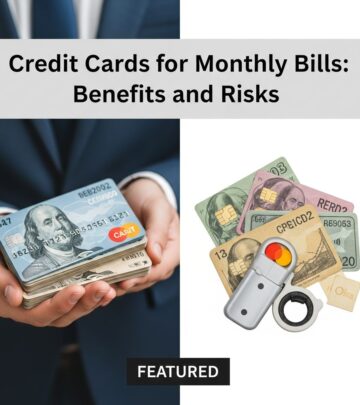
Paying everyday bills with a credit card can seem convenient, offering rewards and purchase protection, but it comes with significant risks like high interest and fees that can lead to debt spirals. This article examines the advantages, pitfalls, and strategies to decide if it’s right for you.
The Appeal of Paying Bills With Credit Cards
Credit cards provide
rewards
on routine expenses that many overlook. Bills such as utilities, insurance, rent, and subscriptions often qualify for cash back or points, turning fixed costs into earning opportunities. For instance, cards offering 1-5% cash back on these categories can yield substantial returns annually for households with high bill payments.- Cash Back and Points: Premium cards reward bill payments, potentially adding hundreds in value yearly.
- Purchase Protection: Coverage against disputes or non-delivery for services paid via card.
- Convenience: Automate payments without writing checks or logging into multiple portals.
- Build Credit: On-time payments boost your score if utilization stays low.
According to behavioral finance studies, the psychological decoupling of payment from spending encourages higher focus on benefits over costs, making credit feel less painful than cash.
Hidden Dangers and Costs
Despite perks,
convenience fees
from billers (2-3% per transaction) often erase rewards. Average U.S. household bills total $2,000+ monthly; a 2.5% fee equals $600 yearly—outpacing most cash back rates. Interest accrues if balances aren’t paid in full, with APRs averaging 20-30%.| Risk Factor | Potential Cost | Example Impact |
|---|---|---|
| Convenience Fees | 1.5-3% | $500/year on $20K bills |
| Interest (20% APR) | High if carried | $2,400/year on $10K balance |
| Overspending Bias | Psychological | 12-18% more spent vs. cash |
| Debt Cycle | Compounding | Months to years trapped |
Research shows consumers spend more with plastic due to ‘payment decoupling,’ ignoring costs while overvaluing benefits. Poor strategies like cash advances exacerbate debt.
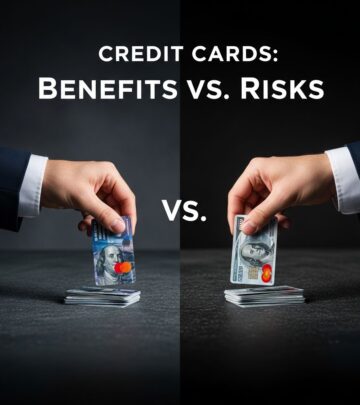
Pros vs. Cons: A Balanced Comparison
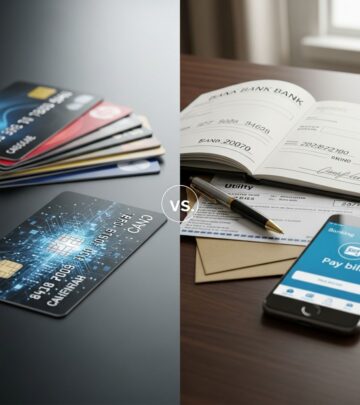
| Pros | Cons |
|---|---|
| Earn rewards on unavoidable spend | Fees often exceed rewards |
| Fraud protection and disputes | High interest if not paid off |
| Payment flexibility | Temptation to overspend |
| Credit score boost | Potential credit limit hits |
When It Makes Sense to Use a Credit Card for Bills
Only pursue if rewards net positive after fees, you pay in full monthly, and utilization <30%. Ideal for:
- High-rewards categories (e.g., 3% on utilities).
- No-fee billers (government taxes, some subscriptions).
- Services with third-party processors like Plastiq (fees apply, but rewards offset).
- Rent payments via apps offering 1%+ cash back without surcharges.
Financial wellbeing experts emphasize budgeting and living within means to avoid pitfalls.
Best Practices for Safe Bill Payments
- Calculate Net Rewards: Subtract fees from cash back. Ensure >0% return.
- Pay in Full: Auto-pay statement balance, never minimum.
- Track Spending: Use apps or ledgers to monitor totals.
- Choose Optimal Cards: Rotate for highest category rewards.
- Set Limits: Cap bill allocation to 20-30% of credit limit.
- Avoid Debt Traps: Shun advances or minimum payments.
Alternatives to Credit Cards for Bill Payments
Debit cards, ACH transfers, or cash avoid debt risks while maintaining control.
- Debit Rewards Cards: 1-2% back without interest risk.
- Bill Pay Services: Free from banks.
- Cash Budgeting: Envelopes or apps enforce discipline.
- Prepaid Cards: Load exact bill amounts.
Habits like tracking every expense reveal wasteful patterns, promoting savings.
Real-Life Examples and Case Studies
Success Story: Sarah pays $1,500 monthly bills fee-free with a 2% rewards card, netting $360/year. She auto-pays full balance.
Cautionary Tale: Mike incurs 2.75% fees on $2,000 bills ($660/year), carries $5K balance at 24% APR, paying $1,500+ interest annually.
Frequently Asked Questions (FAQs)
Can I pay rent with a credit card?
Yes, via platforms like RadPad or PayYourRent, but watch 2-3% fees. Rewards must exceed costs.
Does paying bills build credit?
Yes, on-time payments improve scores, especially with low utilization. Avoid maxing out.
What if the biller charges a fee?
Decline unless rewards > fee. Negotiate or switch providers.
Is it safe for recurring bills?
Secure if reputable biller; monitor statements for errors.
How to avoid interest?
Pay full balance by due date every month.
Final Thoughts on Smart Bill Paying
Paying bills with credit cards suits disciplined users who net rewards without fees or debt. For most, safer alternatives preserve financial wellbeing. Track habits, budget rigorously, and prioritize paying yourself first.
References
- Why We Spend More When We Pay With Credit Cards — Wise Bread. 2010-approx. https://www.wisebread.com/why-we-spend-more-when-we-pay-with-credit-cards
- 10 Worst Ways to Pay Off Your Credit Card Debt — Wise Bread. N/A. https://www.wisebread.com/10-worst-ways-to-pay-off-your-credit-card-debt
- What is Financial Wellbeing — Boston University. 2023-approx. https://www.bu.edu/studentwellbeing/what-is-wellbeing/financial-wellbeing/
- 7 Ways to Turn Saving Money into a Habit — 1st Ed Credit Union (citing Wise Bread). 2023-approx. https://www.1edcu.org/7-ways-to-turn-saving-money-into-a-habit/
- Managing Money — Susquehanna Valley Federal Credit Union. 2024-approx. https://www.svfcu.org/accounts/managing-money/
Similar Articles








Read full bio of Sneha Tete