Pay Credit Card Early: 5 Smart Practices To Boost Credit
Discover if paying your credit card balance ahead of schedule boosts your credit score, cuts interest costs, and simplifies budgeting while weighing potential liquidity trade-offs.
Making credit card payments before the due date offers multiple financial advantages, primarily by minimizing interest accrual and enhancing credit health. This practice aligns with core principles of responsible card usage, as supported by major issuers and scoring models.
Understanding Credit Card Billing Timelines
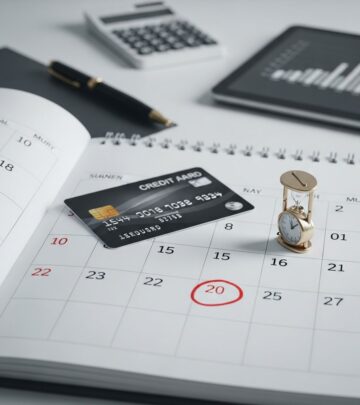
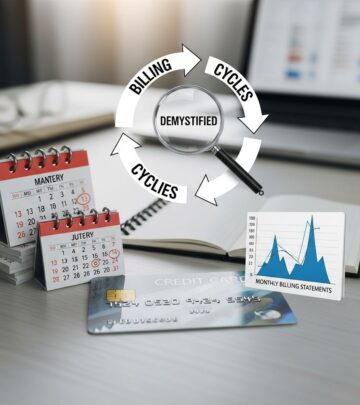
Credit card billing operates on a structured cycle that influences when and how payments affect your finances. Each account has a billing cycle, typically 28-31 days, ending on a statement closing date. The payment due date follows about 21-25 days later, creating a grace period for new purchases.
- Billing Cycle Start: Begins after the previous statement closes, tracking all transactions.
- Statement Closing Date: Marks the end of the cycle; issuers generate your statement reflecting the balance.
- Grace Period: Time between closing and due date, during which full payment avoids interest on purchases.
- Due Date: Deadline for minimum payment to avoid penalties.
Payments made before the closing date reduce the reported balance, directly impacting metrics like utilization. Those after closing but before due still prevent fees but may not alter the statement balance as favorably.
Key Financial Benefits of Early Payments
Submitting payments ahead of schedule yields tangible gains across interest, credit metrics, and risk avoidance. Issuers like American Express emphasize that early full payments keep utilization low, aiding FICO scores where payment history (35%) and amounts owed (30%) dominate.
Minimizing Interest Accumulation
Interest calculates on average daily balance. Early payments shorten the period a balance accrues charges, especially if carrying over from prior cycles. For purchases, full payment within grace eliminates interest entirely, excluding cash advances or transfers.
| Payment Timing | Average Daily Balance Impact | Potential Interest Savings |
|---|---|---|
| Due Date Only | Full cycle exposure | Baseline (higher) |
| Mid-Cycle | Reduced by half or more | Moderate savings |
| Multiple Small Payments | Near-zero sustained | Maximum savings |
At typical APRs of 15-25%, even modest balances benefit; a $2,000 carryover at 20% APR saves ~$11 monthly per early $1,000 payment.
Optimizing Credit Utilization Ratios
Utilization—balance divided by limit—should stay under 30% for optimal scores. Early payments drop this ratio before reporting to bureaus (often closing date). Low utilization signals responsible use, boosting scores per FICO models.
- High utilization (>30%): Hurts scores, limits approvals.
- Early payoff: Can hit 0%, ideal for score maximization.
- Minimum payments: Sustain higher ratios, risking dings.
Avoiding Penalties and Building Habits
Early action eliminates late fees ($30-40 typical) and negative reports lingering 7 years. Autopay or reminders ensure consistency, with on-time history forming 35% of scores. Citi notes minimized missed payment risks further solidify profiles.
Potential Drawbacks and Strategic Considerations
While benefits dominate, early payments tie up cash, reducing liquidity for emergencies. Bankrate advises balancing against cash flow; if short on essentials, prioritize minimums first.
- Cash Flow Strain: Drains checking, potentially incurring overdrafts.
- 0% APR Periods: Retain funds in high-yield savings (4-5%) over prepaying promo balances.
- Reporting Quirks: Rare cases where zero balance might slightly shorten history length, but negligible vs. gains.
For most, advantages outweigh; Arro highlights peace of mind from proactive management.
Best Practices for Implementing Early Payments
Integrate this habit seamlessly without disrupting budgets.
- Review Statements Weekly: Track via apps for closing/due dates.
- Set Multiple Payments: Align with paychecks; e.g., 50% mid-cycle, rest before due.
- Use Autopay Smartly: Full balance option prevents minimum traps.
- Monitor Utilization: Free tools from issuers show real-time ratios.
- Budget Accordingly: Factor card spends into monthly cash flow projections.
Discover affirms multiple payments enhance budgeting, curbing overspending.
Common Myths About Early Credit Card Payoffs
Misconceptions deter adoption; clarify with facts.
| Myth | Reality | Source Insight |
|---|---|---|
| Paying early hurts scores | Improves via utilization/history | FICO: No penalty for full payoff |
| Only minimum matters | Extra reduces interest/ratio | American Express: Beyond minimum boosts scores |
| Can’t pay too early | Anytime before due applies | Citi: Grace/mid-cycle both early |
Real-World Scenarios and Outcomes
Consider a $10,000 limit user averaging $3,000 monthly spend.
- Minimum Only: 30% utilization, ~$50 interest if partial payoff.
- Early Full: 0% utilization, $0 interest, score +20-50 points potential.
- Cash-Strapped: Minimum + extra when possible balances liquidity.
Numerica Credit Union outlines six reasons mirroring these: score lifts, cost cuts, control gains.
Frequently Asked Questions
Does paying early always improve my credit score?
Generally yes, via lower utilization and flawless history. FICO confirms no negatives from full monthly payoffs.
Can I make multiple payments per cycle?
Absolutely; reduces daily balances, aiding interest and utilization.
What if I’m in a 0% intro period?
Hold funds if earning more interest than promo cost.
Will issuers penalize early payoffs?
No; encouraged for reducing default risk.
How soon before due is ‘early’?
Before closing date maximizes impact; anytime before due avoids fees.
Long-Term Financial Wellness Integration
Early payments form a pillar of debt-free living. Pair with spending tracking, emergency funds (3-6 months expenses), and annual credit reviews. Over time, this elevates profiles for better rates on loans/mortgages. Consistent habits compound: a 50-point score gain unlocks premium cards with rewards/cashback amplifying savings.
For revolving debt, prioritize high-APR cards first. Tools like balance transfer offers extend grace-like periods. Ultimately, treating cards as debit equivalents—pay full early—fosters discipline without lifestyle cuts.
References
- Should I Pay My Credit Card Early? — American Express. 2023-10-15. https://www.americanexpress.com/en-us/credit-cards/credit-intel/should-i-pay-my-credit-card-early/
- Is It Bad To Pay Your Credit Card Early? — Arro Finance. 2024-05-20. https://www.arrofinance.com/blog/is-it-bad-to-pay-your-credit-card-early
- Is It Good to Pay Your Credit Card Early? — Citi. 2024-02-12. https://www.citi.com/credit-cards/understanding-credit-cards/is-it-good-to-pay-credit-card-early
- Should You Pay Your Credit Card Bill Early? — Bankrate. 2024-08-07. https://www.bankrate.com/credit-cards/advice/will-paying-my-credit-card-bill-early-help-my-credit-score/
- What’s in my FICO Scores? — myFICO (official FICO partner). 2023-01-01. https://www.myfico.com/credit-education/whats-in-your-credit-score
Similar Articles








Read full bio of medha deb