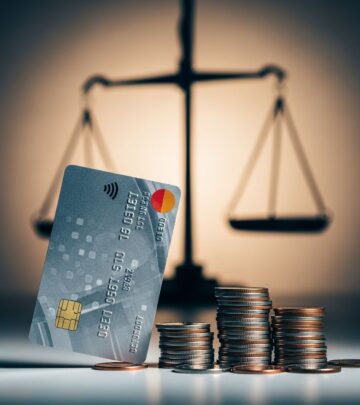
Pay Credit Card In Full: 3 Core Benefits To Save On Interest
Discover why clearing your credit card balance monthly beats carrying debt, plus smart strategies to make it happen without stress.

Clearing your credit card balance completely each month stands as the optimal financial practice for most users, offering substantial savings on interest while enhancing credit health. This approach prevents accruing high-interest charges and maintains low credit utilization, a critical factor in credit scoring models.
Core Advantages of Monthly Full Payments
Opting to settle your credit card statement balance by the due date delivers immediate and lasting benefits. Primarily, it eliminates interest accrual, which often exceeds 20% APR on revolving balances. For instance, a $5,000 balance at 22% APR, paid only at minimums of about $142 monthly, could extend repayment to nearly five years, adding over $3,121 in interest. Boosting payments to $242 shortens this to 27 months, slashing interest to $1,342—a 57% reduction.
Another key gain involves credit utilization, representing 30% of FICO scores. Experts recommend keeping this below 10% for peak scores, though under 30% suffices for most. Full payments ensure utilization stays minimal, signaling responsible credit management to lenders.
- Interest avoidance: No finance charges on purchases if paid fully within the grace period.
- Credit score elevation: Low utilization and perfect payment history (35% of scores) drive improvements.
- Fee prevention: Sidesteps late fees and penalty APR hikes from missed minimums.
Payment history further solidifies with consistent on-time full settlements. A single late payment can drop a fair score (607) by 37 points or a strong one (793) by 83. Automating full-balance payments safeguards against oversight, provided sufficient funds exist.
Drawbacks of Carrying a Balance
Maintaining a month-to-month balance triggers compounding interest, inflating debt rapidly. Minimum payments primarily cover interest, barely denting principal—prolonging payoff timelines and costs. High utilization from unpaid balances also hampers scores, potentially blocking favorable loan terms.
Psychological burdens compound issues: visible debt growth discourages budgeting discipline. Moreover, carrying balances forfeits rewards maximization, as cards suit convenience purchases best when zeroed out monthly.
| Scenario | Monthly Payment | Time to Payoff | Total Interest |
|---|---|---|---|
| $5,000 at 22% APR | Minimum ($142) | 58 months | $3,121 |
| $5,000 at 22% APR | $242 (min + $100) | 27 months | $1,342 |
This table illustrates minimum versus accelerated payments, highlighting accelerated urgency.
Ideal Circumstances for Full Payoff
Full repayment shines when budgets permit, especially for regular users chasing rewards without debt drag. It suits those with steady income covering essentials plus discretionary spending. Even under strain, prioritizing maximum affordable payments over minimums accelerates freedom.
Multiple intra-month payments further optimize: they lower reported utilization (based on statement balances) and curb interest. Paying post-statement but pre-due date maximizes grace periods.
Strategies When Full Payment Isn’t Feasible
If debt overwhelms, structured repayment trumps minimum-only treading. Two proven methods dominate: debt snowball and avalanche.
Debt Snowball: Momentum Through Quick Wins
The snowball targets smallest balances first for psychological boosts. Maintain minimums on all cards, directing extras to the tiniest debt. Upon clearance, roll that payment to the next smallest, building momentum.
Strengths: Rapid victories foster motivation, ideal for discipline-challenged individuals.
Weaknesses: Ignores interest rates; high-APR large debts accrue more if prioritized last.
Debt Avalanche: Interest Minimization Priority
Avalanche attacks highest-APR debts post-minimums on others. This mathematically curbs total interest. Post-payoff, advance to next-highest APR.
Strengths: Maximizes savings, suiting cost-conscious planners.
Weaknesses: Slow progress on large high-rate debts may demotivate.
| Method | Focus | Pro | Con |
|---|---|---|---|
| Snowball | Smallest balance | Quick wins boost morale | Potentially higher interest |
| Avalanche | Highest APR | Saves on interest | Slower visible progress |
Debt Consolidation Options Explained
Consolidation merges debts into one payment, simplifying management.
Balance Transfer Cards
These offer 0% intro APR (up to 24 months), shifting balances fee-laden (3-5%). Pay aggressively during promo to erase interest-free.
- Pros: Zero interest window; single payment focus.
- Cons: Fees, promo limits, utilization risks, post-promo high APR if unpaid. Late payments revoke deals.
Personal Loans for Consolidation
Unsecured loans blend debts at fixed lower rates (often under card APRs for good credit). Installment structure sets firm payoff dates.
- Pros: Predictable payments, rate relief, streamlined billing.
- Cons: Qualification needs solid credit/income; origination fees possible.
Choose based on debt size: transfers suit smaller sums; loans handle larger. Avoid serial transfers without principal reduction—mere deferral.
Practical Tips to Achieve Full Payments
Build habits for sustainability:
- Set autopay for full statement balances, monitoring cash flow.
- Track spending via apps to curb impulse buys.
- Build emergency funds (3-6 months expenses) against reliance on cards.
- Limit new cards; multiple inquiries ding scores.
- Prioritize high-interest debts first if mixing strategies.
Under stress, contact issuers for hardship plans before defaults—preserving scores.
Frequently Asked Questions
Does zero balance harm credit scores?
Not typically; scoring models prefer low utilization over zero, but consistent use with full payoff signals reliability. Aim for 1-10% utilization.
Can I pay off multiple times monthly?
Yes—reduces utilization and interest, reported on statement day.
Is consolidation always cheaper?
Potentially, via lower rates, but fees and eligibility matter. Calculate total cost.
What if I miss full payment occasionally?
Pay minimums to avoid penalties, then extra next cycle. One slip rarely tanks scores if isolated.
Snowball or avalanche—which wins?
Avalanche saves most mathematically; snowball motivates behaviorally. Hybrid possible.
Long-Term Financial Wellness
Mastering full payments evolves into broader habits: budgeting, saving prioritization over high-interest debt. Post-debt, redirect payments to high-yield savings or investments. Regularly review scores via free annual reports, adjusting as needed.
Ultimately, full payoff liberates cash flow, unlocks better rates, and fosters confidence. Start small—extra $100 monthly transforms trajectories.
References
- How to pay off credit card debt — 3 strategies — Credit Karma. 2023. https://www.creditkarma.com/credit-cards/i/how-to-pay-off-credit-card-debt-fast
- Should I Pay Off My Credit Card in Full or Over Time? — Experian. 2024-01-15. https://www.experian.com/blogs/ask-experian/should-i-pay-off-my-credit-card-debt-immediately-or-over-time/
- Weighing the Pros and Cons of 5 Top Strategies to Pay Off Debt — No More Debts. 2023-05-10. https://nomoredebts.org/blog/dealing-with-debt/weighing-the-pros-and-cons-of-5-top-strategies-to-pay-off-debt
- Should I Pay Off My Credit Card in Full? — Equifax. 2024. https://www.equifax.com/personal/education/credit-cards/articles/-/learn/should-i-pay-off-my-credit-card-in-full-each-month/
- How to Pay Off Credit Card Debt: Fast & Long-Term Strategies — UMCU. 2023-11-20. https://www.umcu.org/learn/resources/blogs/how-to-pay-off-credit-card-debt
Similar Articles








Read full bio of Sneha Tete