Should You Ever Consider a Balloon Mortgage?
Balloon mortgages promise low payments but come with big risks. Discover when they might work and why they're often a bad idea for most homebuyers.

Balloon mortgages attract buyers with significantly lower monthly payments during an initial term, typically 5 to 10 years, but they culminate in a substantial lump-sum payment known as the balloon payment. This structure appeals to those anticipating financial improvement or planning to sell or refinance, yet it carries high risks including potential foreclosure if circumstances change. While rare in residential lending post-2008 regulations, they persist as non-qualified mortgages (non-QM loans) for specific scenarios like investment properties.
What Is a Balloon Mortgage?
A
balloon mortgage
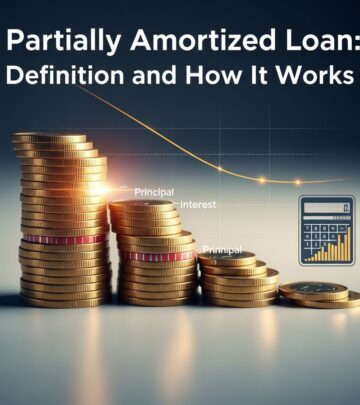
is a short-term home loan featuring low or interest-only payments for a set period, followed by a large final payment covering the remaining principal and interest. Unlike fully amortizing traditional mortgages, these loans use nonstandard amortization, leaving a large balance due at maturity—often described as an “X due in Y” structure, where X is the amortization period (e.g., 30 years) and Y is the shorter term (e.g., 5-10 years).Common variants include:
- Principal and interest payments: Monthly payments calculated on a longer amortization schedule (e.g., 30 years), reducing principal slowly.
- Interest-only payments: Payments cover only interest, leaving the principal intact until the balloon due date.
- No payments: Rare, with full principal and interest due at term end.
These loans typically carry higher interest rates and stricter qualification due to their non-QM status, which excludes them from consumer protections under the Ability-to-Repay rule.
How Does a Balloon Mortgage Work?
During the initial term (5-10 years), borrowers enjoy payments 20-50% lower than a standard 30-year fixed mortgage because they don’t fully amortize the loan. At term end, options include paying the balloon in cash, refinancing into a new loan, or selling the home.
For instance, a “30 due in 10” balloon amortizes payments over 30 years but requires full repayment in 10, resulting in a balloon often exceeding $200,000 on a typical home loan. Lenders like some credit unions offer renewing balloons that adjust rates without lump-sum payoff, amortizing progressively shorter periods (e.g., 30 years initially, then 24.5).
Pros and Cons of Balloon Mortgages
Balloon mortgages offer unique advantages but significant drawbacks. Here’s a comparison:
| Pros | Cons |
|---|---|
| Lower initial payments: Affordable entry for high-cost homes or short-term ownership. | High risk of default: Balloon can lead to foreclosure if refinance/sale fails. |
| Flexibility for investors: Ideal for properties planned for quick flip or rental income growth. | Higher rates/fees: Non-QM status means elevated costs and tougher approval. |
| Cash flow benefits: Invest savings from low payments elsewhere. | Slow equity build: Principal reduction minimal until balloon. |
| Short-term appeal: Suits those expecting income rise or market appreciation. | Market dependency: Rising rates or home values can trap borrowers. |
Post-2008, these loans are harder to find from major lenders, emphasizing their niche role.
Balloon Mortgage Examples
Consider a $280,000 loan at 6.80% interest:
| Type | Term | Monthly Payment (Years 1-X) | Balloon Payment |
|---|---|---|---|
| 30-year amort., principal + interest | 10 years | $1,825 | $240,958 |
| Interest-only | 5 years | $1,587 | $280,000 |
In the first example, payments mimic a 30-year loan, chipping at principal modestly. Interest-only keeps the balance static, maximizing short-term affordability but amplifying the final hit.
Who Might Benefit from a Balloon Mortgage?
Not for everyone, balloon mortgages suit specific profiles:
- Short-term owners: Planning to sell within 5-7 years, leveraging appreciation.
- High-income expectants: Anticipating salary boosts to handle refinance.
- Investors: Financing rentals or flips where cash flow covers low payments.
- Cash-reserved borrowers: With funds set aside for the balloon, investing elsewhere meanwhile.
- Unique credit situations: Non-QM flexibility for self-employed or irregular income.
The National Association of Realtors notes lower initial rates can boost affordability temporarily.
Risks and How to Handle the Balloon Payment
The primary danger is the balloon: tens to hundreds of thousands due suddenly. Strategies include:
- Refinance: Into a fully amortizing loan, but rising rates (as in 2022-2023) hinder this.
- Sell the home: Market downturns or illiquidity can force losses.
- Pay cash: Ideal if savings invested yield returns beating mortgage rates.
- Extra payments: Reduce principal early, absent prepayment penalties.
Default risks foreclosure, damaging credit long-term. Regulations require clear disclosure of balloon amounts.
Alternatives to Balloon Mortgages
Safer options for low payments:
- Adjustable-Rate Mortgages (ARMs): Low teaser rates adjusting later, with caps.
- FHA/VA loans: Lower down payments, no balloons.
- 15/30-year fixed: Predictable payments, steady equity.
- Home equity options: HELOCs for investors avoiding primary balloons.
Bankrate recommends ARMs or refis over balloons for most.
Frequently Asked Questions (FAQs)
Are balloon mortgages legal?
Yes, but as non-QM loans, they lack QM protections and must disclose balloon risks under Truth-in-Lending.
Can I get a balloon mortgage today?
Limited to specialty lenders; mainstream banks avoid post-crisis.
What’s the typical balloon term?
5, 7, or 10 years, amortized over 15-30 years.
Do balloon mortgages have prepayment penalties?
Some do; check terms to pay extra safely.
Are they good for first-time buyers?
Rarely; high risk outweighs low payments for novices.
Final Thoughts: Proceed with Extreme Caution
Balloon mortgages can work for sophisticated borrowers with exit plans, but for most, predictable fixed-rate loans prevail. Assess your finances, market trends, and risk tolerance thoroughly before considering. Consult a financial advisor to model scenarios.
References
- Balloon Mortgage: What It Is and How It Works — LendingTree. 2024-10-15. https://www.lendingtree.com/home/mortgage/what-is-a-balloon-mortgage-loan/
- What Is A Balloon Mortgage And Why Is it Risky? — Bankrate. 2024-11-05. https://www.bankrate.com/mortgages/what-is-a-balloon-mortgage/
- The Impact of Balloon Mortgages on Home Affordability — National Association of Realtors. 2023-08-20. https://www.nar.realtor/financing-credit/balloon-mortgage
- Balloon payment mortgage — Wikipedia (citing primary sources). 2025-01-10. https://en.wikipedia.org/wiki/Balloon_payment_mortgage
- What’s a Balloon Mortgage? — Honor Credit Union. 2024-09-12. https://www.honorcu.com/blog/whats-a-balloon-mortgage/
- Balloon Payments Explained — FHA.com. 2024-03-01. https://www.fha.com/define/balloon-payment
Similar Articles








Read full bio of Sneha Tete