Should We Get Rid of the Penny? 8 Reasons
Explore the compelling arguments for and against eliminating the U.S. penny from circulation.
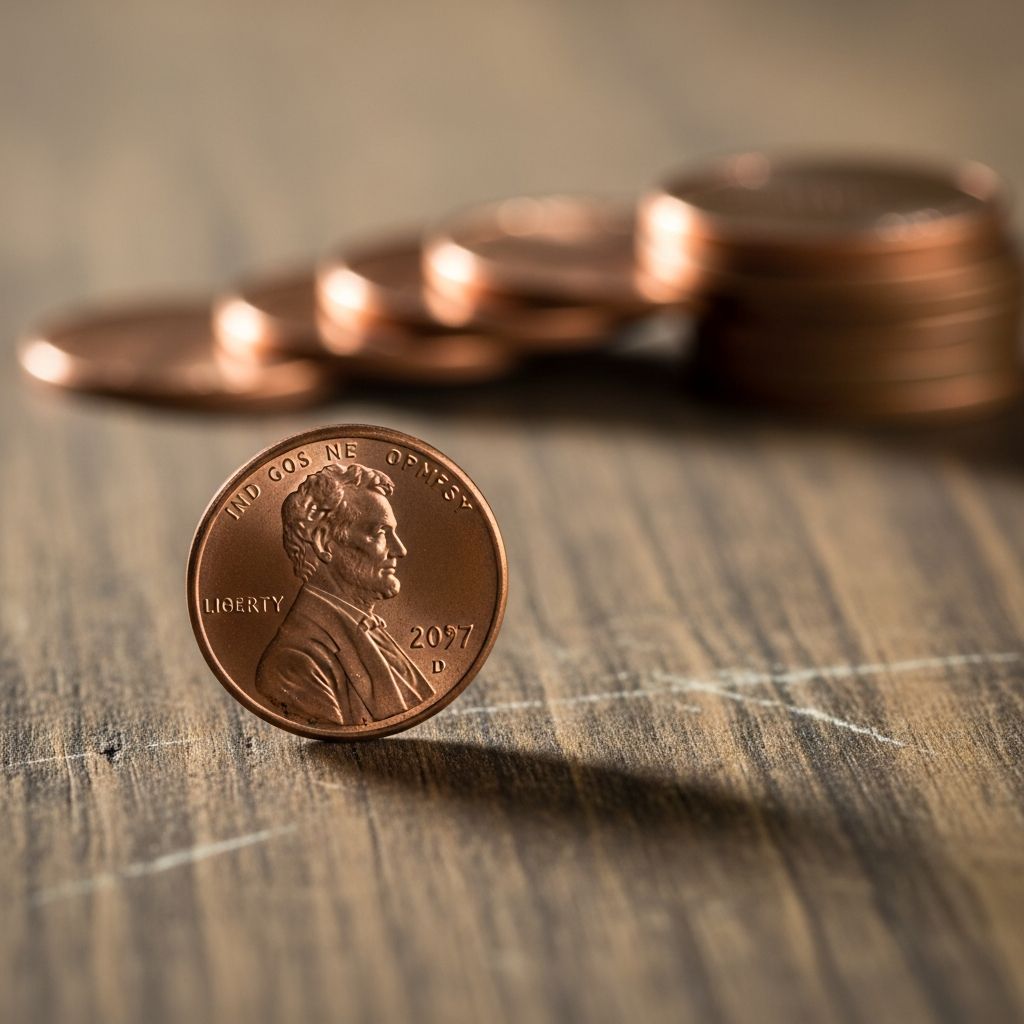
Should We Get Rid of the Penny? Understanding the 8 Reasons to Keep It vs Eliminate It
The one-cent coin, commonly known as the penny, has been a fixture of American currency since 1793. However, in recent decades, a heated debate has emerged about whether this small denomination coin should be retired from circulation. While some argue that pennies are outdated and economically wasteful, others contend that eliminating them could harm consumers and charities. Understanding both sides of this controversy requires examining the specific arguments that economists, policymakers, and ordinary citizens have raised about the penny’s place in the modern economy.
Recent Efforts to Kill (Or Keep) the Penny
The push to eliminate the penny has gained significant momentum over the past two decades. Former Representative Jim Kolbe of Arizona sponsored two bills in Congress specifically designed to eliminate the penny from circulation. Perhaps most notably, in February 2014, President Barack Obama argued during a YouTube chat that pennies were obsolete and represented wasteful government spending. These high-profile endorsements gave the anti-penny movement considerable credibility and public attention.
However, this momentum has not gone unopposed. While many people and organizations are calling for the penny’s retirement, others are working equally hard to preserve it. The most significant pro-penny force is Americans for Common Cents, which represents Jarden Zinc, the company that manufactures the zinc and copper blanks from which pennies are produced. This organization has actively lobbied Congress and shaped public opinion to maintain penny production. More recently, in April 2025, Representatives Lisa McClain and Robert Garcia introduced the Common Cents Act to formalize an end to penny production, though this legislative effort follows a pattern of unsuccessful attempts to eliminate the coin.
In a major development, on May 22, 2025, the U.S. Treasury announced that it had placed the last order for blank pennies, marking the first official step toward phasing out penny minting. Penny production for general circulation was halted on November 12, 2025, though pennies will continue to be produced for collectors and historical purposes.
Reasons to Retire the Penny
1. They’re Useless
One of the most compelling arguments for eliminating the penny is its practical uselessness in modern commerce. There is very little that consumers can actually purchase with a single penny in today’s economy. In fact, vending machines do not accept pennies, parking meters refuse them, and automatic toll booths will not take them (except in Illinois). The limited purchasing power of a single penny means it cannot function effectively as a medium of exchange in real-world transactions.
The problem compounds when consumers accumulate multiple pennies. If you attempt to pay for something in a store with a handful of pennies, you can expect disapproving looks from both the cashier and other customers—if the store does not simply refuse to accept them altogether. This social resistance to pennies reflects their fundamental impracticality.
Economist Greg Mankiw of Harvard University articulated this problem precisely: “When people start leaving a monetary unit at the cash register for the next customer, the unit is too small to be useful.” This observation captures the reality that many consumers now abandon pennies rather than spend them, leaving them at registers or throwing them away entirely. People store pennies in jars at home, knowing they lack sufficient value to warrant the effort of spending them.
2. They Waste Time
Beyond their economic uselessness, pennies waste considerable time in everyday transactions. Although pennies are frustratingly impractical to spend, most consumers cannot entirely avoid them. When paying with cash at a store, the total amount rarely ends in a multiple of five cents. To pay the exact amount, customers must either hand over pennies or receive them in change. This not only weighs down people’s pockets with valueless metal but also holds up lines while people count out coins.
Research has quantified this time waste. One study demonstrated that handling pennies adds an average of two seconds to each cash transaction. When multiplied by the average number of transactions American consumers make annually, this accumulates to approximately 48 million hours wasted counting pennies every year—a staggering amount of collective human time spent managing essentially worthless coins.
The circulation problem exacerbates this issue. In 1996, the Government Accountability Office reported that roughly two-thirds of pennies never circulate in the economy at all. More recent analysis by economist Robert Shapiro estimated that each penny gets used only around twice per year, or approximately 55 times over its entire lifespan. This low circulation rate means most pennies sit dormant in jars, drawers, and cushions rather than actively serving any economic function.
3. They’re Bad for the Environment
Manufacturing pennies consumes natural resources and generates environmental waste that many critics argue is unjustifiable given the coins’ minimal utility. The production process requires extracting zinc and copper, processing these materials, and minting millions of coins annually. This industrial activity generates carbon emissions and resource depletion that could be avoided by discontinuing penny production.
Additionally, the metal used in pennies eventually ends up discarded or abandoned, contributing to environmental degradation. When pennies are thrown away because they lack sufficient value to warrant keeping, they represent pure waste of mined resources and manufacturing effort.
4. They Cost the Government Money
A particularly powerful argument against the penny involves government finances. The U.S. Mint has reported that it costs more money to produce a penny than the coin is actually worth. This means that every penny minted represents a direct financial loss to American taxpayers. For several years, it has cost the Mint approximately 1.7 to 2.5 cents to produce a single penny.
This economic inefficiency is particularly troubling when compared to other coins. Dimes, for example, cost less than four cents to produce, generating value rather than loss. The fact that the government literally loses money on every penny produced stands as powerful evidence that penny production represents wasteful government spending—the very concern that President Obama raised in his 2014 comments about the coin’s obsolescence.
Reasons to Keep the Penny
1. They Keep Prices Low
Penny supporters present a compelling counterargument focused on consumer protection. They argue that eliminating the penny would force all cash transactions to be rounded to the nearest nickel, creating what Americans for Common Cents terms a “rounding tax.” According to this argument, stores would deliberately manipulate their prices to ensure that transactions are consistently rounded upward rather than downward, effectively increasing consumer costs.
The pro-penny group supports this claim by citing economist Raymond Lombra’s work from 1990. Lombra testified before the Senate Banking Committee that his “careful statistical analysis” of pricing data showed that rounding cash sales up or down to the nearest nickel would cost consumers approximately $600 million per year—equivalent to roughly $1.2 billion in 2021 dollars.
However, this argument faces significant challenges. Evidence from Canada, which stopped minting its penny in 2013, provides a real-world test case. Canadian cash transactions are now rounded up or down to the nearest five cents, yet research has not supported predictions of widespread price gouging. In Canada, credit, debit, and check payments continue to be settled to the cent, limiting any rounding effect to cash-only transactions. Furthermore, many economists argue that competitive market forces would prevent systematic upward rounding, as stores attempting such practices would lose customers to competitors offering lower prices.
2. Pennies Support Charitable Giving
Penny advocates point out that the coin’s minimal value makes it particularly useful for charitable purposes. People are often willing to donate pennies because the coins represent negligible personal wealth. Penny jars, wishing wells, and charity collection drives have historically gathered significant funds from accumulated pennies that individuals happily contributed.
However, this argument also contains logical inconsistencies. If pennies are eliminated, they will not immediately lose their value—instead, they will be gradually pulled from circulation. Once stores stop accepting pennies, consumers will have even greater incentive to donate them to charity because they will no longer be usable anywhere else. This pattern occurred in Canada following the penny’s discontinuation, where the Salvation Army and numerous other charities held collection drives specifically for discontinued pennies in 2013.
Moreover, once pennies disappear from circulation, the nickel would become the lowest-value coin cluttering people’s pockets. Charities could simply transition to nickel collection drives, placing bottles and wishing fountains to gather the new “useless” coins. Since each nickel is worth five times as much as a penny, charities would collect five times as much money with each spare coin donated.
The Case for Eliminating Both Pennies and Nickels
Many anti-penny advocates propose an even more comprehensive solution: eliminate both the penny and the nickel, making the dime the smallest coin in circulation. This approach would round all cash transactions to the nearest ten cents, providing “easier math” and “less stuff in our pockets,” according to economists supporting this position.
This proposal has merit from a cost perspective. Dimes cost less than four cents to produce, allowing the Mint to continue manufacturing coins profitably. Eliminating two low-value coins while maintaining a higher-value alternative could resolve multiple inefficiencies simultaneously while keeping a minimum-value coin available for those transactions still conducted in cash.
Comparing the Arguments: A Summary Table
| Argument Category | Pro-Elimination Position | Pro-Retention Position |
|---|---|---|
| Economic Utility | Pennies are functionally useless for commerce | Elimination would force rounding, increasing consumer costs |
| Time Efficiency | Pennies waste 48 million hours annually in transactions | Limited data on overall time benefits from elimination |
| Government Cost | Production costs exceed face value, representing waste | Eliminating pennies doesn’t address fundamental budget issues |
| Environmental Impact | Unnecessary resource consumption and mining | Environmental argument relatively minor |
| Charitable Giving | Can shift to higher-value coins when pennies eliminated | Pennies effectively support charitable contributions |
| International Evidence | Canada’s penny elimination hasn’t caused predicted harm | Canada example still relatively recent for full assessment |
Current Status and Recent Developments
The penny elimination debate reached a turning point in 2025. The U.S. Treasury’s announcement that it had placed the final order for penny blanks in May 2025 represented unprecedented momentum toward actually discontinuing the coin. This move effectively began the phase-out process after decades of legislative proposals that failed to gain sufficient support.
The cessation of penny production for general circulation on November 12, 2025, marks a historic moment in American currency policy. However, this action does not immediately eliminate pennies from the economy. The more than $1 billion in pennies already in circulation, along with the final batch of newly minted pennies, will continue to exist for the foreseeable future. Pennies will still be produced for collectors and historical purposes, maintaining a limited supply.
Yet despite the official production halt, pennies are likely to fade from circulation more quickly than a formal phase-out schedule might predict. Given that fewer than one in five payments in the United States are now made in cash, and pennies are far more likely to be lost in couch cushions or abandoned at registers than actually used for transactions, natural market forces are already pushing pennies from the economy.
Frequently Asked Questions About the Penny Debate
Q: How much does it cost to produce a penny?
A: In recent years, the U.S. Mint has reported that it costs approximately 1.7 to 2.5 cents to produce a single penny, resulting in a net loss on every coin manufactured.
Q: What happened when Canada eliminated the penny?
A: Canada stopped minting the penny in 2013 and implemented rounding for cash transactions to the nearest nickel. Research has not supported predictions of significant consumer harm or systematic price gouging.
Q: How often does an average penny actually circulate?
A: According to economist Robert Shapiro’s estimates, the average penny is used only about twice per year, or approximately 55 times over its entire lifespan.
Q: Would eliminating the penny hurt low-income consumers?
A: This remains debated. While low-income Americans disproportionately use cash and could theoretically be affected by rounding, research from Canada suggests the actual impact is minimal, and some economists argue that eliminating pennies could benefit cash users by speeding transactions.
Q: Is the penny officially being eliminated?
A: As of November 2025, the U.S. Mint has halted penny production for general circulation. However, pennies are not being removed from circulation and will continue to be produced for collectors. A formal elimination would require Congressional legislation.
Q: How much time could be saved by eliminating pennies?
A: Studies suggest that pennies add approximately two seconds to each cash transaction. This accumulates to roughly 48 million hours of wasted time annually across all American consumers.
References
- Should We Get Rid of the Penny? – 8 Reasons to Keep It vs Eliminate It — Money Crashers. https://www.moneycrashers.com/get-rid-penny-reasons/
- Penny debate in the United States — Wikipedia. Last updated November 2025. https://en.wikipedia.org/wiki/Penny_debate_in_the_United_States
- Should We Get Rid of the Penny? – Reasons to Keep It vs Eliminate It — YouTube/Money Crashers. https://www.youtube.com/watch?v=loiVRfVN3Ww
- U.S. Penny | Pros, Cons, Debate, Arguments, Currency, & History — Britannica. https://www.britannica.com/procon/US-penny-debate
Similar Articles








Read full bio of medha deb