Fat Tax On Junk Food: Key Insights For Policy Makers
Exploring the debate on taxing unhealthy foods to combat obesity, weighing economic impacts, health benefits, and policy challenges.

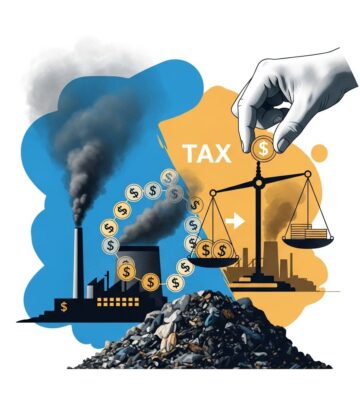
The rising tide of obesity worldwide has sparked intense debate over policy interventions like a “fat tax” on junk food. Proponents argue it could curb unhealthy eating habits, reduce healthcare costs, and fund public health initiatives, while critics warn of regressive impacts on low-income families and limited long-term effectiveness. This article dissects the arguments, drawing from global experiments and recent studies to evaluate if such a tax makes sense.
What Is a Fat Tax?
A
fat tax
is a Pigovian tax—a levy designed to correct negative externalities—imposed on foods high in saturated fats, sugars, or salts, often targeting junk food like sodas, snacks, and fast food. Unlike general sales taxes, it specifically aims to discourage consumption of unhealthy items while generating revenue for health programs. Definitions vary: some tax based on saturated fat content (e.g., Denmark’s short-lived tax), others on product categories like branded fast food (Kerala’s approach), or nutrient thresholds such as calories from fat exceeding 35% per serving.Historically, such taxes build on “sin taxes” for tobacco and alcohol. For instance, India’s Kerala state introduced a 14.5% fat tax in 2016 on items like burgers and pizzas from branded restaurants to combat non-communicable diseases (NCDs) and fund awareness campaigns. It was repealed after 11 months due to the national Goods and Services Tax (GST). In the US, policies from 1991–2021 often combined product categories (e.g., chips, candy), processing levels, and nutrients (e.g., >200 calories/serving, >35% fat calories).
The Obesity Crisis: Why Consider a Fat Tax?
Obesity affects over 1 billion people globally, driving NCDs like diabetes and heart disease, with healthcare costs soaring. In low-resource settings like Kerala, India, rising fast food consumption exacerbates this. Junk food’s high palatability—due to sugar-fat-salt combos—makes it addictive, contributing to poor diets where meals are increasingly eaten out and higher in fat.
A fat tax theoretically nudges consumers toward healthier choices by raising prices, potentially lowering intake. WHO endorses health taxes as cost-effective for preventing cardiovascular diseases by reducing unhealthy product consumption. Small taxes generate revenue without drastically altering habits; high ones might impact at-risk groups more directly.
Pros of a Fat Tax
- Reduces Consumption: Kerala’s fat tax correlated with a 3.9 percentage point drop in the fast food purchase ratio (fast food spends as proportion of total food spends). Post-repeal, it fell further by 5.6 points versus control cities, suggesting sustained behavior change.
- Revenue for Health: Taxes on unhealthy foods can fund nutrition education and subsidies for fruits/vegetables, as intended in Kerala. US proposals aim to invest in low-resource communities.
- Precedent Success: Sugar taxes in Mexico, UK, and France reduced sugary drink purchases. Fat taxes in Hungary and Finland targeted high-fat/sugar items effectively short-term.
- Manufacturer Incentives: Firms reformulate products to avoid taxes, e.g., lower-fat alternatives.
- Public Health Gains: Policies defining junk food by nutrients/processing (e.g., Navajo Nation’s tax) promote lower-sodium, less-processed options.
Cons of a Fat Tax
- Regressive Impact: Low-income households spend more proportionally on taxed foods, exacerbating inequality without proportional health benefits.
- Implementation Challenges: Retailers struggle defining taxable items (e.g., US states repealed taxes due to confusion over snacks). Kerala’s brand-based tax was simpler but still nullified.
- Limited Long-Term Effect: Denmark repealed its saturated fat tax after 15 months amid industry backlash and cross-border shopping. Small taxes yield revenue but minimal obesity reduction.
- Substitution Risks: Consumers switch to untaxed unhealthy foods or overeat post-tax evasion.
- Economic Harm: Job losses in food industries; Hungary’s tax faced opposition despite health aims.
Real-World Examples: A Comparative Table
| Country/Region | Tax Details | Outcome | Source |
|---|---|---|---|
| Kerala, India (2016-2017) | 14.5% on branded fast food (burgers, pizzas) | 3.9% drop in fast food ratio; 5.6% post-repeal | |
| Denmark (2011-2012) | Saturated fat content | Repealed after 15 months; industry backlash | |
| Hungary | High-fat/sugar foods | Reduced consumption; ongoing | |
| US States (e.g., NM, VT proposals) | Snacks >200 cal, high fat/sugar | Many repealed due to definitional issues | |
| Navajo Nation | Category + processing + nutrients | Targets saturated fat, salt, sugar effectively |
Defining Junk Food: Policy Challenges
US policies (1991-2021) reveal complexity: taxes targeted snacks via calories (>200/serving), fat (>35% calories), sugar (>35% weight), sodium (>200mg), or trans fats. Exemptions included fruits, nuts, dairy. Bills like MA H.B. 2701 used nutrient thresholds for “minimal-nutritious” foods. Combining categories, processing, and nutrients works best but burdens retailers.
A nutrient tax (e.g., % fat/sugar) or category tax (e.g., sodas, chips) offers options, but ethical concerns arise: Who defines “unhealthy”? Evidence gaps persist on welfare gains.
Alternatives to a Fat Tax
- Subsidies for Healthy Foods: Vouchers for fruits/veggies lower relative junk food prices.
- Education Campaigns: Awareness on nutrition labels and risks.
- Urban Planning: More parks, farmers’ markets to encourage activity and access.
- Advertising Restrictions: Limit junk food marketing to kids, as in Quebec.
- Sugar Taxes Only: Proven for beverages; easier to implement.
Expert Opinions and Economic Analysis
Studies show fat taxes work best in resource-limited economies like Kerala, where baseline fast food ratios dropped significantly. However, high-income contexts face political hurdles. Economists advocate tiered taxes: low for revenue, high for impact, paired with rebates for the poor. WHO pushes broader health taxes.
Frequently Asked Questions (FAQs)
Q: Does a fat tax actually reduce obesity?
A: Evidence is mixed; Kerala’s tax reduced fast food purchases by 3.9-5.6%, but long-term obesity data is limited. Sugar taxes show clearer beverage reductions.
Q: Who bears the brunt of a fat tax?
A: Primarily low-income groups, as they spend more on cheap junk food proportionally, making it regressive unless rebated.
Q: Why was Denmark’s fat tax repealed?
A: Industry complaints, cross-border shopping, and administrative complexity after 15 months.
Q: Can manufacturers dodge fat taxes?
A: Yes, by reformulating (e.g., low-fat versions), which can drive healthier innovation.
Q: Are there successful ongoing fat taxes?
A: Hungary’s persists; Navajo Nation’s nutrient-based model targets junk effectively.
Conclusion: A Balanced Approach?
While fat taxes show promise in curbing junk food buys—as in Kerala—they falter on equity, enforcement, and sustainability. Pairing with subsidies and education may yield better results. Policymakers must weigh evidence against political realities for targeted, fair interventions.
References
- Association Between a State-Level Fat Tax and Fast Food Purchases — JAMA Network Open. 2024-02-01. https://jamanetwork.com/journals/jamanetworkopen/fullarticle/2810666
- US Policies That Define Foods for Junk Food Taxes, 1991–2021 — NIH / PMC. 2023-06-01. https://pmc.ncbi.nlm.nih.gov/articles/PMC10262384/
- What Makes “Junk Food” Junk? — NYU News. 2023-04-01. https://www.nyu.edu/about/news-publications/news/2023/april/junk-food.html
- Taxing Junk Food to Counter Obesity — NIH / PMC. 2013-10-01. https://pmc.ncbi.nlm.nih.gov/articles/PMC3828689/
- Fat tax — Wikipedia. N/A. https://en.wikipedia.org/wiki/Fat_tax
- More countries using health taxes and laws to protect health — WHO. 2022-01-01. https://www.who.int/about/accountability/results/who-results-report-2022-mtr/more-countries-using-health-taxes-and-laws-to-protect-health
- US Policies That Define Foods for Junk Food Taxes, 1991–2021 — Wiley Online Library. 2023-01-01. https://onlinelibrary.wiley.com/doi/abs/10.1111/1468-0009.12652
Similar Articles








Read full bio of medha deb