Should Conforming Loan Limits Be Increased?
Exploring the debate: benefits and drawbacks of raising conforming loan limits.
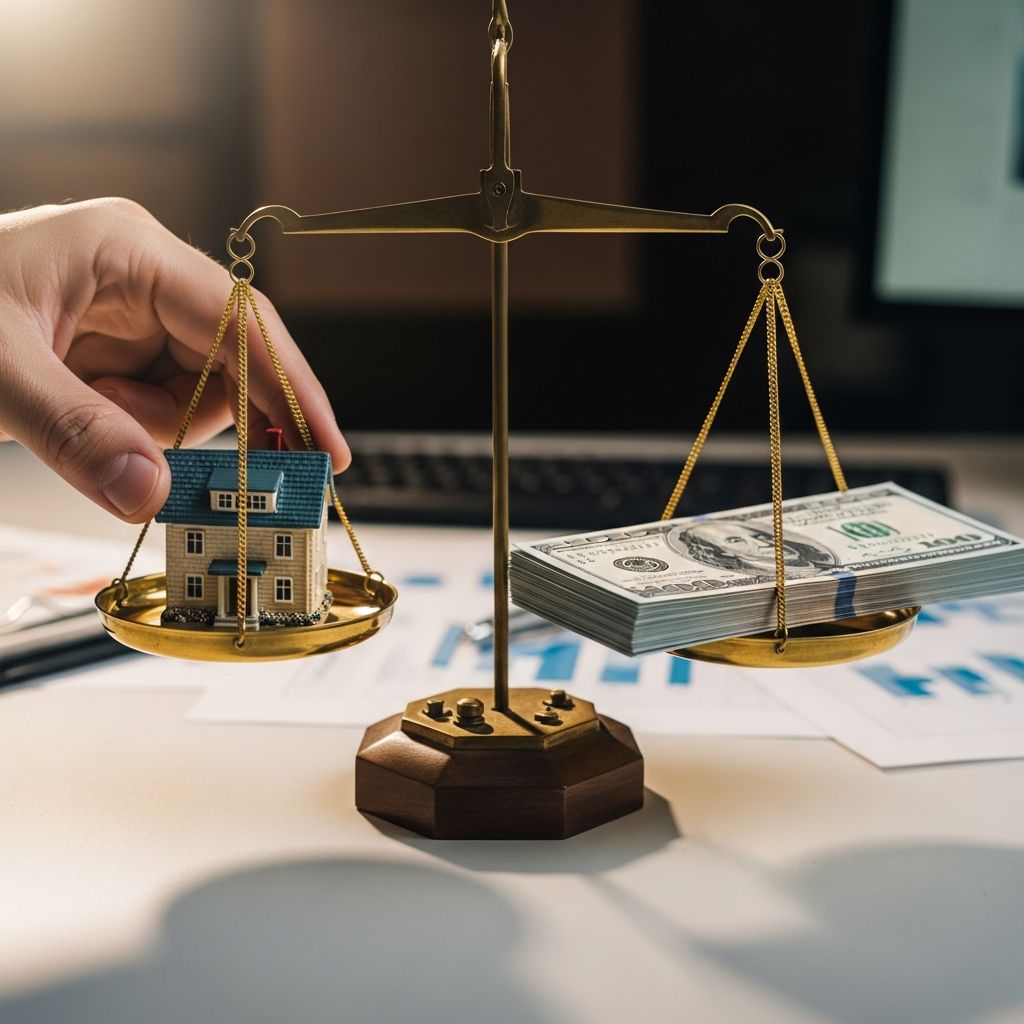
The question of whether conforming loan limits should be increased has become increasingly relevant as home prices continue to rise across the United States. In 2026, conforming loan limits did increase by 3.26%, raising the baseline limit for single-family homes from $806,500 to $832,750. But does this adjustment go far enough? Understanding the arguments on both sides of this debate requires first examining what conforming loans are, why limits exist, and how changes affect borrowers and the broader housing market.
Understanding Conforming Loans and Loan Limits
A conforming loan is a mortgage that adheres to the guidelines established by Fannie Mae and Freddie Mac, two government-sponsored enterprises (GSEs) regulated by the Federal Housing Finance Agency (FHFA). The most critical guideline is the maximum loan amount, known as the conforming loan limit. When a mortgage stays within this limit, lenders can sell it to Fannie Mae or Freddie Mac, which reduces the lender’s risk and allows them to continue funding additional mortgages.
Loans that exceed the conforming limit are classified as non-conforming loans, commonly called “jumbo loans.” These loans carry stricter underwriting requirements, including higher credit score demands, larger down payments (often exceeding 10%), and higher interest rates. Most borrowers prefer conforming loans because they offer better terms and easier qualification pathways.
How Conforming Loan Limits Are Determined
The FHFA establishes conforming loan limits based on national housing price trends. Specifically, it analyzes third-quarter data from its House Price Index (HPI), which tracks average changes in home values year over year. When home prices rise, limits typically increase proportionally to help borrowers keep pace with market conditions.
For 2026, the FHFA announced a 3.26% increase based on house price appreciation between the third quarter of 2024 and 2025. High-cost areas receive higher limits—up to 150% of the baseline—based on their median home values. This regional approach recognizes that housing markets vary significantly across the country.
The Case for Increasing Conforming Loan Limits
Greater Access to Affordable Financing
The primary argument for increasing conforming loan limits is expanding access to conventional financing for more borrowers. When limits rise, properties that would have required jumbo loans can now qualify for conforming mortgages. This shift provides substantial benefits:
- Lower interest rates: Conforming loans typically carry lower rates than jumbo loans, saving borrowers thousands in interest over the loan term.
- Reduced down payment requirements: Conforming loans allow down payments as low as 3%, while jumbo loans often require 10% or more.
- Easier qualification: Conforming loans have more flexible underwriting standards, making homeownership accessible to a broader range of buyers.
For many middle-class and upper-middle-class families, higher conforming limits eliminate the need to navigate the complex and expensive jumbo mortgage market.
Keeping Pace with Housing Market Reality
Home prices have outpaced income growth in many regions, making it increasingly difficult for qualified buyers to obtain conventional financing. Increasing conforming limits annually ensures that the definition of “conventional” financing evolves with market conditions. Without these adjustments, more borrowers would be forced into jumbo loans despite having strong financial profiles.
Supporting Housing Market Liquidity
Higher conforming limits support the secondary mortgage market. When lenders can sell more loans to Fannie Mae and Freddie Mac, they maintain the liquidity necessary to originate new mortgages. This steady flow of capital benefits the entire housing market by ensuring consistent lending availability.
The Case Against (or For Caution With) Increasing Conforming Loan Limits
Risk Management Concerns
Critics argue that regularly increasing conforming loan limits extends the government’s implicit guarantee to larger loans. Since Fannie Mae and Freddie Mac are GSEs with government backing, increases in conforming limits indirectly increase taxpayer exposure to mortgage risk. The 2008 financial crisis demonstrated how large-scale mortgage losses could strain government finances, raising questions about whether conforming limits should grow faster than overall economy growth.
Potential Market Distortions
Some economists contend that higher conforming limits may artificially inflate home prices in certain markets. When more buyers can access favorable financing terms, demand increases, potentially driving up prices and negating the intended benefit of the higher limits. This creates a cycle where limits must increase again to keep pace with prices—limits that may themselves be driving those price increases.
Wealth Inequality Implications
Another consideration is whether increasing conforming limits primarily benefits higher-income borrowers seeking to purchase expensive homes. Median home values in many regions far exceed the conforming limit, meaning increases may have minimal impact on middle-income borrowers while supporting purchases at the upper end of the market.
The Market Impact of 2026 Limit Increases
The 2026 increase of $26,250 (3.26%) for single-family homes is substantial. For four-unit properties, the limit rose from $2,296,100 to $2,370,000. These changes mean that in many counties, borrowers can now access conforming financing for properties that would have required jumbo loans in 2025.
The exact impact varies by region. High-cost areas such as California, New York, and Massachusetts benefit significantly from the ability to set limits up to 150% of the baseline. Borrowers in these markets gain meaningful access improvements.
Regional Variations and Fairness Considerations
Conforming limits vary by county based on median home values. This regional approach raises questions about fairness: Should borrowers in expensive coastal markets receive proportionally higher limits than those in more affordable regions? Proponents argue this reflects market realities, while critics suggest it perpetuates wealth-based disparities.
The FHFA’s interactive map allows borrowers to check their specific county limits, recognizing that one-size-fits-all approaches fail to address geographic diversity.
Historical Context: How Limits Have Evolved
Conforming loan limits have grown substantially over decades. The national baseline has increased from $33,000 in the early 1970s to $832,750 in 2026. This growth reflects both inflation and genuine home price appreciation. Understanding this history helps contextualize whether current increases are appropriate.
Alternatives to Limit Increases
Rather than (or in addition to) increasing conforming limits, policymakers could consider:
- Expanding down payment assistance programs for qualified first-time homebuyers.
- Reforming jumbo loan underwriting standards to make them less restrictive.
- Addressing fundamental housing supply shortages that drive prices upward.
- Implementing targeted tax incentives for homeownership in high-cost markets.
Frequently Asked Questions
Q: What was the conforming loan limit for 2025?
A: The 2025 baseline conforming loan limit for single-family homes was $806,500. In 2026, it increased to $832,750, a difference of $26,250.
Q: How are conforming loan limits calculated?
A: The FHFA calculates limits based on third-quarter House Price Index data, measuring average home price appreciation year over year. The percentage increase in home prices directly translates to the percentage increase in loan limits.
Q: Do all counties have the same conforming loan limit?
A: No. While there is a baseline limit that applies to most areas, high-cost counties can have limits up to 150% of the baseline amount. Borrowers can check their specific county limit using the FHFA’s interactive map or by contacting a mortgage lender.
Q: What are the advantages of conforming loans over jumbo loans?
A: Conforming loans typically offer lower interest rates, allow down payments as low as 3%, have more flexible credit requirements, and involve easier underwriting compared to jumbo loans.
Q: Should conforming loan limits increase annually?
A: This remains debated. Supporters argue annual increases keep conventional financing accessible as prices rise. Critics worry about government risk exposure and potential market distortion. Current policy maintains annual adjustments tied to home price appreciation.
Conclusion: Balancing Accessibility and Prudence
The question of whether conforming loan limits should be increased is ultimately a policy decision balancing multiple objectives: expanding homeownership access, managing government risk, and promoting housing market stability. The 2026 increase represents the current consensus approach—adjusting limits annually based on documented home price changes. This strategy provides a middle ground, ensuring conforming loans remain viable for growing numbers of borrowers while maintaining proportional risk management. However, ongoing debate about whether these increases sufficiently address affordability challenges or merely reflect (and potentially amplify) price appreciation suggests this topic will continue to attract policy attention in coming years.
References
- Conforming Loan Limits 2026: What is Changing? — Academy Bank. 2026. https://www.academybank.com/article/conforming-loan-limits-2026-what-is-changing
- 2026 conforming loan limits: A guide — Rocket Mortgage. 2026. https://www.rocketmortgage.com/learn/conforming-loan-limits
- Did Conforming Loan Limits Increase 2026? — Armed Forces Bank. 2026. https://www.afbank.com/article/did-conforming-loan-limits-increase-for-2026
- 2026 Loan Limits Increase by 3.26% — Freddie Mac Single-Family. 2026. https://sf.freddiemac.com/articles/news/loan-limit-values-for-2026
- What are conforming loan limits and why are they increasing — U.S. Bank. 2026. https://www.usbank.com/home-loans/mortgage/housing-insights/what-are-conforming-loan-limits-and-why-are-they-increasing.html
- FHFA Conforming Loan Limit Values — Federal Housing Finance Agency. 2026. https://www.fhfa.gov/data/conforming-loan-limit
- HUD’s Federal Housing Administration Announces 2026 Loan Limits — U.S. Department of Housing and Urban Development. 2025. https://www.hud.gov/news/hud-no-25-145
Similar Articles








Read full bio of Sneha Tete