Short vs Long Auto Loans: Which Fits Your Budget?
Discover the trade-offs between short-term and long-term car loans to choose the option that aligns with your financial goals and driving needs.
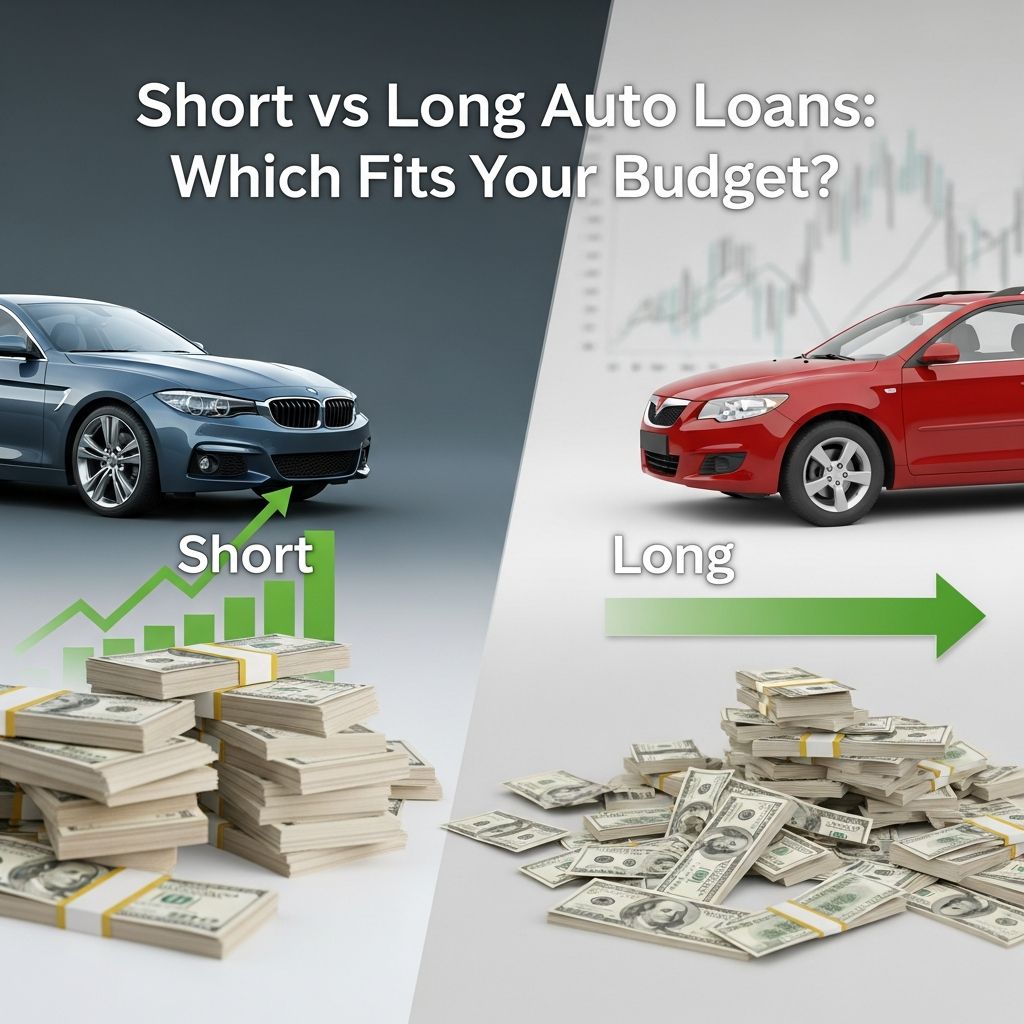
Selecting the right car loan term can significantly impact your financial health. Short-term loans, typically spanning 24 to 60 months, offer quicker payoff and lower overall interest but demand higher monthly outlays. Long-term options, from 60 to 96 months, ease monthly budgets at the expense of extended interest accumulation and potential negative equity risks.
Defining Auto Loan Durations
Auto loan terms represent the repayment period, directly influencing monthly payments and total costs. Shorter durations accelerate debt clearance, while longer ones distribute costs over more years. Common ranges include 36-48 months for brevity and 72-84 months for extension, with emerging 96-month products for premium vehicles.
Understanding these durations helps borrowers align financing with income stability and vehicle usage plans. Lenders assess risk based on term length, often favoring shorter commitments with preferential rates.
Advantages of Choosing Shorter Loan Periods
Opting for a 24-48 month term prioritizes long-term savings. Key benefits include:
- Reduced Interest Burden: Lenders apply lower annual percentage rates (APRs) to brief terms due to minimized default risk, slashing total interest.
- Rapid Ownership: Clear the loan in three years or less, freeing funds for investments or upgrades.
- Swift Equity Growth: Higher payments aggressively reduce principal, building value faster than cars depreciate and avoiding upside-down scenarios.
These features suit disciplined budgets, particularly for buyers with strong credit scores who prioritize debt minimization.
Drawbacks of Short-Term Financing
Despite savings, brevity strains cash flow. Primary challenges are:
- Elevated Monthly Demands: Payments can exceed $1,000 for mid-range vehicles, compressing room for maintenance or emergencies.
- Limited Vehicle Options: Higher outlays may restrict purchases to economical models unless substantial down payments are made.
- Budget Rigidity: Unexpected expenses like repairs could lead to missed payments without buffers.
Benefits of Extending Your Loan Term
Longer terms, 60 months and beyond, enhance accessibility. Notable upsides:
- Affordable Installments: Spreading principal over 72+ months halves payments compared to 36-month equivalents.
- Minimal Upfront Capital: Reduced down payment thresholds allow immediate access to desired vehicles.
- Larger Borrowing Capacity: Lenders approve higher sums, accommodating luxury or family haulers within stretched budgets.
This approach appeals to first-time buyers or those with variable incomes seeking predictable costs.
Risks Associated with Prolonged Loans
Extension amplifies costs and vulnerabilities:
- Amplified Total Expense: Combined higher APRs and duration inflate interest by thousands.
- Prolonged Indebtedness: Ownership delays until year seven or eight heighten depreciation exposure.
- Negative Equity Trap: Vehicles lose 20-30% value annually initially, often outpacing principal reduction.
Borrowers must select depreciation-resistant models like trucks or hybrids to mitigate these issues.
Cost Comparison: Real Numbers Breakdown
Quantitative analysis reveals stark contrasts. Assume a $40,000 loan at varying rates reflective of market norms:
| Term (Months) | APR (%) | Monthly Payment | Total Interest |
|---|---|---|---|
| 36 | 5.5 | $1,260 | $4,319 |
| 48 | 6.0 | $976 | $5,781 |
| 60 | 6.5 | $806 | $7,272 |
| 72 | 7.0 | $693 | $8,792 |
| 84 | 7.5 | $612 | $10,342 |
| 96 | 8.0 | $552 | $11,921 |
Data illustrates a 36-month term saves over $7,600 in interest versus 84 months, despite doubling payments. Calculations use standard amortization formulas; actuals vary by credit and lender.
Factors Influencing Your Ideal Term Length
No universal choice exists; evaluate:
- Credit Profile: Excellent scores (740+) unlock best short-term rates; fair credit may necessitate longer terms for approval.
- Income Consistency: Stable salaries support higher payments; gig workers benefit from lower ones.
- Vehicle Longevity Plans: Long-haul keepers tolerate extensions; frequent traders prefer brevity.
- Depreciation Profile: Sedans plummet faster than SUVs, favoring shorter terms.
Use online calculators to model scenarios against personal finances.
Strategies to Optimize Any Loan Term
Enhance outcomes regardless of duration:
- Maximize Down Payment: 20%+ reduces principal and interest exposure.
- Shop Multiple Lenders: Compare APRs, not just payments, via credit unions and banks.
- Refinance Opportunistically: Drop rates or shorten terms post-credit improvement.
- Extra Principal Payments: Target principal early to mimic shorter terms without refinancing.
- Gap Insurance Consideration: Essential for long terms to cover depreciation gaps.
Who Thrives with Short-Term Loans?
Ideal candidates: High earners with minimal debt, savers aiming for quick payoff, or those trading vehicles frequently. Military personnel or professionals with bonuses also align well, leveraging lump sums for acceleration.
Who Benefits Most from Long-Term Options?
Suits entry-level buyers, large families needing space, or budget-conscious households prioritizing cash flow. Young professionals building careers often select these for flexibility.
Frequently Asked Questions
What is the average car loan term in 2026?
Average hovers at 68-70 months, driven by rising vehicle prices, though shorter terms gain traction amid high rates.
Does loan term affect insurance costs?
Indirectly yes; shorter terms signal lower risk, potentially yielding minor premium discounts.
Can I change my loan term after signing?
Refinancing allows term adjustments, often with fees, to better match evolving finances.
Are 96-month loans worth it?
Rarely, due to exorbitant interest; reserve for exceptional cases with ironclad long-term plans.
How does credit score impact term options?
Superior scores broaden short-term access; subprime borrowers default to longer, costlier paths.
Final Thoughts on Balancing Payments and Savings
Weigh immediate affordability against lifetime costs. Short terms forge financial freedom faster; long terms open doors wider but chain longer. Simulate with personalized data, consult advisors, and prioritize vehicles retaining value. Informed selection ensures your auto loan propels rather than hinders wealth building.
References
- Short-Term vs. Long-Term Car Loans — Experian. 2023. https://www.experian.com/blogs/ask-experian/long-term-vs-short-term-auto-loans/
- Car Loan Terms: Choosing What Works Best for You — Community First Credit Union. 2024. https://www.communityfirstfl.org/resources/blog/how-long-should-you-finance-a-car
- How do I compare auto loan offers? — Consumer Financial Protection Bureau. 2025-03-15. https://www.consumerfinance.gov/ask-cfpb/how-do-i-compare-auto-loan-offers-what-should-i-look-at-besides-the-monthly-payment-en-753/
- What’s The Average Car Loan Length? — Bankrate. 2026-02-20. https://www.bankrate.com/loans/auto-loans/how-long-should-your-car-loan-be/
- How to Determine the Best Loan Term for Your Auto Loan — New Jersey Federal Credit Union. 2024. https://njfcu.org/how-to-determine-the-best-loan-term-for-your-auto-loan/
Similar Articles








Read full bio of medha deb