Short-Term vs. Long-Term CDs: Best Choice Now
Discover if short-term or long-term CDs offer better returns in today's shifting rate environment, with strategies to maximize your savings.
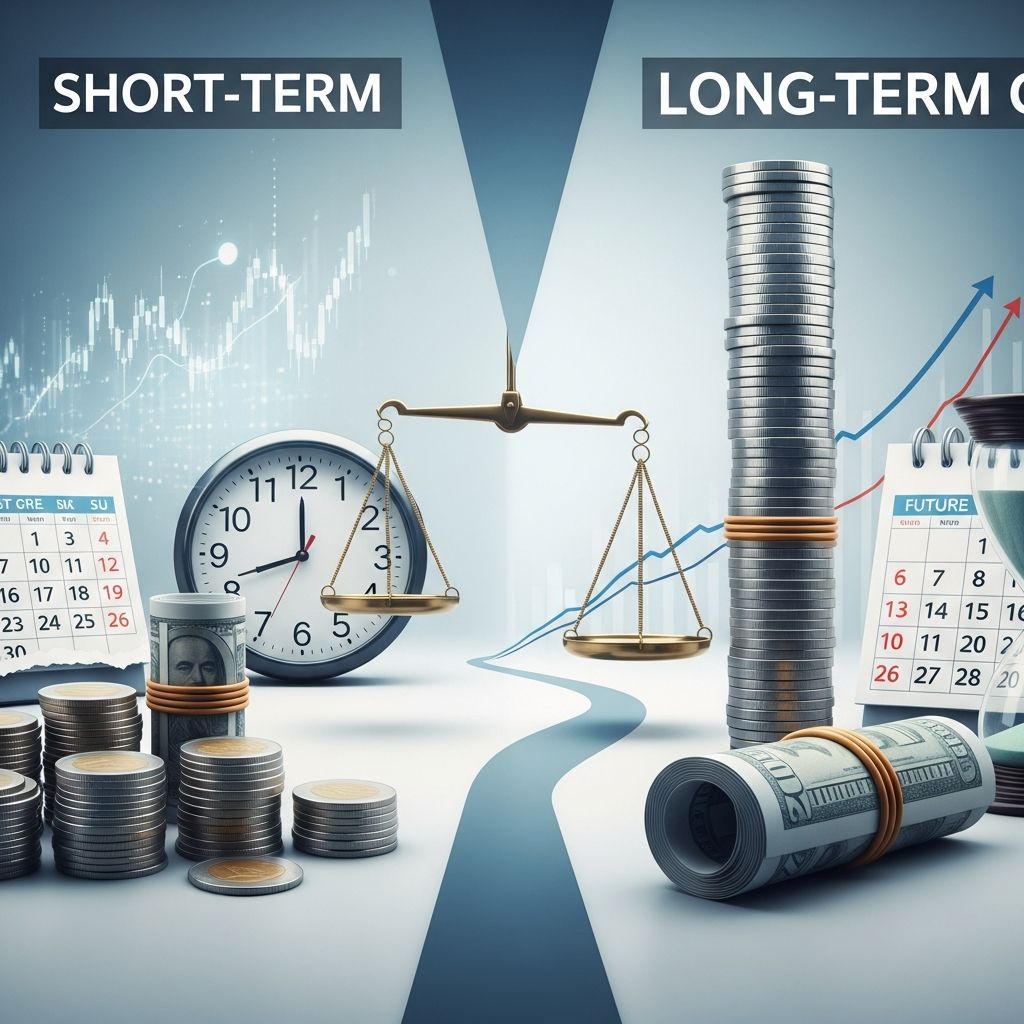
Certificates of deposit (CDs) remain a cornerstone of safe saving, guaranteeing returns through fixed interest rates over set periods. As of early 2026, with the Federal Reserve’s rate cuts influencing yields, savers face a pivotal choice: opt for
short-term CDs
(typically 1 year or less) for liquidity orlong-term CDs
(4-5 years) to secure potentially higher rates before further declines. This decision hinges on current market dynamics, personal financial needs, and tolerance for commitment.Understanding CD Basics and Current Landscape
CDs, known as share certificates at credit unions, lock funds for a term in exchange for higher yields than traditional savings accounts, backed by FDIC or NCUA insurance up to $250,000. Terms span from 3 months to 10 years, with rates measured as annual percentage yield (APY). In 2026, an inverted yield curve persists where shorter terms sometimes edge out longer ones, per FDIC data, though this may flatten soon.
National averages hover low—1.35% APY for 3-month, 1.61% for 1-year, 1.33% for 3-year, and 1.34% for 5-year—but competitive online banks double these. Expect promotions on short terms as banks compete amid cuts.
Advantages and Drawbacks of Short-Term CDs
Short-term CDs, from 3 to 12 months, prioritize flexibility. Ideal for near-term goals like vacations or emergencies, they allow quick reinvestment.
- Quick Access: Funds return soon, minimizing opportunity costs if rates rise.
- Lower Penalties: Early withdrawal often costs a few months’ interest, less severe than long-term hits.
- Competitive Yields Now: 1-year CDs slightly outperform 3+ year averages currently.
Downsides include lower historical rates and frequent renewals, demanding active management. No-penalty variants (e.g., 11-13 months) offer flexibility at slightly reduced APYs.
Benefits and Risks of Long-Term CDs
Long-term CDs (2-5+ years) appeal for extended commitments, suiting retirement or home down payments.
- Higher Potential Returns: Traditionally top rates; lock in before drops, e.g., 3.5%+ APY possible on 5-year vs. 1.6% on 6-month.
- Hands-Off Growth: Set-it-and-forget-it for undisturbed savings.
- Rate Protection: Shields against declines expected in 2026.
Risks: Steep penalties (up to 2 years’ interest), illiquidity, and reinvestment risk if rates rise post-maturity.
Rate Comparison: 2026 Snapshot
| Term Length | National Avg APY | Competitive Online Rates | Best For |
|---|---|---|---|
| 3-6 Months | 1.35%-1.61% | 2.5%+ | Liquidity |
| 1 Year | 1.61% | 3%+ | Balance |
| 3 Years | 1.33% | 2.8%+ | Mid-term Goals |
| 5 Years | 1.34% | 3.5%+ | Lock-in |
Data reflects recent trends; shop online banks for top yields.
CD Laddering: Bridging Short and Long Terms
Laddering diversifies by splitting funds across maturities, e.g., $12,000 into $3,000 each in 1-, 2-, 3-, and 4-year CDs. Annual access allows reinvestment at prevailing rates.
- Reduces Risk: Averages penalties and rate fluctuations.
- Liquidity Boost: Yearly maturities provide cash flow.
- Example Strategy: Post-1-year maturity, roll into new 3-year CD; repeat for steady access.
In a falling-rate world, start with short rungs; extend if rates hold.
Penalties and Grace Periods Explained
Early withdrawal erodes gains: short-term might forfeit 90 days’ interest; long-term, 360+ days. Grace periods (7-10 days post-maturity) allow penalty-free moves; auto-renewals match original terms otherwise.
Assess needs firmly—avoid long terms without certainty.
When to Choose Each in 2026
- Short-Term: If needing funds soon, expecting rate hikes, or chasing promotions. Suits uncertain economies.
- Long-Term: For distant goals, if rates drop further; commit only excess cash.
- Laddering: Best hybrid for most, balancing yield and access.
Tax Implications and Alternatives
CD interest is taxable annually as ordinary income. IRAs offer tax-deferred CDs. Compare to high-yield savings (variable rates, no lock-in) or Treasuries (similar safety, liquidity).
Frequently Asked Questions
What are current top CD rates?
Online banks offer 3%+ on 1-year, 3.5%+ on 5-year; check FDIC-insured lists.
Are CDs FDIC-insured?
Yes, up to $250,000 per depositor per bank.
Should I wait for rate changes?
Short-term allows pivots; long-term locks value now amid cuts.
How does inflation affect CDs?
Fixed rates lag inflation; prioritize real yields.
Can I ladder across banks?
Yes, for yield hunting, staying under insurance limits.
Steps to Open a CD
- Compare rates via bankrate.com or nerdwallet.com.
- Verify FDIC/NCUA coverage.
- Choose term aligning with goals.
- Fund via transfer; note maturity date.
- Plan renewals or withdrawals.
By weighing liquidity against yield in 2026’s environment, tailor CDs to your horizon—short for agility, long for security, or ladder for both.
References
- Short-Term vs. Long-Term CD: Which Do I Choose? — NerdWallet. 2025. https://www.nerdwallet.com/banking/learn/short-term-or-long-term-cds
- Short-Term vs. Long-Term CDs — BankFive. 2025-05. https://www.bankfive.com/blogs/may-2025/short-term-vs-long-term-cds
- Picking the Best CD for You: Short-Term vs. Long-Term — Academy Bank. 2025. https://www.academybank.com/article/picking-the-best-cd-for-you-short-term-vs-long-term
- Short-term CD accounts vs. long-term CD accounts – which will be better for 2026? — CBS News. 2025. https://www.cbsnews.com/news/short-term-cd-accounts-vs-long-term-cd-accounts-which-will-be-better-for-2026/
Similar Articles








Read full bio of medha deb