Short-Term Borrowing Options: Apps vs. Payday Loans
Understand the key differences between modern cash advance apps and traditional payday loans.
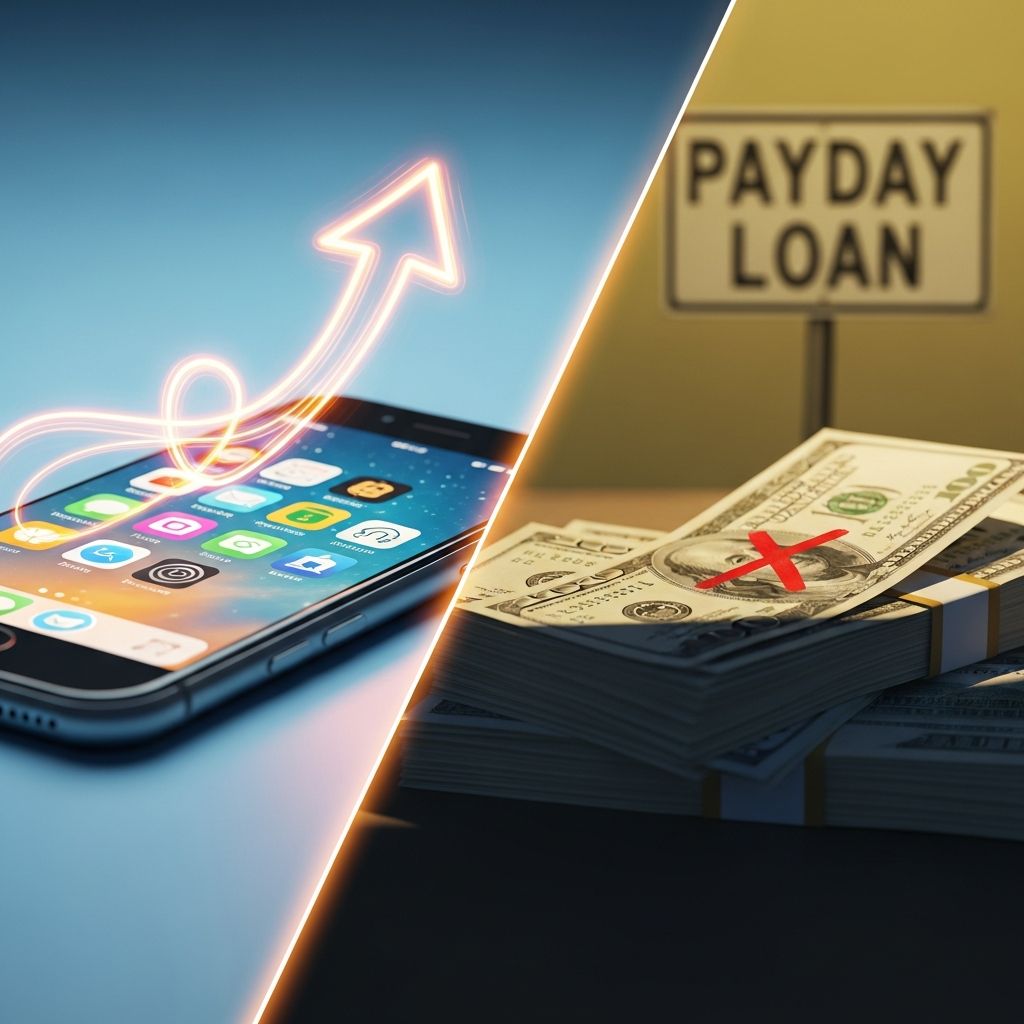
When unexpected expenses arise or your paycheck is delayed, finding quick access to cash becomes crucial. Two popular short-term borrowing solutions have emerged to fill this gap: cash advance apps and payday loans. While both provide rapid funding for people in financial distress, they operate under fundamentally different models with significant implications for your wallet and financial health. Understanding the distinction between these options is essential before committing to either solution.
Understanding the Fundamentals of Short-Term Lending
Both cash advance applications and payday loans serve a similar purpose: providing immediate access to money when you need it most. However, the mechanisms, costs, and terms that govern each product differ substantially. Cash advance apps have modernized the borrowing process by leveraging technology and direct payroll access, while traditional payday loans continue to operate through physical storefronts and online platforms using a more conventional lending framework.
The terminology can be confusing since payday loans are technically a category of cash advances. According to consumer finance experts, a payday loan represents a specific type of cash advance that is secured against your next paycheck. Cash advance apps, by contrast, operate through various mechanisms including tip-based systems, subscription models, or percentage-based fees that do not necessarily align with traditional interest calculations.
How Cash Advance Applications Function
Cash advance apps connect directly to your banking information and paycheck schedule. These digital platforms allow you to access a portion of your earned wages before your regular payday arrives. The application typically requires verification of your income and employment status rather than a comprehensive credit assessment.
The borrowing amounts through these apps remain relatively modest, usually ranging from $20 to $500, depending on your income level and the specific platform’s policies. Access to larger advances generally requires building a history with the service and demonstrating responsible repayment patterns. Funds typically arrive within minutes to five business days, with expedited delivery options available for an additional fee.
Repayment occurs automatically when your paycheck deposits into your connected bank account. This automated process reduces the risk of missed payments and late fees. Most apps offer flexibility regarding repayment dates, allowing you to select when the advance should be deducted from your earnings, provided it aligns with your pay schedule.
The Traditional Payday Loan Model
Payday loans operate through a more straightforward but rigid structure. You borrow a fixed amount, typically between $50 and $1,000, depending on state regulations and individual lender policies. The loan must be repaid in full by your next payday, usually within 14 days to one month.
Obtaining a payday loan requires minimal documentation. You generally need proof of income, a valid bank account, and identification. The application process moves quickly, often providing approval within minutes. Many payday lenders operate both online and through physical locations, offering flexibility in how you apply and receive funds.
Unlike cash advance apps that automatically deduct repayment from your paycheck, payday loans typically require you to provide a post-dated check or authorize a direct debit to your bank account. This manual repayment structure means you must have sufficient funds available on the specified repayment date to cover the full loan amount plus fees and interest.
Comparing Costs and Interest Rates
The financial burden represents the most critical difference between these borrowing options. This distinction significantly impacts your ability to recover financially and avoid debt cycles.
| Borrowing Method | Average APR | Fee Structure | Total Cost Example |
|---|---|---|---|
| Cash Advance Apps | Varies (No standard APR) | Subscription, tips, or percentage-based | $5-$30 per advance |
| Payday Loans | 300%-400%+ | Flat fee per $100 borrowed | $15-$30 per $100 borrowed |
| Credit Card Cash Advances | 25%-30% | 3%-5% upfront fee | Higher for larger amounts |
Payday loans charge fees that translate to astronomical annual percentage rates. A typical payday loan might charge $15 to $30 for every $100 borrowed. When annualized, this creates APRs exceeding 400%, making payday loans significantly more expensive than almost any other borrowing method. Rolling over a payday loan into the next pay period incurs additional fees, trapping borrowers in cycles of escalating debt.
Cash advance apps present a more nuanced cost structure. While they do not always disclose traditional APRs, their fees typically remain lower in absolute dollar terms. Apps may charge subscription fees, encourage tips, or take a percentage of the advance amount. Even with expedited delivery options and tips, total costs for cash advance apps usually range from $5 to $30 per transaction, substantially lower than payday loan charges.
Loan Amounts and Accessibility
The amount you can borrow through each option reflects different philosophies about risk management and intended use cases.
- Cash Advance Apps: Maximum amounts typically start low, between $100 and $500, scaling upward as users establish payment history and demonstrate reliability. This graduated approach encourages responsible borrowing and limits exposure for both the lender and borrower.
- Payday Loans: Initial borrowing limits may reach state-imposed maximums immediately, often between $500 and $1,000. Borrowers can potentially access larger amounts from their first application without establishing prior history with the lender.
- Accessibility: Cash advance apps require a stable job and regular paycheck, plus a bank account connected to the app. Payday loans require similar documentation but typically involve less technology infrastructure, making them accessible to individuals without smartphones or reliable internet access.
Repayment Flexibility and Terms
How each borrowing method handles repayment significantly affects your financial planning and risk of accumulating additional fees.
Cash advance apps automate the repayment process by connecting to your payroll system. When your wages deposit, the app automatically deducts the advance and any applicable fees. This automation reduces the likelihood of accidental non-payment but removes flexibility regarding repayment timing. Most apps allow you to select your repayment date when initiating the advance, typically offering options within your regular pay cycle.
Payday loans demand full repayment by a specific date, usually your next payday. You must ensure sufficient funds exist in your bank account on that date to cover the entire loan balance plus all fees. If funds are unavailable, lenders typically charge additional late fees or allow you to roll over the loan into the next pay period by paying just the interest and fees. This rollover option creates the debt trap that makes payday loans particularly dangerous for financially vulnerable individuals.
Credit Requirements and Reporting
Neither borrowing option requires traditional credit checks or credit score qualifications. This accessibility benefits individuals with poor credit histories, recent bankruptcy, or limited credit experience.
- Cash Advance Apps: Income verification replaces credit assessment. Apps focus on verifying employment status and stable earnings rather than evaluating creditworthiness. This approach makes approval virtually certain for employed individuals regardless of credit history.
- Payday Loans: Most payday lenders do not perform hard credit inquiries. Some may verify income or check bank account status, but credit score rarely influences approval decisions. However, payday loans are typically not reported to credit bureaus, meaning timely repayment does not build your credit history.
- Credit Building: Neither option significantly impacts your credit score positively or negatively. Responsible repayment through cash advance apps or payday loans does not help establish or improve creditworthiness for future borrowing needs.
Hidden Fees and Long-Term Costs
Beyond advertised rates and standard fees, several hidden costs can substantially increase the true expense of short-term borrowing.
Payday loans often impose rollover fees when borrowers extend their loans into subsequent pay periods. Late payment fees apply if you miss the repayment deadline. Some lenders charge insufficient funds fees if your bank account lacks sufficient money when they attempt to collect payment. These layered fees can double or triple the original borrowing cost within just a few months.
Cash advance apps may charge subscription fees for premium features or faster funding. Expedited delivery options cost extra, typically $1-$5 for same-day or next-business-day access. While users have discretion over paying tips, apps employ social pressure and interface design encouraging generous tips. Some users report total costs exceeding payday loan fees once these various charges accumulate.
Debt Cycle Potential
The structure of each borrowing method creates different risks for debt accumulation.
Payday loans present substantial debt cycle risk. Because the entire balance plus fees becomes due on a single date, borrowers who lack sufficient funds often must roll over the loan, incurring additional fees. Research indicates that the typical payday borrower renews their loan multiple times annually, paying more in fees than the original borrowed amount. This structure makes payday loans particularly problematic for individuals living paycheck to paycheck.
Cash advance apps mitigate some debt cycle risk through their lower costs and automated repayment. However, the ease of accessing advances can encourage overreliance on short-term borrowing. Users might chronically advance portions of future earnings, leaving themselves perpetually short of cash. The psychological ease of using an app increases temptation compared to visiting a physical payday lender.
State Regulations and Availability
The regulatory environment varies significantly between payday loans and cash advance apps, affecting availability and terms in different states.
Many states have restricted or banned payday lending entirely due to consumer protection concerns. Regulatory bodies recognize the predatory nature of triple-digit APRs and aggressive collection practices. Where payday loans remain legal, state regulations typically cap maximum APRs, loan amounts, and renewal terms. Consumers in restricted states have fewer payday loan options but may access cash advance apps instead.
Cash advance apps operate in a regulatory gray area. Many states classify them differently than traditional payday loans, allowing broader operation. However, regulators increasingly scrutinize these apps, examining whether their fee structures effectively represent illegal lending. The regulatory landscape continues evolving as states develop frameworks specifically addressing app-based lending.
When Each Option Makes Sense
Cash Advance Apps Are Better When:
- You need funds within days but not immediately
- Your emergency is relatively small, under $500
- You have stable employment and regular direct deposit
- You want lower total costs and simpler terms
- Payday loans are unavailable or banned in your state
Payday Loans Might Be Necessary When:
- You need immediate cash, typically within hours
- You require larger amounts than cash apps typically offer
- You lack smartphone access or reliable internet
- You cannot wait for direct deposit processing times
- Cash advance apps are unavailable in your area
Alternatives to Consider
Before committing to either payday loans or cash advance apps, explore less expensive alternatives. Personal loans from banks or credit unions offer longer terms and lower interest rates despite stricter approval requirements. Borrowing from family or friends, negotiating payment plans with creditors, or seeking assistance from nonprofit credit counseling organizations may provide additional options. Some employers offer emergency assistance programs or paycheck advances without external fees.
Making Your Decision
Choose between cash advance apps and payday loans based on your specific circumstances, required amount, timeline, and financial situation. While both provide quick access to emergency cash, the substantial cost differences warrant careful consideration. Cash advance apps generally represent the more prudent choice due to lower fees and reduced debt cycle risk. However, if you need immediate large amounts and lack other options, payday loans may provide necessary relief despite their significant drawbacks. Regardless of choice, prioritize repaying these short-term loans quickly and avoiding repeated reliance on such expensive borrowing methods.
Frequently Asked Questions
Can I get approved for a cash advance app without employment verification?
Most cash advance apps require proof of steady income and employment. However, verification typically involves connecting to your banking app or payroll system rather than formal employment checks, making approval easier than traditional loans.
Do payday loans and cash advance apps report to credit bureaus?
Most traditional payday loans and cash advance apps do not report to credit bureaus. Your on-time payments will not build credit history, but missed payments may be reported to collection agencies.
What happens if I cannot repay a payday loan on time?
Contact your lender immediately to discuss options. Most lenders offer rollover options that extend the loan for an additional fee. However, rolling over loans creates debt cycles. Some states have payment plan requirements that lenders must offer instead of allowing unlimited rollovers.
Are cash advance apps safer than payday loans?
Cash advance apps present lower immediate financial risk due to reduced fees and smaller amounts. However, neither option should be considered a safe borrowing solution. Both charge more than traditional personal loans and should only be used for genuine emergencies when no other options exist.
Can I use a payday loan and cash advance app simultaneously?
Technically possible, but strongly inadvisable. Using multiple short-term lending products simultaneously creates dangerous debt cycles. Instead, address the underlying cash flow problem causing reliance on expensive borrowing.
References
- Payday Loans and Cash Advances Explained — Consumer.gov. 2023. https://consumer.gov/debt/payday-loans-and-cash-advances-explained
- Payday Loans & Cash Advances – What Consumers Need to Know — California Department of Financial Protection and Innovation (DFPI). 2024. https://dfpi.ca.gov/consumers/managing-debt/payday-loans-cash-advances-what-consumers-need-to-know/
- Payday Loan vs. Cash Advance App: What’s the Difference? — Experian. 2024. https://www.experian.com/blogs/ask-experian/payday-loan-vs-cash-advance-app/
- Cash Advance vs Payday Loan: What’s the Real Difference? — MoneyLion. 2024. https://www.moneylion.com/learn/cash-advance-vs-payday-loan
- Payday Loan vs. Cash Advance – CreditNinja — CreditNinja. 2024. https://www.creditninja.com/blog/payday-loan-vs-cash-advance/
- Payday Loans vs. Cash Advances — Credible. 2024. https://www.credible.com/personal-loan/payday-loan-vs-cash-advance
Similar Articles








Read full bio of Sneha Tete