Short Selling: Definition, How It Works, and Risks
Understanding short selling: A comprehensive guide to betting against stocks and managing associated risks.

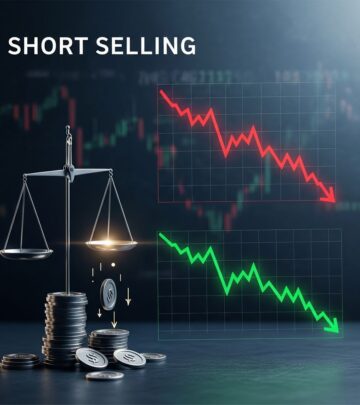
Short selling is a sophisticated investment strategy that allows investors to profit when a stock’s price declines. Unlike traditional investing, where you buy a stock expecting its value to increase, short selling involves borrowing shares and selling them at the current market price, with the intention of buying them back at a lower price in the future. This strategy represents a fundamental departure from conventional buy-and-hold investing, requiring a deeper understanding of market mechanics and risk management.
What Is Short Selling?
Short selling, often referred to as “going short” or “shorting,” is an investment technique where an investor borrows shares of a stock they do not own and immediately sells them in the open market. The investor then waits for the stock price to decline before purchasing the shares back at the lower price, a process known as “covering” the short position. The difference between the selling price and the buying price represents the investor’s profit, minus any fees, commissions, or interest charges associated with borrowing the shares.
This strategy is particularly appealing to investors who believe a particular stock is overvalued or anticipate negative developments that could impact the company’s stock price. By shorting, these investors can potentially generate returns even in declining markets, making short selling an important tool for portfolio diversification and hedging strategies.
How Short Selling Works: A Step-by-Step Process
Understanding the mechanics of short selling requires examining each stage of the transaction:
- Borrowing Shares: The investor contacts their broker to borrow shares of the stock they wish to short. Brokers typically maintain relationships with other clients or maintain a pool of shares available for borrowing. The investor pays a fee for this borrowing arrangement, which varies depending on the stock’s availability and demand.
- Selling the Borrowed Shares: Once shares are borrowed, the investor immediately sells them at the current market price. The proceeds from this sale are deposited into the investor’s account, though they may be subject to certain restrictions or margin requirements.
- Waiting for Price Decline: The investor monitors the stock price, anticipating a decline. This waiting period can range from days to months, depending on the investor’s strategy and market conditions.
- Buying Back (Covering): When the stock price has declined sufficiently, the investor purchases shares to replace those they borrowed. This process, called “covering the short,” completes the transaction.
- Returning Borrowed Shares: The investor returns the purchased shares to their broker, settling the debt and completing the short sale transaction.
Key Mechanics and Requirements
Short selling operates within specific market rules and requirements that investors must understand:
- Margin Requirements: Most brokers require short sellers to maintain a margin account with minimum equity requirements. The SEC and individual brokers establish these requirements to protect against excessive losses.
- Borrowing Fees: Investors must pay fees for borrowing shares, typically calculated as a percentage of the stock’s value. These fees vary based on the stock’s availability and can significantly impact profitability.
- Short Selling Restrictions: Regulatory bodies like the SEC impose rules such as the “uptick rule,” which prevents short sales from being executed below the previous trade price during a downtrend, helping to prevent manipulative practices.
- Dividend Obligations: If a company pays dividends while an investor holds a short position, the short seller must pay the dividend to the stock owner, reducing potential profits.
Historical Examples of Successful Short Selling
Several historical cases demonstrate both the potential profits and risks associated with short selling:
- Enron Corporation (2001): Short sellers identified accounting irregularities at Enron before the company’s collapse. Those who shorted Enron stock early generated substantial returns as the stock fell from over $90 to pennies.
- Bear Stearns (2008): During the financial crisis, short sellers profited significantly from Bear Stearns’ decline before its emergency acquisition by JPMorgan Chase.
- Lehman Brothers (2008): Similar to Bear Stearns, short sellers who correctly predicted Lehman Brothers’ failure generated enormous profits as the stock collapsed.
The Risks and Dangers of Short Selling
While short selling can generate profits, it carries substantial risks that investors must carefully consider:
- Unlimited Loss Potential: Unlike buying stocks, where maximum loss is limited to the initial investment, short selling carries theoretically unlimited loss potential. If a stock price rises indefinitely, losses continue mounting without a natural stopping point.
- Short Squeeze: A short squeeze occurs when a heavily shorted stock’s price rises rapidly, forcing short sellers to buy back shares at increasingly higher prices to limit losses. This creates a feedback loop where increased buying pressure forces prices even higher.
- Forced Buyback: If the lending broker needs to recall borrowed shares, the short seller must purchase shares immediately to return them, potentially at unfavorable prices.
- Borrowing Cost Volatility: Fees for borrowing shares can increase dramatically if demand rises, eroding profits or transforming profitable positions into losses.
- Regulatory Risks: Short selling faces increasing regulatory scrutiny, and rule changes could disadvantage short positions or make the strategy more expensive or difficult to execute.
Short Selling vs. Other Investment Strategies
Short selling differs fundamentally from traditional investment approaches:
| Strategy | Mechanism | Profit Condition | Maximum Loss |
|---|---|---|---|
| Long Buying | Buy shares and hold | Stock price increases | Initial investment |
| Short Selling | Borrow and sell shares | Stock price decreases | Theoretically unlimited |
| Put Options | Buy right to sell at strike price | Stock price below strike price | Premium paid |
| Hedging | Offsetting positions in correlated assets | Depends on hedge structure | Varies |
Ethical and Market Impact Considerations
Short selling raises important questions about market ethics and efficiency. Critics argue that short selling can artificially depress stock prices through “bear raids” or coordinated short attacks. Proponents, however, maintain that short selling improves market efficiency by preventing overvaluation and providing corrective pressure on stock prices.
During the 2008 financial crisis, the SEC implemented temporary bans on short selling for financial sector stocks, reflecting concerns about market stability. This regulatory response demonstrates the contentious nature of short selling in financial markets.
Regulatory Framework and Restrictions
Short selling operates within a complex regulatory framework designed to prevent abuse:
- Regulation SHO: The SEC’s Regulation SHO established requirements for short sales, including the uptick rule and locate requirements ensuring shares are actually available to borrow.
- Circuit Breakers: Trading halts triggered by rapid price movements help prevent panic selling and short squeeze scenarios.
- Position Disclosure: Investors must disclose large short positions in certain circumstances, increasing transparency in markets.
Modern Short Selling and Market Evolution
Contemporary short selling has evolved with technological advancement and changing market structures. High-frequency trading firms employ sophisticated algorithms to identify short opportunities, while retail investors increasingly participate through exchange-traded funds (ETFs) and other instruments that provide short exposure without direct shorting mechanics.
The GameStop and AMC Entertainment episodes in 2021 highlighted retail investor coordination against large short positions, demonstrating how social media and retail trading platforms have transformed short selling dynamics. These events prompted discussions about social responsibility in shorting and the potential for retail investors to influence markets previously dominated by institutional players.
Frequently Asked Questions (FAQs)
Q: What is the difference between short selling and going long?
A: Going long means buying a stock expecting its price to increase, while short selling involves borrowing and selling shares expecting the price to decline. Long positions have limited downside (losing your investment), while short positions have theoretically unlimited loss potential.
Q: Can I short sell any stock?
A: Not all stocks can be shorted. Brokers and regulatory bodies maintain lists of stocks available for short selling. Stocks with limited share availability or those subject to trading restrictions may not be available to short.
Q: What is a short squeeze?
A: A short squeeze occurs when a heavily shorted stock’s price rises sharply, forcing short sellers to buy shares back at higher prices to limit losses. This creates accelerated buying pressure, driving the price even higher.
Q: How are short sellers regulated?
A: The SEC enforces Regulation SHO and other rules governing short selling. These include the uptick rule, locate requirements, and mandatory disclosures of large short positions to maintain market transparency and prevent manipulation.
Q: What fees do short sellers pay?
A: Short sellers pay borrowing fees to their brokers, typically calculated as a percentage of the stock’s value. They also pay standard commissions on buys and sells, and may owe dividends if the company pays distributions during their short position.
Q: Is short selling legal?
A: Yes, short selling is legal in most developed markets when conducted within regulatory guidelines. However, certain practices like naked short selling (selling shares without actually borrowing them) are prohibited.
References
- Regulation SHO: Short Sale Rule Requirements — U.S. Securities and Exchange Commission. 2024. https://www.sec.gov
- Short Selling and Market Efficiency: An Empirical Analysis — Journal of Finance, Oxford University Press. 2022. https://doi.org/10.1111/j.1540-6261.2004.00685.x
- Market Manipulation and Short Selling During Financial Crises — Financial Analysts Journal, CFA Institute. 2023. https://www.cfainstitute.org
- The 2008 Financial Crisis and Short-Selling Restrictions — Federal Reserve Board. 2021. https://www.federalreserve.gov
- Short Squeeze Dynamics and Retail Investor Coordination — Journal of Financial Economics, Elsevier. 2023. https://www.journals.elsevier.com/journal-of-financial-economics
- Borrowing Fees and Short Selling Profitability — Review of Financial Studies, Oxford University Press. 2023. https://academic.oup.com/rfs
Similar Articles








Read full bio of medha deb