Short Sale: Definition, How It Works, and Risks
Complete guide to short selling: mechanics, strategies, risks, and regulatory considerations.

What Is a Short Sale?
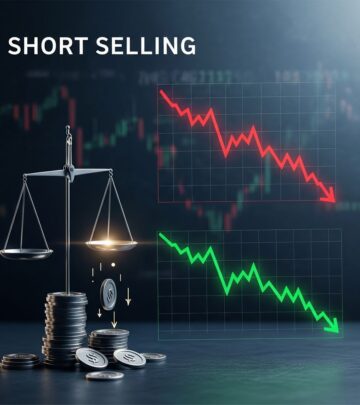
A short sale is an investment strategy where an investor sells a security they do not currently own, with the expectation that the price will decline in the future. The investor borrows the security from a broker or another investor, sells it at the current market price, and then attempts to buy it back at a lower price. If successful, the investor profits from the difference between the selling price and the repurchase price, minus any fees or interest paid for borrowing the security.
Short selling is fundamentally different from traditional “long” investing, where an investor buys a security expecting its value to increase. In a short sale, the investor profits when the security’s value decreases, making it a bearish investment strategy. This strategy is commonly used by professional investors, hedge funds, and experienced individual traders who believe a stock or other security is overvalued or heading toward decline.
How Short Sales Work
The mechanics of a short sale involve several key steps that must be executed in a specific sequence:
Step 1: Borrowing the Security
The investor contacts their broker to borrow shares of the security they wish to short. The broker locates available shares to borrow, typically from the broker’s inventory, other clients’ margin accounts, or other financial institutions. The investor must have a margin account to engage in short selling, as this type of account allows borrowing against deposited funds. The broker charges borrowing fees, similar to interest on a loan, which are deducted from the investor’s profits.
Step 2: Selling the Borrowed Security
Once the shares are borrowed, the investor immediately sells them at the current market price. The proceeds from this sale are deposited into the investor’s margin account. The investor does not own these shares; they are simply borrowed and must be returned at some point in the future.
Step 3: Waiting for Price Decline
The investor now waits and hopes that the price of the security falls. During this holding period, the investor continues to pay borrowing fees. If the stock price declines significantly, the opportunity to profit increases. However, if the price rises instead, losses accumulate while the investor holds the short position.
Step 4: Buying Back (Covering)
When the investor decides the time is right—or when circumstances force the position closed—they purchase the same number of shares at the current market price. This process is called “covering” the short position. If the buyback price is lower than the original selling price, the investor realizes a profit. If the buyback price is higher, the investor incurs a loss.
Step 5: Returning the Securities
The purchased shares are returned to the lender, settling the loan. Any profit or loss is calculated as the difference between the selling price and the buyback price, minus borrowing fees and any commissions paid.
Key Mechanics and Considerations
Margin Requirements and Maintenance
Short selling requires maintaining a margin account with sufficient equity. Brokers typically require a minimum deposit, often 50% of the short sale proceeds, to secure the position. Additionally, investors must maintain a maintenance margin level, which varies by broker but is often around 30%. If the stock price rises and the account equity falls below the maintenance level, the broker may issue a margin call, requiring the investor to deposit additional funds or face forced position closure.
Borrowing Costs and Fees
Short sellers incur several costs that reduce their profits. The primary cost is the borrowing fee, charged by the broker for lending the security. These fees can range from a fraction of a percent annually for easily borrowed stocks to significantly higher rates for difficult-to-borrow securities. Additionally, short sellers must compensate the lender for any dividends or interest paid on the borrowed security, since they do not actually own the shares and are not entitled to these payments.
Short Selling and Dividends
When a company pays a dividend to shareholders, short sellers must pay an equivalent amount to the stock owner from whom they borrowed the shares. While this is sometimes called a “short dividend,” it is technically a payment rather than an actual dividend, since it does not come directly from the company. This obligation can significantly impact profitability, especially when holding short positions through ex-dividend dates.
Types of Short Selling
Covered Short Selling
Covered short selling occurs when the investor has successfully borrowed the security before selling it. This is the standard and legal form of short selling in most markets. The security is identified, reserved, and delivered within the settlement period, typically three business days.
Naked Short Selling
Naked short selling is a controversial practice where a security is sold short without actually borrowing it or ensuring its availability for delivery within the settlement period. Instead of delivering actual shares, the short seller is essentially selling a promise to deliver shares. This practice can create artificial supply, manipulate prices, and cause market disruptions. Many jurisdictions, including the United States, have implemented regulations to restrict or eliminate naked short selling.
Short Sales Through Derivatives
Investors can create short positions through financial derivatives rather than direct short sales. These include put options (the right to sell at a specified price), short futures contracts, or forward contracts. These methods allow investors to benefit from price declines without directly borrowing and selling the underlying security.
Short Interest and Market Signals
Short interest is a metric that indicates the total number of shares that have been sold short as a percentage of total outstanding shares. For example, if 10 million shares of a company are shorted and 100 million shares are outstanding, the short interest is 10%. This metric can provide valuable information about market sentiment toward a security. High short interest may indicate investor skepticism about the company’s future, or it may signal an opportunity if the consensus view is overly pessimistic.
Short interest data is publicly reported and updated regularly, allowing investors to track changes in sentiment. A rising short interest may precede a price decline or may create vulnerability to a “short squeeze,” where short sellers rush to cover positions, causing rapid price increases.
Risks Associated with Short Selling
Unlimited Loss Potential
Unlike buying stocks, where losses are limited to the initial investment, short selling theoretically exposes investors to unlimited losses. If a stock price rises indefinitely, the short seller’s losses grow correspondingly. There is no upper limit to how high a stock can rise, making risk management critical for short sellers.
Short Squeezes
A short squeeze occurs when a heavily shorted stock experiences a sudden price surge, often triggered by positive news or coordinated buying. Short sellers facing losses scramble to cover their positions, creating additional buying pressure and driving the price even higher. This can create a vicious cycle of forced buying and accelerating losses.
Margin Calls
As a short stock rises in value, the investor’s account equity decreases. Brokers may issue margin calls if equity falls below maintenance levels, requiring the investor to deposit additional funds immediately or face forced position closure at unfavorable prices.
Forced Buyback
Brokers can force the buyback of shorted shares at any time if they need to return the borrowed shares to their original lender or if the short seller fails to meet margin requirements. This forced closure may occur at highly disadvantageous prices for the investor.
Availability of Shares
Not all stocks can be easily shorted. “Hard-to-borrow” stocks may have limited shares available for short sale, resulting in higher borrowing costs or even unavailability. Some brokers may refuse to locate shares for short sale, making the strategy impossible for certain securities.
Regulatory Environment
Securities and Exchange Commission (SEC) Rules
In the United States, short selling is regulated by the SEC and subject to specific rules. The “Regulation SHO” rule imposes strict requirements on short sales, including the uptick rule, which generally restricts short sales below the previous trade price. The SEC has also implemented requirements for reporting short positions and has enforced restrictions on naked short selling.
Uptick Rule
The uptick rule (Rule 10a-1) prevents short sales at a price lower than the previous trade. This rule aims to prevent short sellers from driving down stock prices through aggressive downward pressure. The rule provides some protection against manipulative short selling practices.
International Regulations
Different countries have varying regulations regarding short selling. Some nations have implemented bans on certain types of short selling during market crises, while others have imposed circuit-breaker rules or cooling-off periods for heavily shorted securities.
Strategic Uses of Short Selling
Speculation
Many investors use short selling as a speculative tool to profit from anticipated price declines. Technical analysis, fundamental analysis, and market sentiment indicators guide their decisions about which securities to short and when to cover positions.
Hedging
Portfolio managers use short selling to hedge long positions. By shorting a correlated security or market index, they can reduce overall portfolio risk and limit downside exposure without liquidating long-term holdings.
Arbitrage
Short selling facilitates various arbitrage strategies where investors simultaneously buy and sell related securities to profit from price discrepancies. Examples include statistical arbitrage and merger arbitrage.
Short Selling in Different Markets
Short selling is prevalent in securities markets, futures markets, and currency (forex) markets, where securities are fungible and liquid. However, it is uncommon in real estate and other illiquid asset classes because short sellers must be confident they can repurchase equivalent assets at market prices when needed.
| Market Type | Availability | Liquidity Requirements | Regulatory Status |
|---|---|---|---|
| Equities | Highly Available | High | Regulated |
| Futures | Widely Available | Very High | Regulated |
| Currencies | Highly Available | Very High | Regulated |
| Bonds | Limited Availability | Medium to High | Partially Regulated |
| Real Estate | Unavailable | Low | Rare/Prohibited |
Common Misconceptions About Short Selling
Misconception 1: Short Selling Causes Stock Declines
While excessive short selling can contribute to downward pressure, short sellers do not directly cause stock declines. Stock prices are driven by fundamental factors, market sentiment, and supply and demand dynamics. Short sellers are responding to their analysis of these factors, not creating them.
Misconception 2: All Short Sellers Are Harmful
Short selling plays an important role in markets by providing liquidity, discovering prices, and disciplining overvalued companies. Short sellers often conduct thorough research that uncovers fraud or mismanagement, benefiting the broader market and investor protection.
Misconception 3: Short Selling Is Always High-Risk Gambling
While short selling does involve greater risks than long positions, professional investors and hedging strategies use short selling systematically with risk management protocols. Proper position sizing, stop-loss orders, and portfolio diversification can help manage risks.
Frequently Asked Questions (FAQs)
Q: Can individual investors short sell stocks?
A: Yes, individual investors can short sell stocks if they have a margin account with their brokerage firm. However, brokers may have account minimums or other requirements before allowing short selling.
Q: What is a short squeeze?
A: A short squeeze occurs when a heavily shorted stock experiences sudden upward price pressure, forcing short sellers to cover positions at unfavorable prices, which creates additional buying momentum and further price increases.
Q: How long can I maintain a short position?
A: There is no set time limit for maintaining a short position, but you must be prepared to cover whenever the lender recalls the borrowed shares, which could be at any time.
Q: Are short sellers responsible for dividend payments?
A: Yes, short sellers must compensate the share lender for any dividends paid while the shares are borrowed, effectively paying the dividend amount out of their own funds.
Q: What is the difference between short selling and buying put options?
A: Short selling involves borrowing and selling actual shares, while buying put options gives you the right (but not obligation) to sell at a specific price. Put options have defined risk limited to the premium paid, while short selling has unlimited risk potential.
Q: Can brokers force me to close a short position?
A: Yes, brokers can force closure of short positions if you fail to meet margin requirements, if they need to return borrowed shares, or if shares become unavailable to borrow.
References
- Short (finance) — Wikimedia Foundation. 2025. https://en.wikipedia.org/wiki/Short_(finance)
- Regulation SHO — U.S. Securities and Exchange Commission. 2024. https://www.sec.gov/investor/pubs/regsho.htm
- Margin Requirements — Financial Industry Regulatory Authority (FINRA). 2024. https://www.finra.org/investors/learn-to-invest/types-investments/stocks/margin-accounts
Similar Articles








Read full bio of Sneha Tete