Shooting Star Candlestick Pattern: Definition & Trading Strategy
Master the shooting star reversal pattern to identify bearish market signals and improve trading decisions.
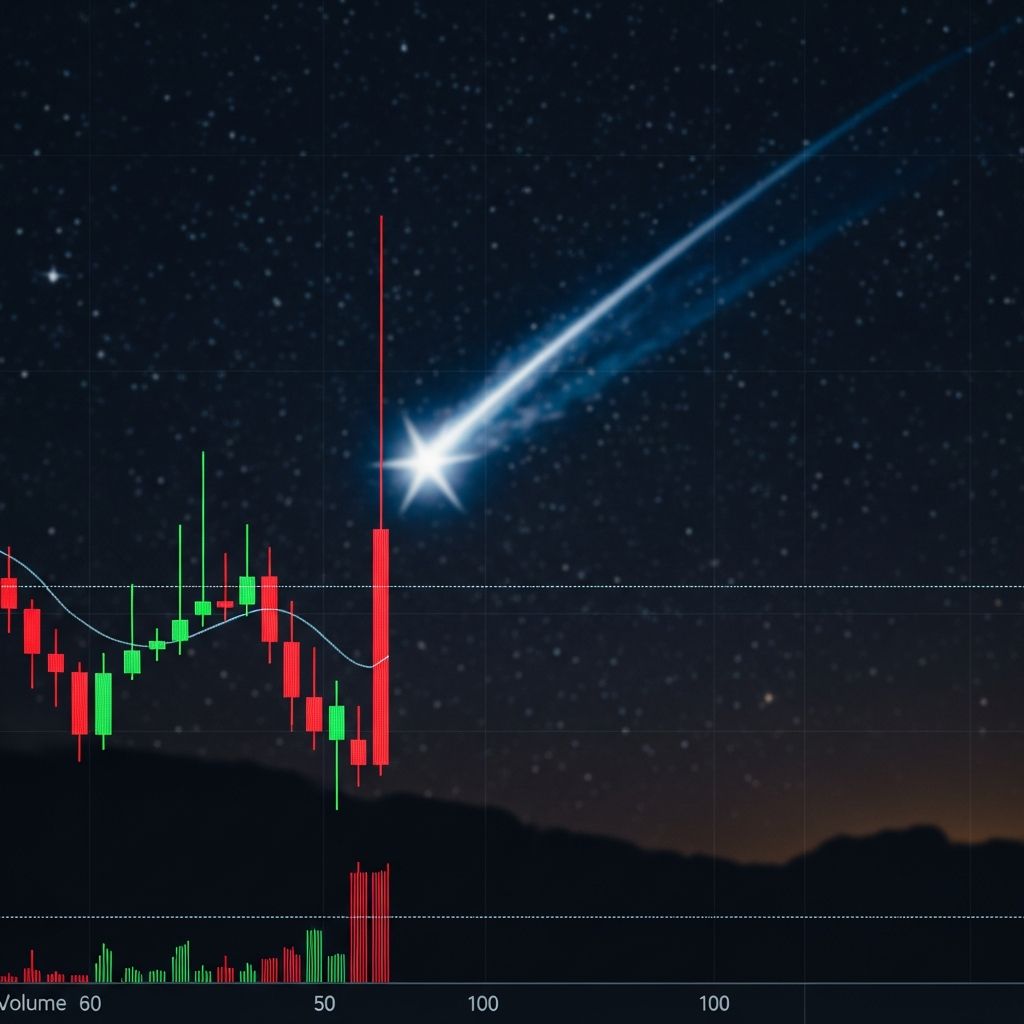
What Is a Shooting Star Candlestick?
A shooting star candlestick is a bearish reversal pattern that appears after a strong uptrend in the market. This single-candle formation signals potential weakness and suggests that buyers may be losing control of price momentum. The pattern represents a moment when optimism gives way to selling pressure, with the market finishing near its lows despite initial strength during the trading session.
The shooting star gets its name from its distinctive visual appearance on a price chart, resembling a star shooting across the sky. This easily recognizable pattern has become a staple in technical analysis, used by traders across various markets including stocks, forex, commodities, and cryptocurrencies. Understanding this pattern can provide traders with an early warning signal of potential trend reversals.
Key Characteristics of a Shooting Star
To properly identify a shooting star candlestick, you must understand its defining physical characteristics:
| Component | Description | Significance |
|---|---|---|
| Body | Small real body located near the session low | Shows sellers maintained control into the close |
| Upper Shadow/Wick | Long upper shadow, typically 2-3 times the body size | Indicates strong rejection of higher prices by sellers |
| Lower Shadow | Little to no lower shadow | Shows minimal buying interest at lower levels |
| Color | Can be red (bearish) or green (bullish) | Less important than the overall structure and context |
| Position | Must appear after an established uptrend | Critical for bearish signal validity |
How Shooting Stars Form
The formation of a shooting star follows a specific sequence that tells a story about market psychology and price action. Understanding this progression helps traders recognize genuine opportunities.
During a strong uptrend, buyers are in control and prices continue rising. On the day a shooting star forms, buyers initially push prices higher, creating the long upper wick. However, sellers enter the market aggressively, recognizing that prices have extended too far. Through a series of sell-offs, bears push prices back down to near the opening level or even lower. The candle closes near its lows, indicating that despite the intraday push higher, sellers ultimately maintained control.
This battle between bulls and bears is precisely what makes the shooting star pattern significant. The long upper wick represents wasted buying effort, while the small body near the lows shows sellers’ dominance. This rejection of higher prices at established resistance levels or near previous swing highs frequently precedes a decline in price.
Identifying Shooting Stars on Charts
Spotting shooting star patterns requires systematic observation and careful attention to context. Here are the essential steps:
- Locate the Uptrend: First, confirm that the market is in an established uptrend. The shooting star must appear after consistent higher highs and higher lows.
- Find the Resistance Level: Identify where the shooting star appears. The most reliable signals occur at or near significant resistance zones, previous swing highs, or round numbers.
- Analyze the Candle Structure: Verify that the candle meets all physical requirements: small body, long upper wick (at least 2x the body), and minimal lower shadow.
- Assess Volume: Look for elevated trading volume during the formation of the shooting star, particularly on the sell-off that creates the lower close.
- Check Time Frame Alignment: Ensure consistency across multiple time frames to avoid false signals from shorter-term noise.
Trading the Shooting Star Pattern
Successfully trading shooting star patterns requires more than just identifying the candle shape. Effective traders combine pattern recognition with confirmation signals and proper risk management.
Confirmation Signals
The most critical step in trading a shooting star is waiting for confirmation from subsequent candles. A shooting star alone is not a complete trading signal. The next candle (or the following day) should close below the shooting star’s body, ideally with above-average volume. This confirmation indicates that sellers are maintaining control and the potential reversal is genuine.
Additional confirmation tools include bearish divergence on the Relative Strength Index (RSI), breakdown of a bullish trendline, or the price failing to hold above key moving averages. When multiple confirmation factors align, the probability of a successful trade increases significantly.
Entry Strategy
Once confirmation appears, traders can enter short positions in several ways. The most common approach is to enter on a pullback to the shooting star’s body or at the point where the next candle closes below this level. Conservative traders might wait for a break below a nearby support level to reduce false signals.
Stop Loss Placement
Proper risk management dictates placing a stop-loss order above the shooting star’s highest point (the top of the upper wick). This location protects against invalidation of the pattern if prices continue higher. The stop-loss level should be determined before entering the trade.
Profit Targets
Traders typically target the previous swing low or use technical support levels identified on the chart. Many successful traders employ a risk-reward ratio of at least 1:2, meaning they aim for profits twice the size of their potential loss. This approach ensures that even a 50% win rate can be profitable over time.
Context and Confluence
The shooting star pattern’s reliability increases dramatically when it aligns with other technical analysis factors. Experienced traders rarely trade a shooting star in isolation; instead, they look for convergence of multiple signals.
Strong confluences include shooting stars appearing at major resistance levels, at the end of extended rallies, within strong downtrend channels, or when RSI shows bearish divergence. Weak setups occur when shooting stars appear in choppy, ranging markets or during consolidation periods without clear trend direction.
Additional context factors to consider include upcoming economic events, support and resistance zones from longer-term charts, and overall market sentiment. During periods of strong bullish momentum driven by positive news, shooting star patterns may fail more frequently.
Shooting Star vs. Similar Patterns
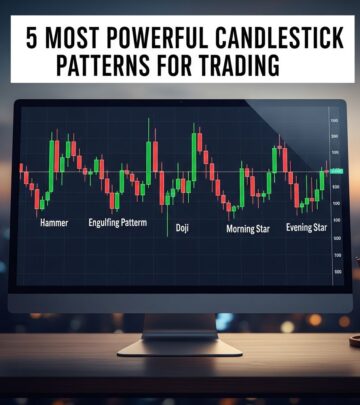
Several candlestick patterns share similarities with shooting stars, and distinguishing between them is crucial for accurate trading:
Shooting Star vs. Inverted Hammer
The inverted hammer is the opposite of a shooting star. While both have long upper wicks and small bodies, the inverted hammer appears after a downtrend and signals potential bullish reversal. The shooting star appears after an uptrend and signals bearish reversal. Context and position determine which pattern you’re analyzing.
Shooting Star vs. Doji
A doji has a very small or nonexistent body with upper and lower wicks of similar length. While a shooting star shows clear rejection of higher prices, a doji indicates indecision. Both can precede reversals, but they convey different market messages.
Shooting Star vs. Hammer
A hammer has a small body near the top of the range with a long lower wick and little upper wick. Hammers appear at support levels and signal potential bullish reversal. This pattern is essentially the inverse of a shooting star.
Statistical Reliability and Research
Academic and empirical research on shooting star patterns reveals mixed but useful results. Studies show that single-line shooting star patterns exhibit reversal success rates around 59% when properly confirmed. However, two-line shooting star variants sometimes behave as bullish continuation patterns, achieving approximately 61% success rates in certain databases.
These statistics underscore an important principle: knowing which specific variant you’re trading matters significantly. The variation in outcomes also emphasizes why confirmation signals and proper context are non-negotiable elements of any shooting star trading strategy.
Limitations of the Shooting Star Pattern
While useful, shooting star patterns have notable limitations that traders must acknowledge:
- Not Deterministic: The shooting star does not guarantee a reversal will occur. Many patterns fail, and prices continue higher despite a textbook shooting star formation.
- Requires Confirmation: Standing alone, the pattern lacks sufficient predictive power. Traders must wait for confirming signals, which means delayed entry and reduced profit potential.
- Ambiguous Entry/Exit Points: The pattern alone doesn’t specify precise entry prices, stop-loss placement, or profit targets. Traders must use additional tools and judgment.
- Confusion with Similar Patterns: Misidentification as an inverted hammer, doji, or other patterns can lead to trading the wrong direction.
- False Signals in Choppy Markets: During consolidation periods or low-trend-conviction markets, shooting stars produce more false signals.
Real-World Trading Example
Consider a practical scenario: A large-cap stock rallies approximately 12% over ten trading sessions and approaches a significant prior swing high. On the eleventh day, a shooting star forms with an upper wick approximately 2.5 times the size of the body. The next day, the stock gaps down and closes below the shooting star’s body on 40% above-average volume. A trader identifying this setup would short the position on the first pullback to the prior day’s close, place a stop-loss above the shooting star’s high, and target the previous swing low as a profit objective.
Integration with Other Technical Tools
Sophisticated traders combine shooting stars with additional technical analysis tools to improve signal quality. Moving averages help confirm trend direction, Fibonacci retracement levels identify potential support targets, and oscillators like RSI or MACD provide divergence signals. Volume analysis validates the conviction behind the pattern, while trendline breaks confirm reversal integrity.
Frequently Asked Questions
What exactly defines a shooting star candlestick?
A shooting star is a bearish reversal pattern consisting of a single candle with a small body positioned near the session low, a long upper wick (typically at least twice the body size), and little to no lower wick. It must appear after an established uptrend to be considered a valid signal.
How reliable is the shooting star pattern for trading?
The shooting star has moderate reliability, with research suggesting success rates around 59% for properly confirmed patterns. Reliability increases significantly when the pattern appears at resistance levels, follows strong uptrends, and receives confirmation from subsequent price action and volume.
What is the opposite pattern to a shooting star?
The inverted hammer is the opposite pattern. While a shooting star appears after an uptrend and signals bearish reversal, the inverted hammer appears after a downtrend and signals bullish reversal. Both have long upper wicks but opposite implications based on their position in the trend.
Should I trade shooting stars without confirmation?
No, trading shooting stars without confirmation significantly reduces your win rate and increases risk. Always wait for the next candle to close below the shooting star’s body with above-average volume before entering a position. This confirmation step is essential for filtering false signals.
What time frames work best for shooting star patterns?
Shooting stars work across all time frames, from intraday charts to daily and weekly timeframes. However, patterns on longer time frames generally produce more reliable signals with greater profit potential. Many traders look for alignment across multiple time frames to confirm pattern validity.
How should I position my stop-loss with shooting stars?
Place your stop-loss above the highest point of the shooting star’s upper wick. This location protects your position if the pattern fails and prices continue higher. The precise placement depends on your risk tolerance and position size.
Can shooting stars appear in any market?
Yes, shooting star patterns work in stocks, forex, commodities, cryptocurrencies, indices, and ETFs. The pattern’s universality stems from the underlying market psychology it represents—rejection of higher prices. However, apply proper position sizing and risk management for each market’s specific volatility characteristics.
References
- Shooting Star Candlestick: Meaning, Strategy, and Real Market Examples — Alphabots. Accessed 2025. https://alphabots.in/blog/shooting-star-candlestick/
- Shooting Star Candlestick: Early Warning for Market Reversals — Vocal Media. Accessed 2025. https://vocal.media/trader/shooting-star-candlestick-early-warning-for-market-reversals
Similar Articles








Read full bio of Sneha Tete