Shifts in Department Store Consumer Spending
Explore how economic pressures and digital innovation are reshaping spending patterns at department stores in 2026 and beyond.
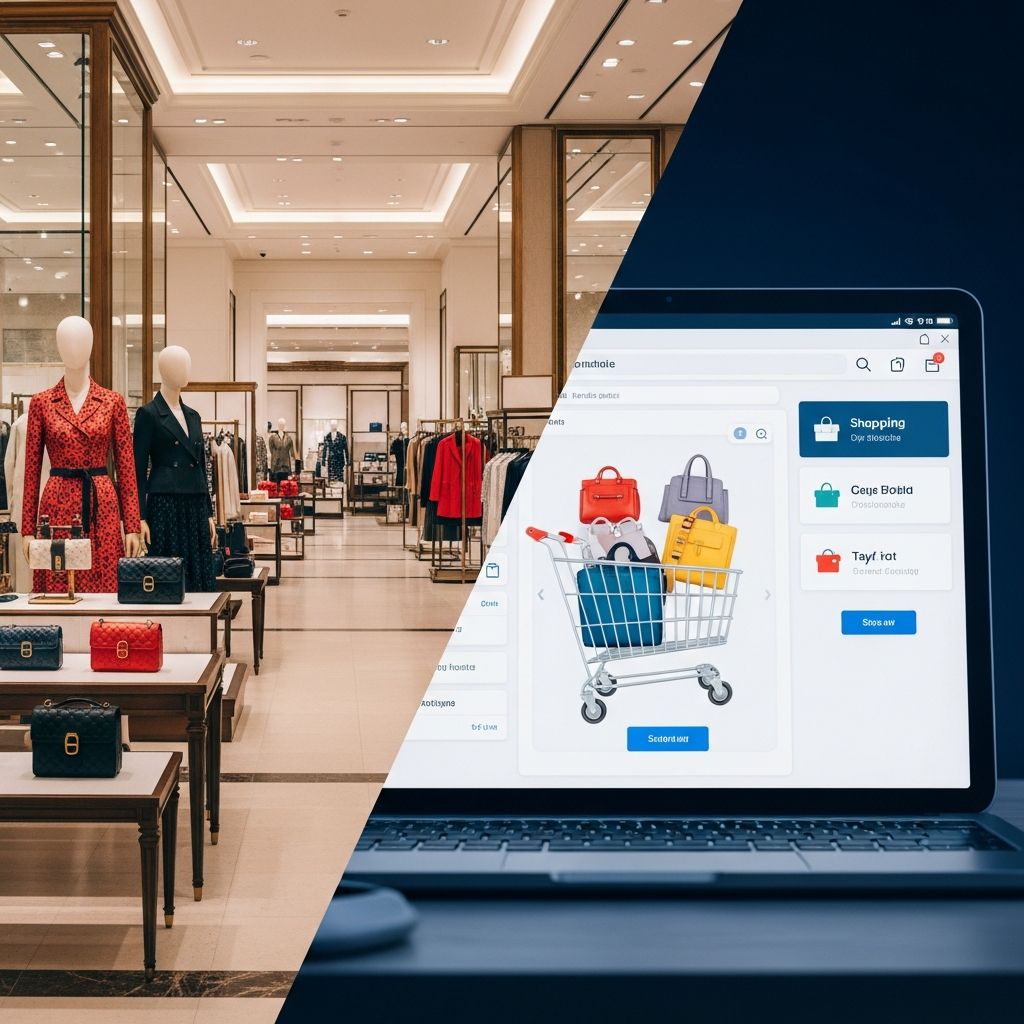
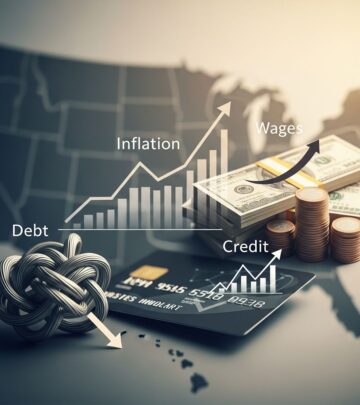
Department stores are navigating a rapidly changing retail landscape where consumer spending patterns reflect broader economic realities. Shoppers are increasingly dividing between bargain hunting and premium indulgences, driven by inflation, wage stagnation, and technological advancements. This article delves into these dynamics, drawing on recent market data to outline key transformations and strategies for survival.
The Rise of Polarized Shopping Behaviors
Today’s consumers exhibit starkly divided preferences, favoring either deep discounts or high-end luxury experiences over traditional mid-tier options. Economic pressures like lingering inflation and softening job markets push many toward value-oriented purchases, while affluent buyers seek exclusive, experiential retail.
- Discount Surge: Inflation-weary households prioritize off-price retailers, with spending at chains like Costco rising 12% through late 2025.
- Luxury Boom: Ultra-premium segments report 12% annual revenue growth, outpacing mid-market peers through personalized services and brand collaborations.
- Middle-Market Squeeze: Traditional department stores in the ‘middle ground’ face existential threats, exemplified by major bankruptcies signaling the erosion of this category.
This polarization underscores a fundamental shift: department stores must redefine themselves as experiential destinations to capture both ends of the spectrum.
Market Size and Declining Footprint
The global department store sector, valued at $2.07 trillion in 2024, is projected to reach $2.5 trillion by 2035 with a modest 1.73% CAGR. However, the U.S. market tells a story of contraction, with store counts dropping 32% from 7,885 in 2015 to 5,010 by 2024 and sales hitting $133 billion in 2023—the lowest since 1992.
| Metric | 2023/2024 Value | Trend | Projection |
|---|---|---|---|
| U.S. Store Count | 5,349 (2023) | -32% decline | 5,010 (2024) |
| U.S. Sales | $133B | Downward | Record lows |
| Global Market | $2.07T (2024) | 1.73% CAGR | $2.5T by 2035 |
| Luxury Growth | N/A | 12% annual | Outpacing mid-tier |
Despite challenges, segments like apparel ($800B in 2024) and electronics ($450B) remain dominant, highlighting opportunities in high-demand categories.
Consumer Sentiment and Spending Caution
Affordability concerns dominate, with 84% of consumers planning to reduce spending due to rising costs. Gen Z leads cutbacks, slashing holiday budgets by 23%—the steepest among generations. Real personal consumption growth is forecasted to slow to 1.5% in 2026, down from 2.5-3% prior years, as wage growth hovers at 3.5% barely above inflation.
Four in 10 Americans now show deal-driven habits, including higher-income households redefining ‘value.’
Moody’s analysts note fading momentum from softening labor conditions, squeezing real incomes and discretionary budgets.
Omnichannel Strategies Driving Recovery
Successful department stores leverage hybrid models, blending physical and digital channels. Omnichannel approaches yield 19% engagement rates—3.5x higher than single-channel peers. New physical locations boost online sales by 50.6%, the highest among retail categories.
- Curbside pickup lifts conversion rates by 25.9%.
- 27% of shoppers split time equally between online and in-store.
- Macy’s leads satisfaction rankings, followed by Belk and Kohl’s.
Holiday shopping reinforces department stores as top physical destinations, sustaining foot traffic amid e-commerce growth.
Marketing and Advertising Investments
The industry allocated $2.12B to advertising in 2022, with Macy’s accounting for over 60% ($1.3B). Digital ad spend surges from $65.55B in 2022 to a projected $92.2B by 2025 (40.6% growth). In-store retail media is set to explode from $370M in 2024 to $1.06B by 2028 (186% growth).
Technology and AI Transformations
AI adoption accelerates, with 70% of executives planning personalization implementations. Global AI spending hits $2T in 2026 (36.8% growth), focusing on CRM, predictive analytics, and supply chain tools. Walmart’s ‘Stores of the Future’ exemplify this, with 150+ new builds emphasizing QR codes, expanded selections, and seamless pick-up.
Department stores surviving the shakeout invest in real-time inventory, personalized recommendations, and agentic commerce for enhanced traceability.
Category-Specific Insights
Apparel and Sizing Shifts
Apparel dominates at $800B, but trends like GLP-1 drug usage spur demand for smaller sizes, prompting inventory adjustments and ‘revenge shopping’ indulgences.
Electronics and Holiday Peaks
Valued at $450B, electronics underscore tech’s role, amplified during holidays when department stores shine as purchase hubs.
Future Outlook and Strategic Recommendations
Retailers anticipate mid-single-digit growth in 2025-2026, fueled by M&A (53% of executives planning increases) and resilient U.S. dominance (34% global share). Survivors prioritize supply chain robustness, e-commerce integration, and differentiation via value or premium service.
- Transform into experiential destinations.
- Embrace AI for personalization and efficiency.
- Optimize omnichannel for higher engagement.
Frequently Asked Questions
What is driving the decline in U.S. department store numbers?
A 32% drop since 2015 stems from e-commerce competition, shifting preferences to extremes, and economic pressures eroding mid-market viability.
How are luxury department stores performing?
They achieve 12% revenue growth through exclusive experiences, far exceeding mid-tier declines.
What role does AI play in department store revival?
70% of leaders invest in AI for personalization, forecasting, and optimization, with global spend reaching $2T in 2026.
Are consumers cutting back on spending?
Yes, 84% plan reductions, especially Gen Z at 23% holiday cuts, amid 1.5% consumption growth slowdown.
Which strategies boost department store sales?
Omnichannel (50.6% online lift from new stores), curbside (25.9% conversions), and multi-channel engagement (19% rates).
References
- 2026 Retail Trends: Thriving Amid AI Disruption — T-ROC. 2026. https://trocglobal.com/2026-retail-industry-trends-growth/
- 6 retail trends to watch in 2026 — Retail Dive. 2026. https://www.retaildive.com/news/retail-trends-to-watch-2026/808341/
- 3 key retail trends for 2026 — Yahoo Finance (YouTube). 2026. https://www.youtube.com/watch?v=h-ey6M7F-8s
- 2026 Retail Industry Global Outlook — Deloitte Insights. 2026. https://www.deloitte.com/us/en/insights/industry/retail-distribution/retail-distribution-industry-outlook.html
- TOP 20 DEPARTMENT STORE MARKETING STATISTICS 2026 — Amra & Elma LLC. 2026. https://www.amraandelma.com/department-store-marketing-statistics/
- 10 trends and predictions for retail in 2026 — National Retail Federation (NRF). 2026. https://nrf.com/blog/10-trends-and-predictions-for-retail-in-2026
- Fashion Retail Outlook 2026 — Strategy&. 2026. https://www.strategyand.pwc.com/de/en/industries/consumer-markets/fashion-retail-outlook.html
Similar Articles








Read full bio of medha deb