Share Certificate: Definition, Types, and Importance
Complete guide to share certificates: Understanding ownership proof and investment documentation.

What Is a Share Certificate?
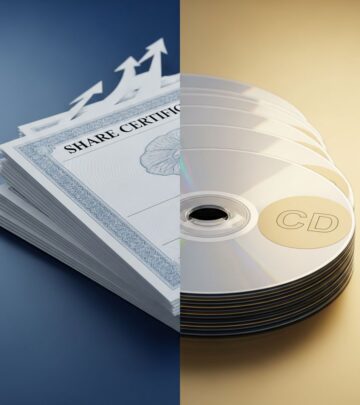
A share certificate is a legal document that serves as proof of ownership in a corporation or investment fund. It represents the ownership stake that an investor holds in a company and documents the number of shares owned by that individual or entity. Share certificates have historically been among the most tangible forms of evidence that a person owns equity in a business, providing official documentation of investment ownership and the rights that accompany such ownership.
The share certificate typically includes essential information such as the name of the corporation or fund, the number of shares represented, the class of shares (if applicable), the certificate number, and the date of issuance. These documents serve as formal proof that distinguishes one shareholder from another and establishes the investor’s claim to a portion of the company’s assets and earnings.
Understanding Share Certificates
Share certificates represent fractional ownership in a company. When an investor purchases shares, they are essentially buying a portion of the business. The certificate documents this ownership relationship and serves as the official record of that investment. Historically, physical share certificates were issued by companies to shareholders, and these paper documents were crucial for establishing and transferring ownership rights.
The significance of share certificates extends beyond mere documentation. They represent voting rights in corporate decisions, potential dividend payments, and claims on company assets in case of liquidation. Investors holding share certificates are considered part-owners of the corporation, though their level of control and voting power depends on the number and type of shares they hold.
Key characteristics of share certificates include:
- Official proof of equity ownership in a corporation
- Documentation of the exact number of shares owned
- Transferable nature, allowing for buying and selling of shares
- Association with voting rights and dividend entitlements
- Official seal or signature from company authorities
- Unique certificate numbers for tracking and record-keeping
Types of Share Certificates
Share certificates come in various forms, each serving different investor needs and corporate structures. Understanding these types helps investors recognize what ownership stake they hold and what rights are associated with their shares.
Common Stock Certificates
Common stock certificates represent ownership in the most basic form. Holders of common stock typically have voting rights in corporate matters and may receive dividends if the company distributes profits. Common shareholders are last in line during liquidation, meaning they receive compensation only after all debts and preferred shareholders are paid.
Preferred Stock Certificates
Preferred stock certificates represent a different class of ownership with distinct characteristics. Preferred shareholders typically have priority in receiving dividends and have claims on company assets that supersede common shareholders. However, preferred shareholders often have limited or no voting rights. These certificates are particularly attractive to investors seeking more stable income streams.
Restricted Stock Certificates
Restricted stock certificates represent shares that cannot be freely sold or transferred for a specified period. These are commonly issued to company employees as part of compensation packages. Restrictions may include vesting periods or conditions that must be met before the shares can be sold on the open market.
Bearer Certificates
Bearer certificates represent ownership to whoever physically holds the document, without registration of the owner’s name. This type of certificate transfers ownership through physical delivery, making them similar to cash. Bearer certificates are less common in modern markets due to regulatory and security concerns.
Historical Evolution of Share Certificates
The history of share certificates reflects the evolution of capital markets and securities regulation. In the early days of stock markets, physical certificates were the only proof of ownership. These ornately designed documents served as both legal proof and valuable artifacts. Companies took great care in printing share certificates with intricate designs, security features, and official seals to prevent fraud and counterfeiting.
For centuries, share certificates were issued as printed documents that shareholders held physically. Trading these certificates involved physical transfer, which created logistical challenges and security risks. The process of settling trades could take days or weeks, during which time the physical documents had to be transported and verified.
The advent of electronic systems revolutionized share ownership documentation. By the 1970s and 1980s, securities markets began transitioning to book entry systems where shares were recorded electronically rather than through physical certificates. This transformation significantly improved efficiency, reduced fraud, and accelerated settlement times.
Modern Share Certificates and Dematerialization
In contemporary financial markets, most shares are held in dematerialized form, meaning they exist only as electronic records rather than physical certificates. This digital transformation has made trading faster, cheaper, and more secure. Investors typically receive electronic confirmations of ownership rather than physical documents.
Modern share certificates exist primarily in these forms:
- Electronic Records: Digital ownership records maintained by brokers and securities depositories
- Book Entry Statements: Periodic statements from brokers confirming ownership position
- Physical Certificates: Still available in some jurisdictions and for certain types of shares, though increasingly rare
- CUSIP/ISIN Numbers: Standardized identifiers replacing physical certificates for tracking purposes
Rights Associated with Share Certificates
Share certificates grant investors several important rights that vary depending on the class and type of shares:
Voting Rights
Holders of common stock certificates typically have the right to vote on corporate matters such as election of the board of directors, approval of major corporate transactions, and policy decisions. The number of votes is usually proportional to the number of shares held, following the principle of one vote per share.
Dividend Rights
Share certificates entitle holders to receive a portion of company profits distributed as dividends. Dividend payments are declared by the board of directors and distributed to shareholders on a per-share basis. The frequency and amount of dividends vary based on company performance and policy.
Liquidation Rights
In the event of company dissolution, share certificates give shareholders claims on remaining assets after all debts and obligations are settled. The priority of these claims depends on the type of shares held, with preferred shares typically receiving priority over common shares.
Transfer Rights
Share certificates represent transferable ownership, allowing investors to sell their shares to other parties. This transferability is fundamental to liquid capital markets and enables investors to convert their stock holdings into cash.
The Role of Share Certificates in Corporate Governance
Share certificates play a crucial role in corporate governance frameworks. They establish the legal relationship between shareholders and the corporation and define the extent of shareholder interests in the company. The specific rights and privileges outlined in certificates help maintain clarity and fairness in corporate decision-making processes.
Companies maintain detailed records of share certificates and their holders to facilitate proper governance. These records ensure that voting rights are accurately distributed, dividends are paid to rightful recipients, and corporate communications reach all shareholders. In many jurisdictions, companies are required to maintain a share registry that documents all outstanding certificates and their current holders.
Share Certificates Versus Brokerage Statements
In modern investing, brokerage statements have largely replaced physical share certificates as proof of ownership. When investors purchase shares through a broker, they receive electronic confirmations and periodic statements rather than physical certificates. These statements serve the same legal purpose of documenting ownership but offer several advantages:
- Easier to store and manage than physical documents
- Immediate electronic transfer of ownership
- Reduced risk of loss or damage
- Consolidated reporting of multiple holdings
- Faster trading and settlement processes
Obtaining Physical Share Certificates Today
While physical share certificates are increasingly rare, investors can typically request them from their brokers or directly from companies. The process involves submitting a formal request and paying any associated fees. Some investors prefer physical certificates for sentimental reasons, historical collections, or specific business purposes.
When obtaining physical share certificates, investors should consider the following:
- Processing fees may apply for certificate issuance
- The process can take several weeks to complete
- Physical certificates require secure storage and insurance
- They complicate the trading process compared to electronic ownership
- Lost or damaged certificates may require special procedures for replacement
Share Certificates and Fraud Prevention
Historically, share certificates have included numerous security features to prevent counterfeiting and fraud. Modern certificates incorporate sophisticated anti-counterfeiting measures including watermarks, unique numbering systems, special printing techniques, and official seals or signatures. These features help protect both investors and companies from fraudulent schemes.
The transition to electronic record-keeping has dramatically reduced certificate fraud by eliminating the need to produce and transfer physical documents. Digital systems employ encryption, authentication protocols, and centralized record-keeping to ensure the integrity of ownership records.
Frequently Asked Questions (FAQs)
Q: What is the difference between a share certificate and a stock certificate?
A: Share certificates and stock certificates are essentially the same thing. Both terms refer to the official document proving ownership of shares in a corporation. The terms are used interchangeably, though “share certificate” may be used more commonly in certain jurisdictions or contexts.
Q: Do I need a physical share certificate to own stock?
A: No, modern investors typically hold shares in electronic form through brokerage accounts. Physical certificates are no longer necessary for ownership; electronic records maintained by brokers and securities depositories serve as proof of ownership and facilitate trading.
Q: Can I sell shares without a physical certificate?
A: Yes, the vast majority of share sales occur without physical certificates. Electronic records and book entry systems make it possible to buy and sell shares instantly without any need for physical documentation.
Q: What happens if I lose my share certificate?
A: If you lose a physical certificate, you should immediately contact the company’s transfer agent or your broker. They can issue a replacement certificate after verifying your ownership. You may need to provide documentation and pay a replacement fee.
Q: Are antique share certificates valuable?
A: Yes, historical share certificates from defunct companies or famous businesses can be valuable to collectors. The value depends on factors such as the company’s historical significance, the certificate’s rarity, design quality, and condition.
Q: What rights do share certificates grant me?
A: Share certificates typically grant voting rights (for common stock), dividend rights, liquidation rights, and the ability to transfer your ownership to others. The specific rights depend on whether your shares are common or preferred stock.
Q: Can companies issue shares without certificates?
A: Yes, most modern companies issue shares in book entry form, existing only as electronic records rather than physical certificates. This is the standard practice in most developed securities markets.
References
- Securities and Exchange Commission (SEC) – Investor Publications — U.S. Securities and Exchange Commission. 2024. https://www.sec.gov/investor/
- Understanding Stock Ownership and Share Certificates — Financial Industry Regulatory Authority (FINRA). 2024. https://www.finra.org/investors/learn-to-invest/
- Depository Trust & Clearing Corporation – Securities Processing — The Depository Trust & Clearing Corporation (DTCC). 2024. https://www.dtcc.com/
- Corporate Governance and Share Ownership — Organisation for Economic Co-operation and Development (OECD). 2023. https://www.oecd.org/corporate/
- Evolution of Securities Markets and Book Entry Systems — Federal Reserve Board. 2023. https://www.federalreserve.gov/
Similar Articles








Read full bio of medha deb