Settled Accounts on Credit Reports: Duration and Impact
Discover how long settled debts linger on your credit history, their effects on scores, and strategies to minimize long-term damage.
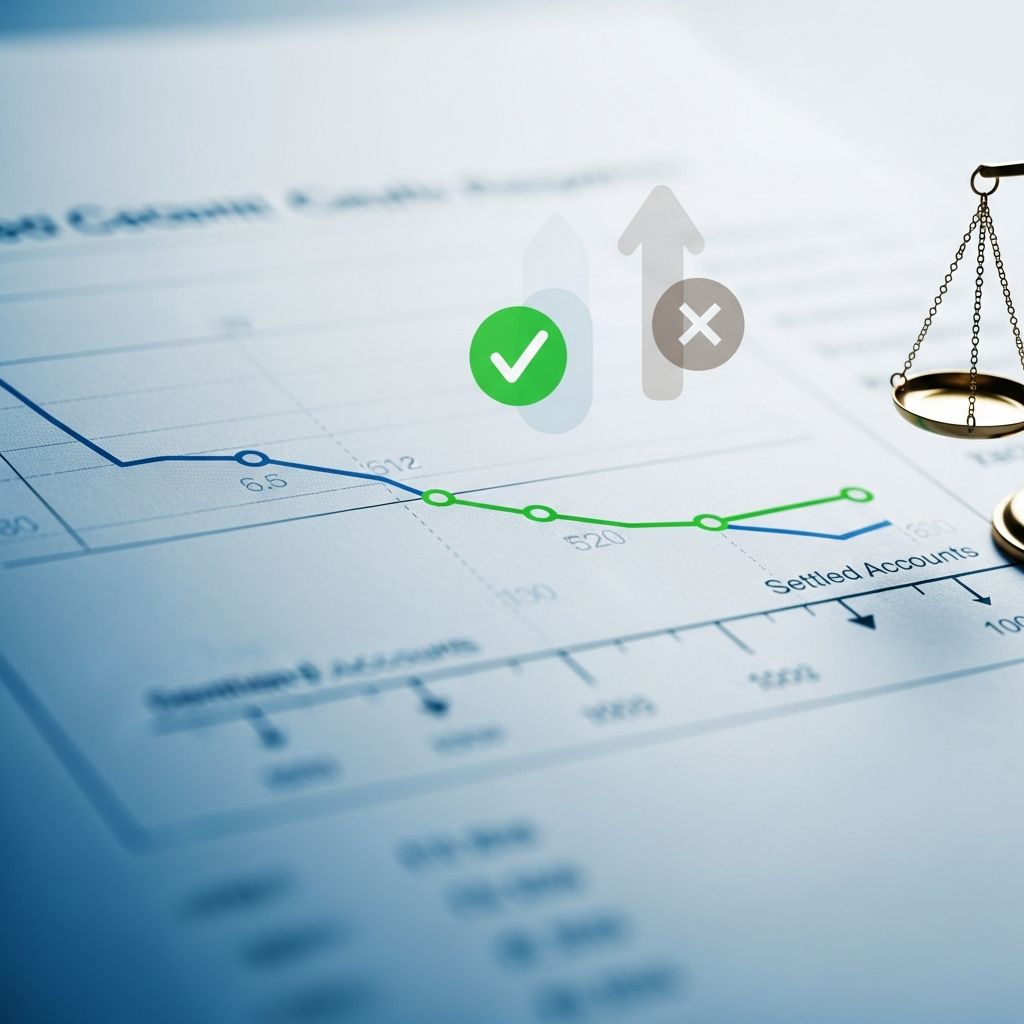
Settled accounts represent a common outcome for individuals facing financial hardship who negotiate with creditors to pay less than the full debt owed. These notations appear on credit reports and carry specific implications for creditworthiness. Understanding their lifespan, reporting nuances, and recovery strategies is essential for anyone navigating debt resolution.
Defining Settled Accounts in Credit Contexts
A
settled account
occurs when a creditor agrees to accept a reduced payment to close out a debt, rather than the original full balance. This arrangement typically arises after missed payments lead to delinquency, prompting negotiations. Unlike accounts marked as paid in full, settled entries signal to lenders that the borrower faced challenges meeting the original terms.Common scenarios include credit card balances, personal loans, or medical bills where the debtor offers a lump sum or installments lower than owed. Upon payment, the creditor updates the account status, often using phrases like “paid settled for less than full balance,” “settlement accepted,” or “account legally paid in full for less than full balance”. This distinction is critical, as it differentiates from fully satisfied obligations.
Legally, a settled account confirms resolution through a written agreement, serving as proof that both parties have agreed to the terms. It closes the matter but leaves a record on credit files. Importantly, settling usually results in account closure, preventing further use, such as reactivating a settled credit card.
The Standard Timeline for Settled Accounts
Settled accounts generally remain visible on credit reports for
up to seven years
from the date of the original delinquency—the first missed payment that triggered the chain of events leading to settlement. This timeline aligns with regulations under the Fair Credit Reporting Act (FCRA), which limits reporting of most negative information to seven years.For example, if delinquency began in June due to job loss on a $5,000 credit card debt, and settlement followed months later, the seven-year clock starts from that initial June missed payment, not the settlement date. The entry should show as “closed” with a zero balance and the settlement notation.
| Account Status | Reporting Duration | Starting Point |
|---|---|---|
| Settled Account | 7 years | Date of first delinquency |
| Paid in Full | Until closed + 10 years (positive) | Account closure date |
| Charge-Off | 7 years | Date of charge-off |
This table compares key timelines. Note that while settled accounts are negative, they are preferable to unresolved delinquencies or charge-offs.
Why Settled Accounts Negatively Affect Credit Scores
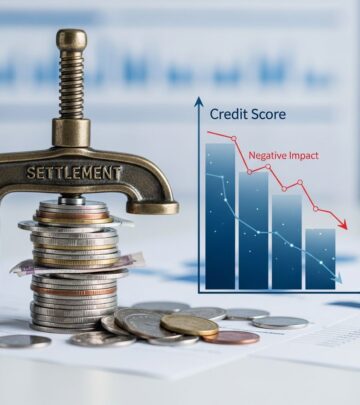
Payment history constitutes 35% of FICO scores, and settled accounts register as negative items akin to delinquencies. Lenders view them as indicators of past financial distress, increasing perceived risk compared to clean, paid-in-full records.
The notation “settled” or “less than full balance” explicitly flags incomplete repayment, potentially lowering scores more than standard closures. Impacts include higher interest rates on new credit, loan denials, or stricter terms. However, the effect diminishes over time—typically most severe in the first two years, then tapering.
- Immediate drop: Scores may fall 50-100+ points upon reporting.
- Mid-term: Ongoing drag while visible, but offset by positive behaviors.
- Long-term: Minimal after 4-5 years with consistent good habits.
Regularly monitoring reports via AnnualCreditReport.com helps catch inaccuracies, such as settled debts erroneously shown as open.
Differences: Settled vs. Satisfied vs. Paid in Full
Terminology matters on credit reports. “**Satisfied**” often means full repayment after default, carrying a default marker but positive closure. In some systems, it appears for six years from default. Conversely, “settled” implies partial payment post-delinquency, always negative.
“**Paid in full**” is ideal, boosting scores without caveats. Settled statuses like “partially satisfied” further highlight shortfalls. Regional variations exist; U.S. reports emphasize the seven-year rule uniformly.
Potential Reporting Errors and How to Address Them
Errors occur: settled accounts might display as open, with balances, or incorrect dates. This violates FCRA guidelines. Steps to fix:
- Obtain free weekly reports from Equifax, Experian, TransUnion.
- Identify discrepancies, like non-closed status.
- File disputes online or by mail with bureaus, including settlement proof.
- Follow up; bureaus must investigate within 30 days.
If unresolved, consult Consumer Financial Protection Bureau (CFPB) resources.
Strategic Approaches to Debt Settlement
Before settling, weigh options: debt management plans preserve “paid” status better than settlement. If proceeding:
- Negotiate directly or via reputable firms.
- Prioritize lump-sum offers for better terms.
- Seek “pay for delete” agreements (not guaranteed).
Post-settlement, focus on rebuilding: timely payments on remaining accounts, low utilization, new positive credit.
Rebuilding Credit After a Settlement
Recovery is achievable. Strategies include:
- Secured cards: Build history with low-risk options.
- Authorized user status: Piggyback positive accounts.
- Score monitoring: Track progress monthly.
Expect gradual improvement; many reach good scores (670+) within 2-3 years. Avoid new debt during early recovery.
Frequently Asked Questions (FAQs)
How long exactly does a settled account stay on my credit report?
Up to seven years from the first delinquency date leading to settlement.
Does settling debt improve my credit score immediately?
No, it remains negative but is better than open delinquency; positive habits help over time.
Can I remove a settled account early?
Only via pay-for-delete (rare) or successful disputes for errors; otherwise, it auto-expires.
Is ‘settled’ better than ‘charge-off’?
Yes, as it shows resolution, lessening long-term harm.
Will settled accounts affect renting or employment?
Possibly, if landlords/employers check credit; impact fades with age.
References
- How Settlement Accounts Appear in Collections: Tips for Agencies — Tratta.io. 2023. https://www.tratta.io/blog/settlement-account-definition-workings
- Account Settled: What It Means in Legal Terms and Implications — USLegalForms. N.D. https://legal-resources.uslegalforms.com/a/account-settled
- Why Settled Debts May Appear as Open on Your Credit Report — McCarthy Lawyer. 2025-09-24. https://mccarthylawyer.com/2025/09/24/why-settled-debts-may-appear-as-open-on-your-credit-report/
- How Long Do Settled Accounts Stay on a Credit Report? — Experian. N.D. https://www.experian.com/blogs/ask-experian/how-long-do-settled-accounts-remain-on-a-credit-report/
- The Difference Between ‘Settled’ and ‘Satisfied’ in a Credit Report — Scotland Debt. N.D. https://www.scotlanddebt.co.uk/articles/understanding-your-credit-report-the-difference-between-settled-and-satisfied
- Remove Settled Accounts From Your Credit Report and Rebuild Credit — Tate Esq. N.D. https://www.tateesq.com/learn/remove-settled-accounts-credit-report
- What Is Paid in Full vs. Settlement On A Credit Report — Money Management International. N.D. https://www.moneymanagement.org/blog/paid-in-full-versus-paid-off-less-than-full-balance
Similar Articles








Read full bio of Sneha Tete