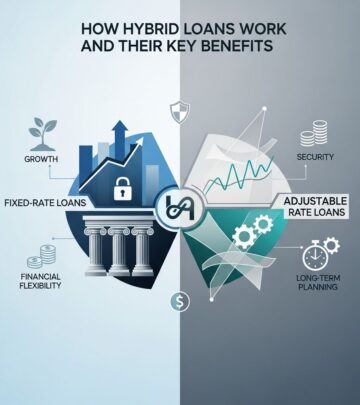
Senior Stretch Loan: Definition & How It Works
Master senior stretch loans: A hybrid financing solution for businesses seeking flexible debt structures and higher borrowing capacity.

Understanding Senior Stretch Loans
A senior stretch loan, also known as an overadvance loan or unitranche financing, represents a sophisticated hybrid debt instrument that combines the characteristics of both asset-based lending and cash flow lending. This innovative financing structure has become increasingly important in the middle market, providing companies with greater flexibility in their capital structure while allowing lenders to optimize their risk-adjusted returns.
The fundamental concept behind senior stretch loans is straightforward yet powerful: by merging two distinct lending methodologies into a single facility, lenders can accommodate borrowers who might not qualify for traditional financing alone. This hybrid approach enables businesses to access larger loan amounts than they could obtain through conventional senior debt alone, while simultaneously providing lenders with dual sources of repayment security.
The Hybrid Structure Explained
Senior stretch loans occupy a unique position in the corporate debt hierarchy. Rather than existing as separate senior and subordinated tranches managed by different lenders, stretch loans consolidate these elements into a unified package. This consolidation offers significant advantages for borrowers, particularly in terms of documentation complexity, approval timelines, and overall transaction costs.
The asset-based component of a senior stretch loan focuses on the borrower’s tangible assets, such as inventory, accounts receivable, equipment, and real estate holdings. This portion of the loan is secured by first liens on these assets and typically carries lower interest rates due to the concrete collateral backing.
The cash flow component, conversely, relies on the borrower’s operational performance and ability to generate earnings. This portion of the loan is evaluated based on EBITDA, cash flow projections, and the company’s historical financial performance. By combining these two evaluation methods, lenders gain multiple perspectives on borrower creditworthiness and repayment capacity.
Ideal Borrower Profiles
Senior stretch loans are particularly well-suited for two distinct categories of companies:
Turnaround and Troubled Companies
Companies experiencing financial distress or undergoing operational restructuring often possess substantial asset bases but lack stable or predictable cash flows. Traditional cash flow loans would be insufficient and prohibitively expensive for these entities. Senior stretch loans leverage the company’s asset base to provide the necessary capital while accounting for cash flow uncertainty. This makes stretch financing an ideal solution for leveraged buyouts of companies in transition or those requiring operational improvement.
Asset-Light Businesses with Strong Cash Generation
Conversely, growing companies with healthy operational cash flows but limited tangible assets represent another ideal borrower profile. Pure asset-based lending would provide inadequate financing for these businesses despite their proven ability to generate revenue. By incorporating the cash flow component into the loan structure, lenders can provide significantly more capital than asset-only loans would permit, recognizing the company’s earnings potential.
Loan-to-Value Ratios and Lending Capacity
One of the most significant advantages of senior stretch loans is their ability to provide higher loan-to-value (LVR) ratios than conventional senior debt. Traditional senior construction and development financing typically caps LVR at approximately 65 percent. Senior stretch loans can extend lending capacity to 75 percent or higher, with some specialized lenders offering coverage up to 90 percent of total development costs.
This increased lending capacity fundamentally changes the economics of capital deployment for borrowers. Rather than requiring 35 percent equity contributions on each project, stretch financing may require only 10-25 percent, dramatically improving return on invested capital. For developers managing multiple projects simultaneously, this enhanced leverage enables superior capital efficiency and accelerated portfolio growth.
Key Characteristics and Terms
Loan Amounts and Duration
Senior stretch loans typically range from $1 million to $15 million, though larger facilities are available for established borrowers with significant transaction sizes. Loan terms generally span 6 to 18 months, though some facilities extend longer depending on the underlying business requirements and exit strategy. The term structure often aligns with the expected timeline for asset realization, project completion, or operational improvement initiatives.
Security and Collateral
Senior stretch loans are secured by first mortgage positions on collateral, providing lenders with superior claim priority in default scenarios. For development financing, this typically includes real property and improvements. For operating companies, security extends to all material business assets including receivables, inventory, equipment, and intellectual property.
Pricing and Fees
Interest rates on senior stretch loans generally range from 9.5 percent per annum and upward, reflecting the elevated risk profile compared to traditional senior debt. Establishment fees typically range from 1.5 percent to 2.5 percent of the committed facility size, with ongoing monthly administration fees of approximately 0.04 percent per month. These fees compensate lenders for the increased credit risk inherent in higher LVR lending.
Advantages for Borrowers
Senior stretch loans offer several compelling benefits for qualified borrowers:
Enhanced Capital Access: By combining asset and cash flow assessment, borrowers access significantly more capital than either lending methodology alone would provide.
Simplified Documentation: Unlike traditional structures requiring coordination between senior and mezzanine lenders, stretch loans consolidate all funding through a single lender. This substantially reduces documentation complexity, legal fees, and administrative overhead.
Faster Execution: Single-lender structures eliminate coordination delays, enabling quicker credit decisions and faster funding timelines critical for time-sensitive transactions.
Improved Economics: Reduced equity requirements on individual projects allow borrowers to deploy capital across multiple initiatives simultaneously, enhancing overall portfolio returns.
Operational Flexibility: The combined debt structure provides flexibility during the loan period, allowing borrowers to adjust capital deployment based on changing market conditions or operational requirements.
Risk Considerations for Lenders
The elevated loan-to-value ratios inherent in senior stretch lending create proportionally higher risk for lenders compared to traditional senior debt. Several factors influence lender risk assessment:
Collateral Coverage Erosion: Higher LVR means less collateral cushion relative to outstanding loan balances. A modest decline in asset values can quickly erode lender protection.
Cash Flow Dependency: As the cash flow component becomes more important with elevated leverage, borrower earnings volatility directly impacts repayment capacity and lender risk.
Market Sensitivity: For development or real estate-focused stretch loans, market conditions significantly influence exit values and recovery prospects in default scenarios.
Refinance Risk: Borrowers may struggle to refinance stretch facilities if market conditions deteriorate or business performance declines, forcing lender participation in workout scenarios.
Comparison with Alternative Financing Structures
| Structure | Typical LVR | Lenders Involved | Documentation Complexity | Cost Efficiency |
|---|---|---|---|---|
| Senior Only | 60-65% | Single | Moderate | Lower fees |
| Senior + Mezzanine | 75-90% | Two or more | High | Higher fees |
| Senior Stretch | 75-90% | Single | Moderate | Lower fees |
Applications in Different Sectors
Real Estate Development
Senior stretch loans have become particularly prevalent in real estate development financing. Developers benefit significantly from the enhanced leverage, enabling more efficient capital deployment across multiple projects. The exit strategy remains the sale or refinancing of completed residential or commercial projects, with repayment funding from these transactions.
Leveraged Buyouts
In middle-market acquisitions, senior stretch loans provide flexible leverage for buyers with mixed asset profiles. Companies with strong earnings but moderate asset bases can access adequate leverage while maintaining acceptable debt structures.
Turnaround and Restructuring
Distressed companies requiring operational improvement can utilize stretch loans to fund working capital and restructuring initiatives while maintaining adequate liquidity for operational flexibility.
Qualifying for Senior Stretch Loans
Access to senior stretch financing requires meeting several key criteria. Borrowers typically need proven track records in their industries, established management teams with relevant expertise, and realistic business plans with clearly articulated value creation strategies. For development-focused stretch lending, experience as a successful project developer is often mandatory.
Lenders conduct thorough underwriting of both the asset base and cash flow generation potential. Detailed historical financial statements, forward projections, collateral appraisals, and market analysis are standard documentation requirements. First-time borrowers may face more stringent qualification standards than experienced borrowers with prior stretch loan relationships.
Market Trends and Evolution
Senior stretch lending has evolved significantly as lenders and borrowers have gained experience with hybrid structures. Pricing has become more competitive as more lenders enter the space, though rates remain elevated relative to traditional senior debt to compensate for incremental risk. Maximum LVR levels have gradually increased for experienced borrowers with strong track records, reflecting improved lender understanding of risk management in stretch structures.
Frequently Asked Questions
Q: How does a senior stretch loan differ from mezzanine financing?
A: While both structures provide leverage beyond traditional senior lending, senior stretch loans consolidate senior and subordinated debt into a single facility managed by one lender. Mezzanine financing typically involves separate senior and mezzanine lenders, resulting in more complex documentation and higher fees.
Q: What is the typical timeline for senior stretch loan approval?
A: Due to single-lender structures reducing coordination requirements, senior stretch loans typically close within 30-45 days of complete application submission, compared to 60+ days for traditional senior-mezzanine combinations.
Q: Can senior stretch loans be used for operating company acquisitions?
A: Yes, senior stretch loans are frequently used in middle-market leveraged buyouts where traditional leverage ratios would be insufficient. The hybrid structure accommodates both asset-based and cash flow considerations.
Q: What happens if borrower cash flows deteriorate during the loan period?
A: Borrowers must rely on collateral values and asset sales to satisfy lender obligations. Lenders may restrict additional distributions or require additional financial covenant compliance during periods of cash flow stress.
Q: Are senior stretch loans available for all business types?
A: Senior stretch loans are most commonly available for established businesses in traditional industries with demonstrated exit strategies. Startups, highly cyclical businesses, and companies with unproven business models typically cannot access stretch financing.
References
- Senior Stretch Loan Definition — Wikipedia. Accessed November 2025. https://en.wikipedia.org/wiki/Senior_stretch_loan
- Stretch Construction Loans and Senior Debt — HCP Fund. Accessed November 2025. https://hcp.fund/lend-from-us/stretch-construction-loans/
- Stretch Loan: Definition & Meaning — FreshBooks Financial Glossary. Accessed November 2025. https://www.freshbooks.com/glossary/financial/stretch-loan
- Stretch Senior Construction Debt Overview — IBN Private. Accessed November 2025. https://ibnprivate.com.au/commercial-funding-solutions/stretch-senior-construction-debt/
Similar Articles








Read full bio of medha deb