Selling Options: A Comprehensive Guide to Strategies
Master the art of selling options: Learn strategies, risks, and rewards for options traders.
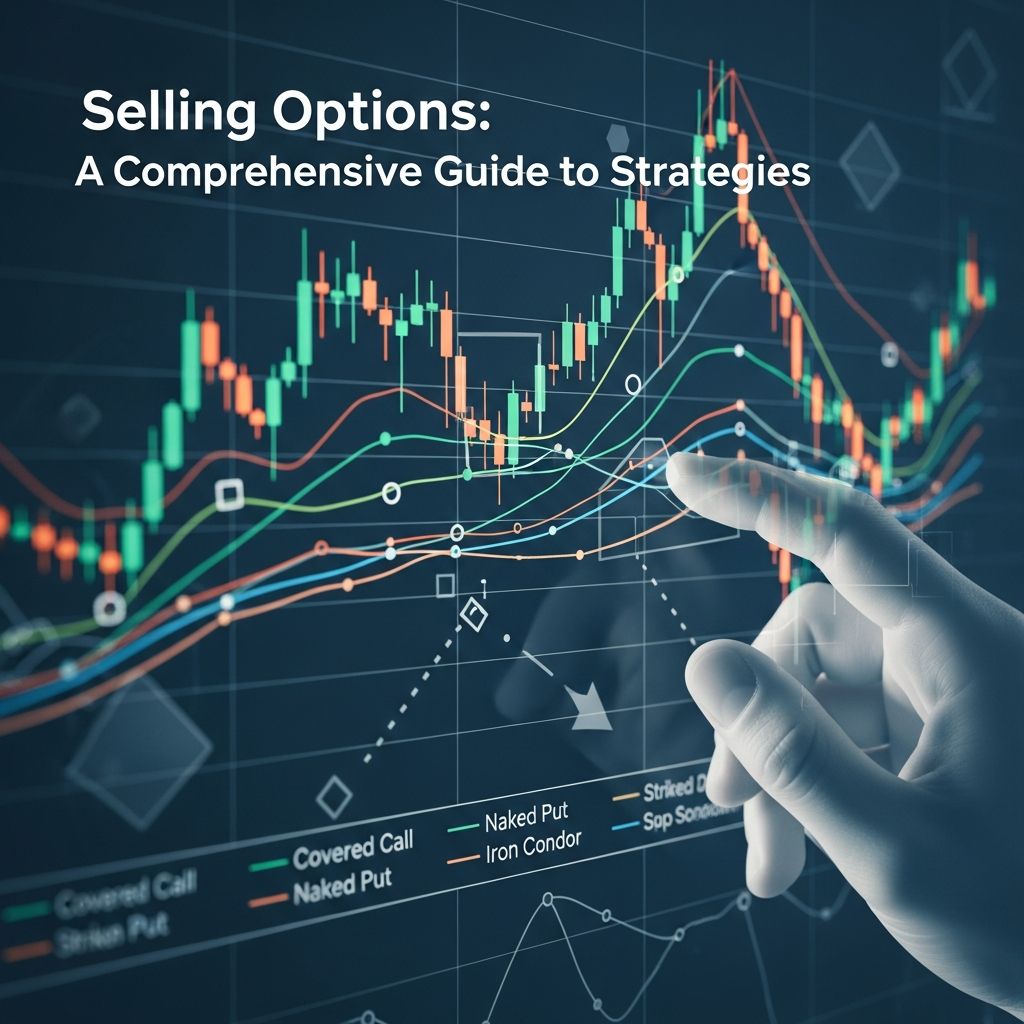
Selling options is a sophisticated investment strategy that allows traders and investors to generate income from their stock portfolios or to take directional bets on market movements. Unlike buying options, which gives the holder the right to purchase or sell an underlying asset at a predetermined price, selling options involves granting someone else that right. Understanding how to sell options effectively is crucial for anyone looking to expand their investment toolkit and potentially increase returns.
Understanding the Basics of Selling Options
When you sell an option, you are creating a contract that gives the buyer the right to buy or sell an underlying security at a specific price within a predetermined timeframe. In return for granting this right, the seller receives a premium—the price paid by the buyer for the option contract. This premium represents the maximum profit a seller can make on a short option position.
There are two primary types of options that can be sold:
- Call Options: A call option gives the buyer the right to purchase the underlying asset at a predetermined price (strike price) before the expiration date. When you sell a call option, you are obligating yourself to sell the underlying security if the buyer exercises their right.
- Put Options: A put option gives the buyer the right to sell the underlying asset at a predetermined price. When you sell a put option, you are obligating yourself to buy the underlying security if the buyer exercises their right.
The premium you receive when selling an option is non-refundable, regardless of whether the option is exercised. However, this premium does not represent your total profit potential—you must account for the cost of acquiring or maintaining the underlying position.
Covered Calls: A Conservative Income Strategy
One of the most popular and accessible strategies for selling options is the covered call. This strategy involves selling call options on shares you already own. The “covered” aspect means you have the underlying security to deliver if the call option is exercised, thus eliminating the risk of having to purchase shares at potentially unfavorable prices.
How Covered Calls Work
Suppose you own 100 shares of XYZ Corporation trading at $50 per share. You decide to sell one call option contract (representing 100 shares) with a strike price of $55, expiring in one month. You receive a premium of $2 per share, or $200 total for the contract.
In this scenario, several outcomes are possible:
- Stock Price Falls: If XYZ falls to $45, the call option expires worthless. You keep the $200 premium and retain your shares.
- Stock Price Stays Between $50 and $55: The call option expires worthless. You keep the premium and your shares.
- Stock Price Rises Above $55: The buyer exercises the call option, and you sell your shares at $55. Your total profit includes the $500 gain from stock appreciation (from $50 to $55) plus the $200 premium, for a total of $700 on your initial $5,000 investment.
Advantages of Covered Calls
- Generate additional income from existing stock holdings
- Defined risk—you already own the underlying shares
- Suitable for range-bound or slightly bullish market outlooks
- Relatively easy to understand and implement
- Effective way to offset holding costs or losses
Disadvantages of Covered Calls
- Limits upside potential if the stock price rises significantly above the strike price
- Provides limited downside protection—you still own the shares and face losses if prices fall
- May result in assignment, forcing you to sell shares you want to keep
- Opportunity cost if the stock rallies substantially beyond the strike price
Cash-Secured Puts: Income with Flexibility
Another popular strategy for selling options is selling cash-secured put options. This involves selling put options and simultaneously setting aside cash to purchase the underlying security if the option is exercised. This strategy is ideal for investors who want to potentially acquire a stock at a lower price while collecting premium income.
How Cash-Secured Puts Work
Imagine you want to purchase shares of ABC Company, currently trading at $40, but believe it might decline further. You could sell a put option with a $38 strike price expiring in two months, collecting a $1.50 premium per share, or $150 per contract. You simultaneously maintain $3,800 in cash to purchase 100 shares at $38 if the option is exercised.
The possible outcomes include:
- Stock Price Rises Above $38: The put expires worthless. You keep the $150 premium and retain your cash.
- Stock Price Falls Below $38: You are assigned and must purchase 100 shares at $38. Your effective purchase price is $36.50 per share ($38 minus the $1.50 premium received).
Advantages of Cash-Secured Puts
- Generate income while waiting to buy a stock
- Lower your average cost basis if assigned
- Defined risk—limited to the strike price
- Suitable for neutral to bullish market outlooks
- No margin requirement for the cash-secured portion
Disadvantages of Cash-Secured Puts
- Ties up capital that could be deployed elsewhere
- Obligates you to purchase shares if assigned, even if your outlook changes
- Limited profit potential—capped at the premium received
- Requires adequate cash reserves to cover potential assignment
Naked Calls and Puts: Advanced Strategies with Higher Risk
For experienced traders, selling naked (uncovered) options represents a more advanced strategy. Selling a naked call means selling call options without owning the underlying shares. Selling a naked put means selling put options without maintaining cash reserves for potential assignment. While these strategies can generate significant premium income, they carry substantially higher risk.
Risks of Naked Options
- Naked Calls: If the stock price rises significantly above the strike price, you must purchase shares at market prices to deliver them at the lower strike price, resulting in potentially unlimited losses.
- Naked Puts: If the stock price falls below the strike price, you must purchase shares at the strike price. Your losses are limited but can be substantial.
- Margin requirements are typically higher for naked options
- Requires active monitoring and strict risk management
- Subject to more stringent regulatory requirements and broker restrictions
Key Considerations When Selling Options
Premium and Risk-Reward Analysis
Before selling any option, carefully evaluate the premium relative to the risk you’re taking. A higher premium typically compensates for greater risk. Consider whether the income generated justifies the potential loss or opportunity cost.
Time Decay (Theta)
One advantage of selling options is that you benefit from time decay. As an option approaches expiration, its value decreases if all other factors remain constant. This works in the seller’s favor, as the premium received becomes increasingly profitable as the option loses value.
Volatility Considerations
Options premiums are significantly influenced by volatility. Higher volatility typically means higher premiums, making it more attractive to sell options. However, higher volatility also increases the likelihood that an option will be exercised, which may force unwanted trades.
Diversification and Position Sizing
Never concentrate too heavily in selling options on a single security. Diversify across different stocks, sectors, and strike prices to reduce unsystematic risk. Position sizing is critical—ensure no single option position represents an excessive portion of your portfolio.
Tax Implications of Selling Options
The tax treatment of options varies based on how long you hold the option contract and whether it is exercised. Short-term gains on options sold and closed within one year are taxed as ordinary income. If shares purchased through put assignment are held for more than one year before sale, those shares qualify for long-term capital gains treatment. Consult a tax professional to understand the specific implications for your situation.
Essential Factors for Success
- Education: Thoroughly understand options mechanics, Greeks (delta, gamma, theta, vega), and various strategies before trading.
- Risk Management: Use stop-losses, position limits, and proper position sizing to protect your portfolio.
- Broker Selection: Choose a broker that offers competitive option pricing, research tools, and educational resources.
- Portfolio Goals: Align your option-selling strategy with your overall investment objectives and risk tolerance.
- Ongoing Monitoring: Regularly review your positions and adjust strategies as market conditions change.
Frequently Asked Questions
Q: What is the difference between selling calls and selling puts?
A: When selling calls, you obligate yourself to sell shares at the strike price if exercised. When selling puts, you obligate yourself to buy shares at the strike price if exercised. The risk profiles differ significantly, with naked calls carrying potentially unlimited risk.
Q: Can I lose money selling options?
A: Yes, selling options carries significant risk. Covered calls limit losses to the stock declining to zero. Naked calls have theoretically unlimited loss potential. Cash-secured puts limit losses to the strike price minus the premium received.
Q: What is assignment in options trading?
A: Assignment occurs when the option buyer exercises their right, obligating the seller to fulfill the contract. For calls, you must sell shares at the strike price. For puts, you must buy shares at the strike price.
Q: How much capital do I need to start selling options?
A: For covered calls, you need enough capital to purchase the shares you’ll cover. For cash-secured puts, you need the strike price times 100 multiplied by the number of contracts. For naked options, requirements depend on your broker’s margin policies.
Q: Is selling options suitable for beginners?
A: Selling covered calls or cash-secured puts can be appropriate for beginners with a solid understanding of options mechanics. Naked options trading should only be attempted by experienced traders with substantial capital and risk management expertise.
Q: How do the Greeks affect option-selling strategies?
A: Theta (time decay) benefits sellers as options lose value over time. Vega measures volatility impact—higher volatility increases option premiums, benefiting sellers. Delta indicates directional movement, and gamma measures delta acceleration. Understanding these is essential for successful option selling.
References
- Options Industry Council – Educational Resources on Option Strategies — Options Industry Council. 2024. https://www.optionseducation.org/
- SEC: Introduction to Options — U.S. Securities and Exchange Commission. 2024. https://www.sec.gov/investor/glossary/optionscontract.htm
- FINRA: Options Trading Rules and Regulations — Financial Industry Regulatory Authority. 2024. https://www.finra.org/investors/learn-to-invest/types-investments/options
- CME Group: Options Greeks Explained — CME Education. 2024. https://www.cmegroup.com/education/
- IRS: Capital Gains Tax Treatment of Options and Securities — Internal Revenue Service. 2024. https://www.irs.gov/taxtopics/tc409
Similar Articles








Read full bio of medha deb