Self-Employed? Here’s How to Get Your Apartment Application Approved
Proven strategies for self-employed renters to overcome income verification hurdles and secure their ideal apartment lease.

The rise of the gig economy and remote work has empowered millions to embrace self-employment, freelancing, and independent contracting. However, this flexibility comes with challenges, particularly when applying for apartments. Traditional renters rely on W-2 forms and pay stubs, but self-employed individuals often face skepticism from landlords due to irregular income patterns. Large corporate complexes exacerbate this issue with rigid policies that prioritize salaried applicants. Fortunately, with strategic preparation, you can demonstrate financial stability and secure approval. This guide covers proven steps to navigate the process successfully, drawing from real-world advice for freelancers and business owners.
Understand the Challenges of Self-Employment in Renting
Landlords prioritize tenants who can reliably pay rent, typically requiring gross monthly income at least 3x the rent amount—a standard known as the 30% rule or 3x income guideline. Self-employed applicants struggle because income fluctuates, lacks employer verification letters, and relies on tax returns that average earnings over a year, potentially underrepresenting peak months. Corporate-managed properties automate approvals via algorithms that flag non-traditional income, leading to higher rejection rates. Smaller, private landlords offer more flexibility, as they can assess your full financial picture through personal meetings and custom documentation.
To succeed, shift your mindset: view the application as a business pitch. Compile a comprehensive portfolio showcasing consistent cash flow, responsibility, and low risk. Preparation is key—start gathering documents weeks in advance to avoid delays.
Choose Your Landlord Wisely
The foundation of approval lies in targeting receptive landlords. Avoid national chains with inflexible corporate leasing policies that demand uniform proof like recent pay stubs or W-2s. Instead, seek small, privately owned properties or individual homeowners via platforms like Craigslist, Facebook Marketplace, or local referrals.
- Seek personal connections: Ask friends, colleagues, or online communities for landlord recommendations. A referral can bypass formal checks.
- Opt for independents: Mom-and-pop operations or single-family rentals allow face-to-face evaluations where you can explain your business model.
- Use leasing agents: Hire specialists who access unlisted properties and advocate for you, often for a fee split from the landlord’s commission.
This approach increases approval odds, as private owners value character and preparation over algorithmic scores.
Gather Comprehensive Proof of Income
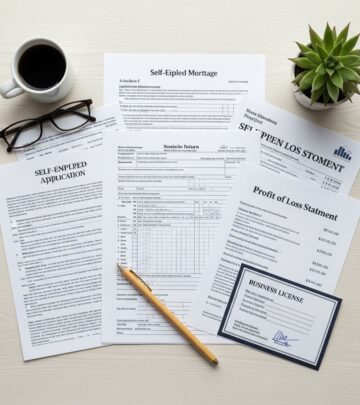
Landlords need assurance of your ability to cover rent. Replace missing pay stubs with a mix of documents proving steady earnings. Aim for 2-3 years of history to show trends.
| Document Type | Purpose | Tips for Self-Employed |
|---|---|---|
| Tax Returns (2-3 years) | Official IRS record of net income | Use Schedule C for business profits; get IRS transcripts for verification. |
| Bank Statements (3-6 months) | Tracks deposits and cash flow | Highlight recurring client payments; redact unrelated info. |
| 1099 Forms | Freelance/contractor earnings | Compile from all clients; totals should align with taxes. |
| Invoices/Contracts | Demonstrates ongoing business | Include 3-6 months of recent ones with payment proofs. |
| Profit & Loss Statements | Business financial summary | Prepared by accountant; shows monthly revenue/expenses. |
Cross-verify everything: Ensure totals match across documents. If income dipped recently, explain seasonal factors (e.g., ‘Q4 holiday rush boosted prior year’). For added strength, include a CPA letter on letterhead verifying your income stability.
Build a Strong Network of References
References humanize your application, offsetting income variability. Prioritize those from self-employment periods.
- Past landlords: Request written letters detailing on-time payments, property care, and lease duration. Include contact info for follow-up.
- Business contacts: Clients, accountants, or partners can confirm revenue streams.
- Personal references: Use sparingly; focus on professionals who know your work ethic.
Create a renter’s resume: A one-page document listing rental history (addresses, dates, rent amounts, reasons for leaving), employment overview, and references. This professional touch impresses landlords.
Consider a Co-Signer or Guarantor
If documentation falls short, enlist a co-signer—typically a relative or friend with stable W-2 income. They agree to cover rent if you default, reducing landlord risk.
- Choose wisely: Select someone with income 3-5x rent and excellent credit.
- Be transparent: Explain it’s a common hurdle for self-employed; offer to cover their credit check fees.
- Alternatives: Offer higher security deposit (check local laws, e.g., max 2 months in many states) or prepay 2-3 months’ rent.
This boosts approval by 50-70% in competitive markets, per rental industry insights.
Prepare for the Perfect Application Interview
Treat property viewings as job interviews. Arrive 15 minutes early with organized documents in a folder.
- Dress professionally: Business casual signals seriousness.
- Be personable: Maintain eye contact, smile, ask about the property—show enthusiasm.
- Anticipate questions: ‘How do you handle slow months?’ Answer: ‘I maintain 6 months’ reserves and diversify clients.’
- Highlight perks: No pets? Quiet lifestyle? No parking needs? These reduce perceived risks.
Have deposit ready (often 1-2 months’ rent) to demonstrate commitment.
Additional Strategies for Success
Enhance your profile with these tactics:
- Boost credit score: Pay down debts; scores above 650 ease concerns.
- Rental assistance: Check local programs via HUD.gov for income-qualified support.
- Portfolio presentation: Use a digital folder or app for easy sharing.
- Timing: Apply mid-month when competition dips.
Transparency builds trust—never inflate income, as background checks reveal discrepancies.
Frequently Asked Questions (FAQs)
Q: What is the minimum income landlords require?
A: Most use a 3x rent rule; e.g., $3,000/month rent needs $9,000 gross income. Flexible landlords may adjust for self-employed.
Q: Can I use gig economy apps like Uber as proof?
A: Yes, via earnings statements, 1099s, and bank deposits showing consistency.
Q: How much security deposit is typical?
A: 1-2 months’ rent; self-employed may need more, capped by state law (e.g., 1.5x in California).
Q: What if I have bad credit?
A: Offer higher deposit, co-signer, or proof of reserves (6+ months’ rent in savings).
Q: Do I need an accountant letter?
A: Highly recommended; it validates tax docs and projects future income.
Final Thoughts
Securing an apartment as self-employed demands proactive organization, but it’s achievable. By selecting amenable landlords, amassing ironclad documentation, leveraging references, and presenting professionally, you’ll stand out. Start today—your ideal home awaits. With the gig economy growing (over 36% of U.S. workforce per recent stats), landlords are adapting, making now the perfect time to apply confidently.
References
- How To Rent An Apartment If You Are Self-Employed — Thousand Hills Realty. 2023. https://www.thousandhillsrealty.com/how-to-rent-an-apartment-if-you-are-self-employed
- Providing and Verifying Self-Employed Proof of Income for Apartment — Azibo. 2024-05-15. https://www.azibo.com/blog/self-employed-proof-of-income-for-apartment
- Landlord’s Guide to Rental Application Income Verification — SingleKey. 2024. https://www.singlekey.com/income-verification-rental-app/
- Proving Income for Self-Employed Renters: How to Secure a Lease — RentCafe. 2024-08-20. https://www.rentcafe.com/blog/apartment-search-2/money/proving-income-when-self-employed/
- 10 Methods for Tenants to Show Proof of Income — Landlord Studio. 2024. https://www.landlordstudio.com/blog/proof-of-income
Similar Articles








Read full bio of medha deb