Self-Directed IRA: Complete Guide to Control
Take control of your retirement: Understand self-directed IRAs and alternative investments.
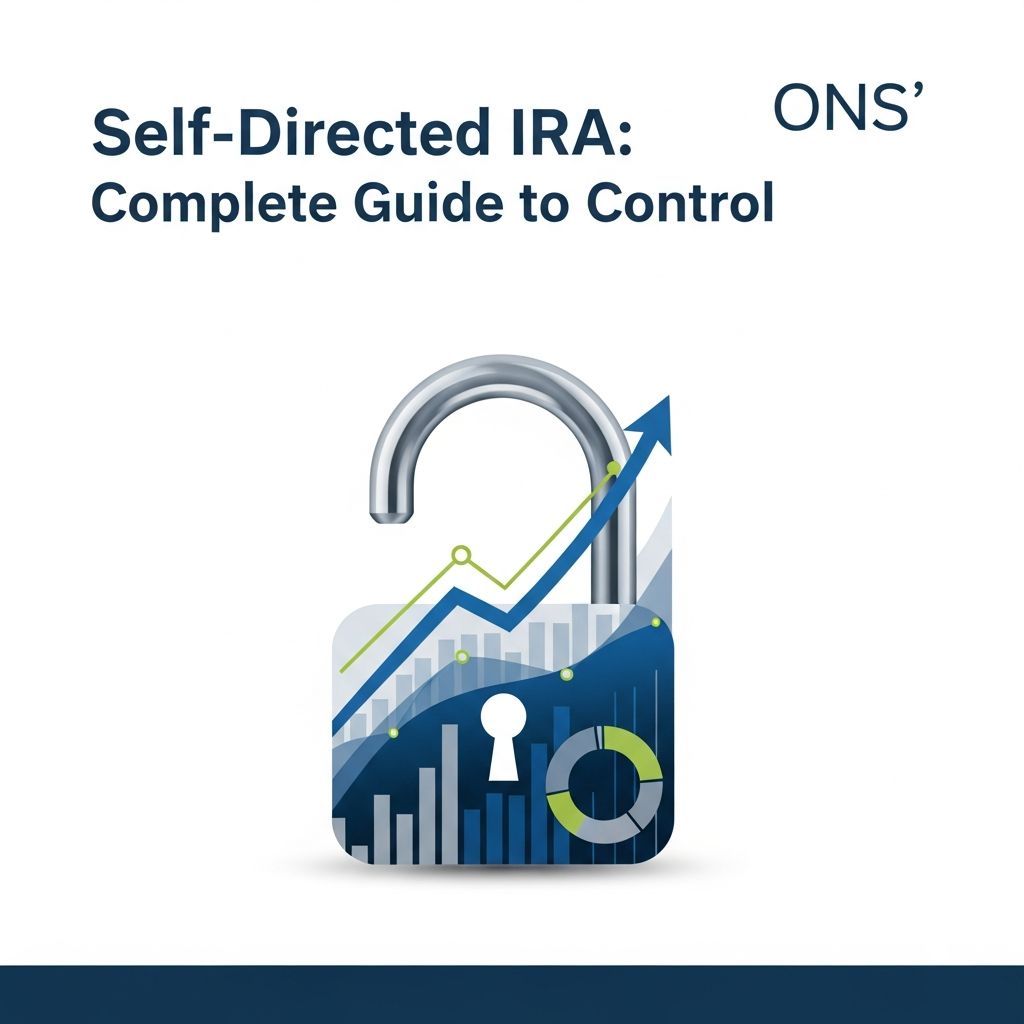
What Is a Self-Directed IRA?
A self-directed IRA (SDIRA) is an Individual Retirement Account that provides account holders with the ability to make their own investment decisions rather than relying on a financial institution to manage their investments. Unlike traditional IRAs or 401(k) plans where investment options are limited to stocks, bonds, and mutual funds offered by the financial institution, a self-directed IRA allows investors to direct contributions into a much broader range of alternative investments. This includes real estate, precious metals, private equity, tax liens, and other non-traditional assets. The key distinction is that the account owner maintains complete control over investment choices within IRS guidelines.
How Self-Directed IRAs Work
A self-directed IRA operates similarly to a traditional or Roth IRA in terms of contribution limits and tax treatment, but differs significantly in investment flexibility and management structure. When you establish a self-directed IRA, you must work with a specialized custodian or administrator who is familiar with handling alternative investments and IRS compliance requirements.
The Role of Custodians
The custodian plays a crucial role in the self-directed IRA process. Unlike traditional IRA custodians who simply hold stocks and bonds, a self-directed IRA custodian must have expertise in alternative assets and must ensure that all investments comply with IRS regulations. The custodian maintains legal ownership of the account assets, while you direct the investments. This arrangement protects the tax-advantaged status of your retirement savings while giving you control over investment decisions. Your custodian will handle documentation, maintain records, file necessary tax forms, and ensure compliance with prohibited transaction rules.
Account Structure and Titling
Self-directed IRAs follow specific titling conventions to maintain their tax-advantaged status. The typical format for account titling is: [SDIRA Name] FBO [Investor Name] IRA # [investor account number]. FBO stands for “For the Benefit Of,” which clarifies that while the custodian holds legal title, the account exists for the investor’s retirement benefit. For example, an account might be titled as “IRA Trust FBO John Smith IRA # 123456.” This proper titling is essential for IRS recognition and compliance.
Types of Self-Directed IRAs
There are several variations of self-directed retirement accounts, each with distinct features and benefits:
Self-Directed Traditional IRA
This account type operates like a traditional IRA but with broader investment options. Contributions may be tax-deductible in the year they are made, depending on your income level and whether you have access to an employer-sponsored retirement plan. Investments grow tax-deferred, and distributions are taxed as ordinary income upon withdrawal. Required Minimum Distributions (RMDs) begin at age 73 (as of 2023), making this suitable for those who anticipate using retirement funds in the future.
Self-Directed Roth IRA
A self-directed Roth IRA provides tax-free growth and qualified distributions, though contributions are made with after-tax dollars. Income limits apply for direct contributions, but high-income individuals can use the backdoor Roth conversion strategy. One major advantage is the absence of Required Minimum Distributions during the account owner’s lifetime, allowing for extended tax-free growth. This option suits younger investors or those expecting higher income in retirement.
Self-Directed SEP IRA
Designed for self-employed individuals and small business owners, the Self-Employed Persons (SEP) IRA allows substantial annual contributions compared to traditional or Roth IRAs. Contributions are tax-deductible, and the account can hold the same alternative investments as other self-directed options. This type is ideal for those with self-employment income looking to maximize retirement savings.
Self-Directed Solo 401(k)
Also known as an Individual 401(k), this plan is available to self-employed individuals with no employees (except a spouse). It allows higher contribution limits than IRAs and provides loan provisions, making it particularly flexible. Self-directed solo 401(k)s can hold alternative investments and offer greater borrowing capacity for business purposes.
Investment Options in Self-Directed IRAs
The primary advantage of a self-directed IRA is access to alternative investments beyond traditional securities. Permissible investments include:
Real Estate
Real estate represents one of the most popular alternative investments in self-directed IRAs. You can purchase residential or commercial properties, land, or real estate investment partnerships. Rental income generated by the property flows back into the IRA and grows tax-deferred. However, you cannot personally use the property, and property management must be arms-length, meaning family members cannot provide services without compensation.
Precious Metals
Self-directed IRAs can hold IRS-approved precious metals including gold, silver, platinum, and palladium in specific forms. Coins must meet purity standards, and bars must be approved. This provides portfolio diversification and inflation protection within a tax-advantaged structure.
Private Business Interests
You can invest in private companies, partnerships, and LLCs through a self-directed IRA. This includes startup investments, private equity, and business expansion opportunities. Such investments must be documented properly and valued appropriately for IRS compliance.
Tax Liens and Deeds
Self-directed IRA holders can purchase tax liens on properties when owners fail to pay property taxes. Alternatively, you can purchase tax deeds at public auctions. These investments generate returns through interest payments or property acquisition, which flow back into the retirement account.
Cryptocurrency and Digital Assets
Some self-directed IRA custodians now allow cryptocurrency holdings, though this remains an emerging area. Bitcoin, Ethereum, and other approved digital assets can be held within the account structure, subject to custodian approval and IRS guidelines.
Other Permissible Investments
Additional options include mortgages, private notes, peer-to-peer lending, oil and gas interests, franchises, and livestock. The IRS allows any investment that doesn’t violate prohibited transaction rules or disqualified asset classifications.
Benefits of Self-Directed IRAs
Self-directed IRAs offer compelling advantages for certain investors:
Investment Control and Flexibility
The most obvious benefit is complete control over investment decisions. You choose which assets to purchase, when to buy or sell, and how to manage your portfolio. This appeals to investors with expertise in alternative assets or those who want to invest in their own business ventures.
Diversification Opportunities
Traditional IRAs limit diversification to stocks, bonds, and mutual funds. Self-directed IRAs allow portfolio diversification across asset classes including real estate, commodities, and alternative investments, potentially reducing overall portfolio risk.
Tax-Advantaged Growth
Like traditional IRAs and Roth IRAs, self-directed accounts provide tax-deferred or tax-free growth depending on account type. Investment returns, rental income, and capital appreciation occur without annual taxation, allowing compounding to work more effectively.
Higher Contribution Limits for Some Account Types
SEP IRAs and Solo 401(k)s offer substantially higher contribution limits than traditional IRAs, allowing greater tax-advantaged retirement savings for self-employed individuals and business owners.
Opportunity for Higher Returns
Alternative investments, particularly real estate and private equity, historically offer higher return potential than traditional securities. For knowledgeable investors, self-directed IRAs provide access to these opportunities within a tax-protected structure.
Risks and Drawbacks
Despite advantages, self-directed IRAs carry significant risks that require careful consideration:
Prohibited Transaction Rules
The IRS strictly prohibits certain transactions involving self-directed IRAs. You cannot use IRA funds to purchase property for personal use, cannot engage in business transactions with relatives, and cannot provide services to the IRA. Violations result in account disqualification and potential tax penalties. Understanding these complex rules is essential to maintain tax-advantaged status.
Fiduciary Responsibility
As the account owner making investment decisions, you assume full fiduciary responsibility for those choices. Unlike managed IRAs where the financial institution bears some liability, self-directed IRA investors bear complete responsibility for investment performance and compliance.
Investment Risk
Alternative investments often carry higher risk than traditional securities. Real estate illiquidity, private equity concentration risk, and difficulty valuing non-traditional assets create investment challenges. Poor investment decisions can significantly diminish retirement savings.
Custodian Fees
Self-directed IRA custodians charge higher fees than traditional IRA custodians due to the complexity of handling alternative assets. Annual fees, transaction fees, and setup costs can reduce net returns, particularly for smaller accounts.
Limited Liquidity
Many alternative investments are illiquid, making it difficult to quickly access funds in emergencies. Real estate, private equity, and other alternative assets may take months or years to convert to cash.
Complexity and Administration
Self-directed IRAs require more paperwork, documentation, and IRS compliance compared to traditional IRAs. Account holders must track basis, depreciation, and ensure proper reporting, increasing administrative burden and professional fees.
Contribution Limits and Rules
Self-directed IRAs follow IRS contribution limits based on account type. For 2024, traditional and Roth IRA contribution limits are $7,000 annually for those under age 50 and $8,000 for those age 50 and older. SEP IRA contributions can reach up to 25% of net self-employment income, with a maximum of $69,000 in 2024. Solo 401(k)s allow employee deferrals plus employer contributions, potentially exceeding $69,000 annually. Required Minimum Distributions begin at age 73 for traditional accounts, though Roth IRAs have no RMD requirement during the owner’s lifetime.
Tax Considerations
Self-directed IRA tax treatment depends on account type. Traditional self-directed IRA contributions may be deductible, with growth and withdrawals taxed as ordinary income. Roth self-directed IRAs provide after-tax contributions but tax-free qualified distributions. All account types must comply with IRS reporting requirements, and prohibited transactions can result in account disqualification with immediate taxation of all assets at ordinary income rates plus potential 10% early withdrawal penalties.
Getting Started with a Self-Directed IRA
Establishing a self-directed IRA involves several steps. First, select a qualified custodian experienced with alternative investments. Next, decide which IRA type suits your situation. Complete account paperwork and provide required identification and tax information. Fund your account through contributions or rollovers from existing retirement accounts. Finally, direct your custodian regarding specific investments, ensuring all documentation complies with IRS requirements.
Frequently Asked Questions
Q: Are self-directed IRAs right for everyone?
A: Self-directed IRAs work best for experienced investors knowledgeable about alternative assets who understand prohibited transaction rules and IRS compliance requirements. They are not suitable for passive investors preferring traditional securities.
Q: Can I use a self-directed IRA to invest in my own business?
A: Yes, you can invest in your own business through a self-directed IRA, but strict rules apply. You cannot personally guarantee business loans, take a salary from the business, or be involved in day-to-day management. The investment must be documented and valued properly.
Q: What happens if I violate prohibited transaction rules?
A: Violating prohibited transaction rules results in account disqualification. All assets are treated as distributed at fair market value, creating immediate income taxation and potential 10% early withdrawal penalties if you’re under age 59½.
Q: How are self-directed IRA investments valued?
A: Alternative investments must be valued at fair market value. For illiquid assets like real estate or private equity, independent appraisals are typically required. Valuation documentation is essential for IRS compliance and accurate reporting.
Q: Can I take a loan from my self-directed IRA?
A: Loans from IRAs are prohibited. However, solo 401(k)s allow loans to the account owner for business or personal purposes, providing liquidity that IRAs do not offer.
Q: What custodian fees should I expect?
A: Self-directed IRA custodian fees vary widely, typically ranging from $300 to $500 annually plus transaction fees of $50 to $150 per transaction. Comparing custodians before opening an account is important.
References
- Self-Directed IRA Definition — Investopedia. 2024. https://www.investopedia.com/terms/s/self-directed-ira.asp
- IRA Contribution Limits for 2024 — Internal Revenue Service. 2024. https://www.irs.gov/retirement-plans/plan-participant-employee/retirement-topics-ira-contribution-limits
- Prohibited Transactions — Internal Revenue Service. 2024. https://www.irs.gov/retirement-plans/prohibited-transactions
- Required Minimum Distributions — Internal Revenue Service. 2024. https://www.irs.gov/retirement-plans/retirement-topics-required-minimum-distributions-rmds
- Best Practices for Working with Retirement/IRA/SDIRA Accounts and Custodians — InvestNext Support. 2024. https://support.investnext.com/en/articles/6564425-best-practices-for-working-with-retirement-ira-sdira-accounts-and-custodians
- Solo 401(k) Plan Rules — Internal Revenue Service. 2024. https://www.irs.gov/retirement-plans/self-employed-persons-retirement-plans-sep
Similar Articles








Read full bio of Sneha Tete