Best Mutual Funds: 5 Types To Choose For Your Goals
Master the art of picking mutual funds that align with your goals, risk tolerance, and timeline for smarter investing.

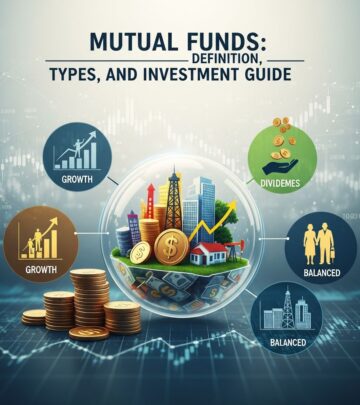
Mutual funds offer a straightforward way for individuals to gain exposure to a broad range of investments without needing to pick individual stocks or bonds. By pooling money from multiple investors, these funds enable access to professional management and instant diversification, making them ideal for beginners and seasoned investors alike. This comprehensive guide explores the key factors to consider when choosing mutual funds, ensuring your selections support your financial aspirations.
Understanding the Fundamentals of Mutual Funds
At their core, mutual funds collect capital from investors to purchase a diversified portfolio of securities such as stocks, bonds, or money market instruments. This structure spreads risk across numerous assets, reducing the impact of any single poor performer. Professional fund managers or passive indexing strategies oversee these portfolios, aiming to achieve specific objectives like growth, income, or capital preservation.
Investors buy shares in the fund, and the value of each share, known as the net asset value (NAV), fluctuates daily based on the underlying assets’ performance. Funds are priced once per day after markets close, distinguishing them from exchange-traded funds (ETFs) that trade throughout the day.
Key Types of Mutual Funds for Every Investor
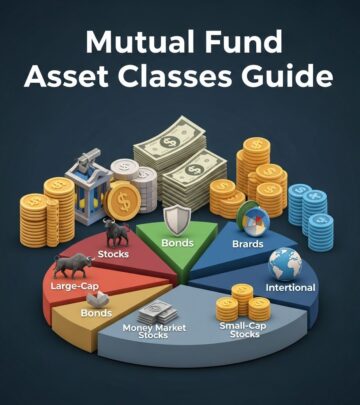
Different mutual funds cater to varying risk levels and goals. Selecting the right type starts with matching the fund’s strategy to your needs.
- Equity Funds: These invest primarily in stocks, offering high growth potential but with greater volatility. Suitable for long-term horizons like retirement savings.
- Bond Funds: Focused on fixed-income securities, they provide steady income and lower risk, ideal for conservative investors seeking stability.
- Money Market Funds: Investing in short-term, high-quality debt, these offer liquidity and minimal risk, often outperforming savings accounts slightly.
- Index Funds: Passively tracking benchmarks like the S&P 500, they deliver market returns at low costs and have historically outperformed many active funds over time.
- Target-Date Funds: Automatically adjusting to become more conservative as a target date (e.g., retirement) approaches, simplifying portfolio management for hands-off investors.
Choosing among these depends on your timeline and comfort with market swings. Younger investors might lean toward equity-heavy funds, while those nearing retirement prefer bonds.
Assessing Your Personal Investment Profile
Before diving into fund options, evaluate your financial situation. Key questions include: What are your goals—retirement, home purchase, or education funding? How much risk can you tolerate? What’s your investment timeline?
Risk tolerance is pivotal. Conservative profiles favor stable bond or money market funds, while aggressive ones suit equity funds. Time horizon matters too: Longer periods allow riding out volatility for higher potential returns.
| Investor Profile | Risk Level | Recommended Funds | Typical Allocation |
|---|---|---|---|
| Young Professional | High | Equity/Index | 80% Stocks, 20% Bonds |
| Mid-Career | Moderate | Balanced | 60% Stocks, 40% Bonds |
| Pre-Retiree | Low | Bond/Target-Date | 40% Stocks, 60% Bonds |
This table illustrates basic allocations; adjust based on personal circumstances.
Critical Metrics for Evaluating Mutual Funds
Performance data is essential but not in isolation. Examine these metrics:
- Expense Ratio: Annual fees as a percentage of assets; aim for under 1%, especially for index funds.
- Historical Returns: Compare 5-10 year performance against benchmarks, noting consistency.
- Standard Deviation: Measures volatility; lower values indicate stability.
- Manager Tenure: Longer experience suggests steadier strategy execution.
- Turnover Ratio: High turnover increases costs and taxes; prefer lower figures.
Always review the prospectus for detailed holdings, risks, and fees. Tools from brokers provide these insights.
Active vs. Passive: Which Approach Wins?
Active funds rely on managers to outperform markets through stock picking, incurring higher fees. Passive funds mirror indexes, boasting lower costs and, per studies, better long-term results for most investors.
For beginners, passive index funds offer simplicity and cost savings. Data shows they beat 80-90% of active peers over decades.
Navigating Fees and Costs Effectively
Fees erode returns significantly. Beyond expense ratios, watch for:
- Load Fees: Sales charges on purchase (front-end) or sale (back-end); no-load funds avoid these.
- 12b-1 Fees: Marketing costs embedded in expenses.
- Transaction Fees: Broker charges for buying/selling.
Opt for low-cost providers like Vanguard or Fidelity to maximize net gains.
Building a Diversified Mutual Fund Portfolio
Diversification minimizes risk. A simple portfolio might include:
- One broad stock index fund (e.g., total market).
- One bond index fund.
- A small international fund for global exposure.
Rebalance annually to maintain targets. Dollar-cost averaging—investing fixed amounts regularly—reduces timing risk by buying more shares when prices dip.
Practical Steps to Purchase Mutual Funds
- Open an Account: Use a brokerage like Schwab or Vanguard, or employer 401(k).
- Fund the Account: Transfer money via bank link; meet minimums ($500-$3,000 typically).
- Research and Select: Use screeners for low-fee, high-rated funds.
- Place Order: Enter ticker and amount; trades execute at end-of-day NAV.
- Monitor: Review quarterly, rebalance yearly.
Minimums can be barriers; ETFs offer alternatives with lower entry points.
Mutual Funds vs. ETFs: Key Differences
| Feature | Mutual Funds | ETFs |
|---|---|---|
| Trading | End-of-day | Intraday |
| Minimums | $500-$3,000 | Share price |
| Fees | Higher average | Lower often |
| Management | Active/Passive | Mostly Passive |
Mutual funds suit set-it-and-forget-it investors; ETFs appeal to active traders.
Common Pitfalls to Avoid
- Chasing past performance without context.
- Ignoring fees’ long-term impact.
- Overlooking tax implications in taxable accounts.
- Failing to diversify across asset classes.
- Reacting emotionally to market dips.
Long-Term Strategies for Success
Commit to consistent investing via automatic plans. Stay disciplined through market cycles. Periodically reassess goals and adjust allocations, especially life changes like marriage or job shifts.
Frequently Asked Questions
What is the minimum investment for mutual funds?
Typically $500 to $3,000, varying by fund; some offer $0 via employer plans.
Are mutual funds safe?
No investment is risk-free, but diversification lowers risk. Not FDIC-insured.
How often should I rebalance my portfolio?
Annually or when allocations drift 5-10% from targets.
Can I lose money in index funds?
Yes, they track markets which can decline, but long-term trends upward.
What’s the best mutual fund for beginners?
A low-cost S&P 500 index fund for simplicity and performance.
References
- How to invest in mutual funds: A guide for beginners — Bankrate. 2023. https://www.bankrate.com/investing/guide-to-mutual-funds/
- The Best Mutual Funds and How to Start Investing — NerdWallet. 2024. https://www.nerdwallet.com/investing/learn/how-to-invest-in-mutual-funds
- Understanding Mutual Funds — Investment Company Institute. 2022-10-01. https://www.ici.org/system/files/attachments/pdf/g2understanding.pdf
- Understanding mutual funds — Charles Schwab. 2024. https://www.schwab.com/mutual-funds/understand-mutual-funds
- Beginners’ Guide to Mutual Funds — U.S. Securities and Exchange Commission (SEC.gov). 2023. https://www.sec.gov/about/reports-publications/investorpubsbeginmutualhtm
Similar Articles








Read full bio of medha deb