Securing Subprime Loans: A Complete Guide
Discover how individuals with lower credit scores can access subprime financing, understand the costs involved, and explore strategies to improve future borrowing options.

Subprime loans provide financing options for borrowers with damaged or limited credit histories who cannot qualify for standard loans. These products carry elevated interest rates and stricter terms to account for heightened default risks perceived by lenders.
Defining Subprime Financing
Subprime lending targets individuals deemed higher risk due to factors like FICO Scores below 670, recent delinquencies, bankruptcies, or high debt levels. Lenders extend credit to these applicants at premium costs to mitigate potential losses.
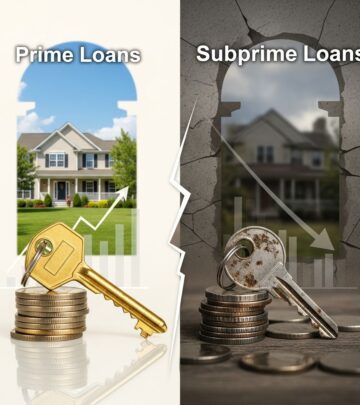
Unlike prime loans available to those with strong credit profiles, subprime options feature adjusted pricing based on risk assessments. Borrowers often face FICO thresholds under 600 or VantageScore equivalents below 600, placing them in fair or poor categories.
- Credit scores typically ranging from 300 to 669 qualify as subprime territory.
- Recent financial setbacks such as 30-day late payments, foreclosures, or judgments trigger subprime classification.
- Limited credit history or high debt-to-income ratios further elevate risk profiles.
Key Characteristics of Subprime Products
These loans distinguish themselves through protective measures for lenders. Higher annual percentage rates (APRs) compensate for default probabilities, often exceeding prime rates by several points.
| Feature | Prime Loans | Subprime Loans |
|---|---|---|
| Credit Score Minimum | 670+ FICO | Below 670 FICO |
| Interest Rates | Competitive, lower | 3-10%+ higher |
| Down Payment | Often 0-5% | 10-20% typically |
| Default Risk | Low | High |
Secured subprime loans, such as auto or home financing, demand larger upfront payments. Adjustable-rate structures prevail in mortgages, where payments can escalate over time.
Reasons Lenders Offer Subprime Credit
Financial institutions pursue subprime markets to broaden their customer base and capture untapped revenue. Borrowers with imperfect records represent a segment excluded from conventional products, creating demand for specialized lending.
Government-backed programs like FHA loans set minimums at 580 FICO for maximum financing with 3.5% down, offering pathways even for lower scores with adjusted terms.
- Expands access to credit for rebuilding financial stability.
- Generates higher yields through risk premiums.
- Supports economic inclusion for underserved populations.
Step-by-Step Process to Obtain a Subprime Loan
Navigating subprime applications requires preparation. Start by reviewing your credit report from major bureaus to identify errors or areas for quick fixes.
- Assess Your Credit Profile: Pull free annual reports and note scores, delinquencies, and debt levels.
- Compare Lenders: Research banks, credit unions, and online platforms specializing in high-risk loans.
- Gather Documentation: Prepare pay stubs, tax returns, bank statements, and proof of income stability.
- Pre-Qualify: Use soft inquiries to gauge offers without impacting scores.
- Apply Selectively: Submit to 2-3 lenders to minimize hard inquiries.
- Negotiate Terms: Highlight positive factors like steady employment.
Approval hinges on income verification and residual ability to repay after expenses. Lenders scrutinize debt-to-income ratios closely.
Common Types of Subprime Financing
Auto Loans for Poor Credit
Vehicle financing often requires 10-20% down with APRs 5-15% above prime. Shorter terms reduce total interest but raise monthly payments.
Mortgage Options
Non-conforming loans bypass Fannie Mae/Freddie Mac standards, leading to ARMs with initial teaser rates that reset higher.
Personal and Payday Alternatives
Unsecured personal loans cap at smaller amounts with brief repayment periods. Avoid predatory payday products with triple-digit APRs.
Costs and Financial Impact
Over a 30-year mortgage, subprime terms can add tens of thousands in interest. A $200,000 loan at 4% prime versus 8% subprime yields over $250,000 extra in payments.
- Origination fees: 1-5% of loan amount.
- Prepayment penalties on some products.
- Balloon payments demanding full principal at term end.
Risks Associated with Subprime Borrowing
While accessible, these loans amplify debt burdens. Rising ARM rates contributed to the 2007 crisis, underscoring payment shock dangers.
Default risks heighten repossession or foreclosure odds, further damaging credit for 7-10 years.
Strategies to Improve Approval Odds
Enhance your profile before applying:
- Reduce outstanding balances to lower utilization below 30%.
- Secure a co-signer with solid credit.
- Opt for secured loans using savings as collateral.
- Build payment history with secured credit cards.
Alternatives to Traditional Subprime Loans
Explore peer-to-peer platforms, credit union programs, or buy-here-pay-here dealers for auto needs. FHA-backed mortgages provide structured paths for homebuyers.
| Option | Pros | Cons |
|---|---|---|
| Credit Unions | Lower rates, flexible terms | Membership required |
| Peer-to-Peer | Online speed, competition | Still high rates for poor credit |
| FHA Loans | Low down payment, 580 min score | Mortgage insurance premiums |
Building Credit for Prime Access
Consistent on-time payments over 6-12 months can boost scores 50-100 points. Automate bills, dispute inaccuracies, and diversify credit mix.
Aim for prime eligibility within 1-2 years through disciplined habits.
Frequently Asked Questions
What credit score qualifies for subprime loans?
Scores below 670 FICO, often under 600, trigger subprime offers.
Are subprime loans worth the higher costs?
They enable immediate needs but prioritize short-term use while improving credit.
Can I refinance a subprime loan later?
Yes, after 6-12 months of positive payments, seek rate reductions.
How do subprime mortgages differ from prime?
Higher rates, larger down payments, and frequent ARM structures.
What documents are needed for approval?
ID, income proof, asset statements, and residence verification.
Long-Term Financial Planning
View subprime loans as bridges, not permanent solutions. Pair borrowing with budgeting apps, emergency funds, and professional counseling from nonprofits.
Track progress quarterly via free score monitoring to transition upward.
References
- What Is a Subprime Loan? — Experian. 2023. https://www.experian.com/blogs/ask-experian/what-is-a-subprime-loan/
- Subprime lending — Wikipedia. 2024-03-15. https://en.wikipedia.org/wiki/Subprime_lending
- Subprime Lending — Mass.gov. 2023. https://www.mass.gov/industry-letter/subprime-lending
- Pros and Cons of Subprime Mortgages — FHA.com. 2024. https://www.fha.com/define/subprime-mortgage
- Subprime Lending — FDIC.gov. 1997-12-01. https://www.fdic.gov/news/financial-institution-letters/1997/fil9744.html
- What is a subprime mortgage? — Consumer Financial Protection Bureau. 2023. https://www.consumerfinance.gov/ask-cfpb/what-is-a-subprime-mortgage-en-110/
- A Homeowner’s Guide to Subprime — NJ.gov. 2024. https://www.nj.gov/dobi/division_consumers/finance/homeowner_subprime_english.html
Similar Articles








Read full bio of Sneha Tete