Securing Business Loans: Your Complete Guide
Unlock funding for your business growth with proven strategies, eligibility insights, and application tips for 2026.

Obtaining a business loan can propel your enterprise forward, enabling expansions, equipment purchases, or working capital boosts. In 2026, with evolving lender standards and government-backed programs, understanding the landscape is crucial for approval.
Understanding Business Loan Fundamentals
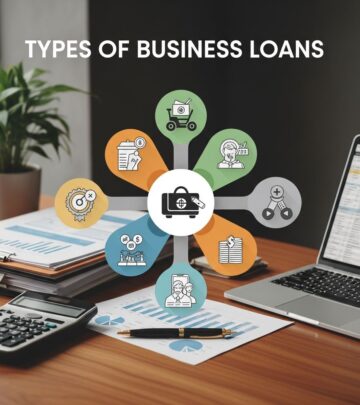
Business loans provide capital for operational needs, differing from personal loans by focusing on company metrics. Lenders assess risk through credit profiles, revenue stability, and repayment potential. Key types include term loans for fixed amounts, lines of credit for flexible draws, and equipment financing tied to asset purchases.
- Term Loans: Lump-sum funding repaid over time, ideal for major investments.
- Lines of Credit: Revolving access up to a limit, suited for cash flow management.
- SBA-Backed Loans: Government-guaranteed options reducing lender risk.
Government programs like those from the U.S. Small Business Administration (SBA) offer favorable terms, but require strict compliance.
Key Eligibility Criteria for Funding
Lenders prioritize businesses demonstrating viability and repayment capacity. Core requirements span operational status, financial health, and legal standing.
Operational and Legal Standards
Your business must operate for profit within the U.S., be legally registered, and comply with all regulations. It should maintain current status on taxes, debts, and filings. Owners cannot have felony convictions or be under indictment.
- Active operations in the U.S. or territories.
- No defaults on federal obligations.
- Full compliance with tax requirements.
Financial Benchmarks
Expect scrutiny of revenue, cash flow, and debt ratios. Many require at least $100,000-$250,000 annual revenue and 1-2 years in operation. Startups may qualify via projections.
| Metric | Typical Threshold | Purpose |
|---|---|---|
| Annual Revenue | $100K+ | Ensures cash flow for repayments |
| Debt Service Coverage Ratio (DSCR) | 1.25+ | Income exceeds debt payments |
| Time in Business | 1-2 Years | Proves stability |
Building a Strong Credit Foundation
Credit scores signal reliability. Business scores (e.g., FICO SBSS) and personal guarantees are evaluated, with minimums often 620-640. Poor credit limits options, but compensating factors like collateral help.
- Monitor scores via agencies like Dun & Bradstreet.
- Pay bills promptly to improve profiles.
- Separate business and personal credit.
Recent SBA changes mandate all owners in their ETRAN system and restrict non-U.S. citizens from primary programs.
Navigating SBA Loan Programs
SBA loans guarantee up to 85% of amounts, easing lender approvals. Popular 7(a) loans cap at $5 million for versatile uses like acquisitions or refinancing.
7(a) Loan Variations
Options include standard, small ($350K max in 2026 updates), Express for speed, and export-focused lines.
- Standard 7(a): Up to $5M, broad purposes.
- 7(a) Small: Streamlined under $350K.
- CAPLines: Working capital lines to $5M.
Other Federal Options
USDA Business & Industry (B&I) loans target rural areas, up to $25M for expansions, requiring job creation and credit elsewhere denial.
Documentation Essentials
Prepare a robust package to expedite processing. SBA loans demand more than conventional ones.
- Business Docs: Plan, licenses, incorporation papers, leases.
- Financials: 2-3 years tax returns, P&Ls, balance sheets.
- Personal: Credit reports, resumes, financial statements for owners with 20%+ stake.
For startups, emphasize projections and owner experience.
Strategies to Boost Approval Chances
Strengthen your case with proactive steps.
- Develop a detailed business plan outlining fund use and ROI.
- Shop multiple lenders via platforms for competitive offers.
- Offer collateral or personal guarantees judiciously.
- Address weaknesses, like bolstering cash reserves.
Eligibility confirms consideration; approval hinges on lender discretion.
Alternative Funding Paths
If traditional loans falter, consider invoice factoring, merchant cash advances, or grants. Online lenders offer faster access with higher rates.
Frequently Asked Questions
Can startups get business loans?
Yes, via SBA Microloans or lenders accepting projections, though harder without history.
What credit score is needed?
Typically 620+, but varies; strong revenue compensates lower scores.
How long does approval take?
SBA: 45-90 days; online: days to weeks.
Are personal guarantees required?
Often for smaller firms or owners with significant stakes.
Common Pitfalls to Avoid
Steer clear of incomplete apps, unrealistic projections, or ignoring credit repair. Verify size standards per industry.
In 2026, stay updated on rules like 7(a) caps and owner residency mandates.
References
- SBA Loan Eligibility Requirements (2026) – Lendio — Lendio. 2026. https://www.lendio.com/blog/sba-loan-requirements
- SBA Loans Explained: Complete Small Business Guide (2026) — Peoples Bank. 2026. https://www.peoplesbankmtg.com/the-complete-guide-to-sba-loans-for-small-business-owners-2026-edition/
- Business Loan Requirements: What You Need to Qualify – NerdWallet — NerdWallet. 2026. https://www.nerdwallet.com/business/loans/learn/how-to-qualify-for-small-business-loans
- 7 SBA Rule Changes in 2025 That Will Decide Your 2026 Loan Approval — Fastway SBA. 2025. https://www.fastwaysba.com/blog/7-sba-rule-changes-in-2025-that-will-decide-your-2026-loan-approval
- Loans | U.S. Small Business Administration — SBA.gov. 2026. https://www.sba.gov/funding-programs/loans
- How To Get A Business Loan: Business Financing Guide 2026 – Nav — Nav. 2026. https://www.nav.com/blog/how-to-get-a-business-loan-64286/
- SBA cuts off non-US citizens from primary loan program — POLITICO. 2026-02-03. https://www.politico.com/news/2026/02/03/sba-non-us-citizens-primary-loan-program-00762363
Similar Articles








Read full bio of Sneha Tete