Land Loan Complete Guide: How To Qualify, Apply, And Close
Unlock the process of obtaining financing for raw land, improved parcels, or investment properties with expert steps and requirements.

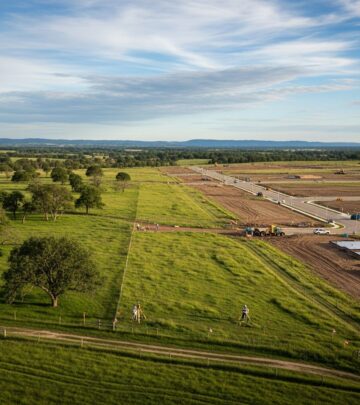
Land loans enable buyers to finance vacant parcels for building homes, farming, or investment, differing from standard mortgages due to higher risks for lenders. These loans typically demand larger down payments, stronger credit profiles, and detailed property plans. This guide outlines types of land, qualification standards, required paperwork, application procedures, and post-approval steps, drawing from authoritative financial institutions.
Understanding Land Loan Fundamentals
Unlike home mortgages that fund existing structures, land loans cover purchasing bare or partially developed property. Lenders view them as riskier because the land lacks immediate income potential or resale value from buildings. Interest rates often run higher, and terms are shorter, usually 3 to 15 years, with options to refinance later.
Key distinctions include stricter underwriting: borrowers must prove the land’s viability through zoning checks, utility access, and usage plans. Federal guidelines from the FDIC influence minimum standards, though private lenders may impose tougher rules.
Types of Land and Their Financing Implications
Land categories affect loan availability, down payment sizes, and approval odds. Here’s a breakdown:
| Land Type | Description | Typical Down Payment | Risk Level for Lenders |
|---|---|---|---|
| Raw Land | No utilities, roads, or structures; fully undeveloped. | 35% minimum | High |
| Unimproved Land | Basic access like old roads or partial utilities; no full build-ready setup. | 25% minimum | Medium-High |
| Improved Land | Utilities, roads, and sometimes pads ready for construction. | 15% minimum | Medium |
Raw land poses the greatest challenge, often requiring cash-heavy buyers or specialized agricultural lenders. Improved parcels qualify for easier terms, resembling construction loans.
Qualification Criteria for Land Loans
Meeting lender benchmarks is crucial. Core requirements include:
- Credit Score: Minimum 700, ideally 720+ for competitiveness. Scores below may need compensating factors like extra down payments.
- Debt-to-Income (DTI) Ratio: Capped at 43%, measuring monthly debts against income. Lower ratios strengthen applications.
- Down Payment: 15%-40% based on land type; FDIC sets baselines to mitigate default risks.
- Income and Employment: Stable proof via pay stubs, tax returns; self-employed need business records.
Borrowers must submit a clear land use plan—residential build, farming, or holding for appreciation—to demonstrate repayment ability.
Essential Documents to Prepare
Gathering paperwork upfront speeds processing. Compile these before applying:
- Three years of federal tax returns (personal and business).
- Current balance sheet detailing assets and liabilities.
- Proof of income: W-2s, pay stubs, or 1099s.
- Bank and investment account statements.
- Government ID and Social Security details for all applicants.
- Property specifics: legal description, parcel ID, acreage, zoning info.
- Business docs if applicable: articles of incorporation, TIN for entities.
- Purchase contract or intended use plan.
Authorized credit pulls and collateral descriptions like surveys or prior appraisals are also standard.
Step-by-Step Application Process
Follow this sequence for smooth navigation:
- Define Objectives: Specify land type, location, price, and end goal (e.g., farm expansion or home site).
- Research Lenders: Target farm credit services, banks, or credit unions specializing in land; avoid general mortgage providers.[10]
- Get Pre-Approved: Submit initial docs for a commitment letter, boosting seller negotiations.
- Locate Property: Use agents familiar with land sales; verify utilities, soil quality, and restrictions.
- Submit Full Application: Include all docs; expect 7-10 day credit review.
- Underwriting Phase: Lender orders appraisal, title search, survey; address any conditions.
- Closing: Sign docs, fund down payment; timelines average 30 days post-approval.
Communication with your loan officer prevents delays; update on changes like deal price.
Costs and Fees to Anticipate
Beyond the down payment, budget for:
- Appraisal: $500-$2,000, assessing land value via comparables.
- Survey: $300-$1,500, confirming boundaries.
- Title Insurance: Protects against ownership disputes.
- Origination Fees: 1-2% of loan amount.
- Closing Costs: 2-5% total, varying by state.
Improved land incurs lower fees due to simpler valuations.
Common Pitfalls and How to Avoid Them
Buyers often stumble on overlooked issues:
- Ignoring zoning: Confirm build permissions pre-application.
- Underestimating down payments: Save aggressively for raw land.
- Incomplete docs: Organize digitally for quick submission.
- Poor credit: Improve scores via timely payments before applying.
- Rushing without plans: Detail usage to satisfy lenders.
Partner with experienced realtors and pre-qualify early.
Alternative Financing Options
If traditional land loans don’t fit:
- Owner Financing: Seller-held notes, flexible terms but higher rates.
- USDA Loans: For rural areas, low down payments if eligible.
- Local Credit Unions: Competitive rates for parcels under 10 acres.[10]
- Portfolio Lenders: Flexible for unique properties.
Compare via pre-approvals from multiple sources.
Post-Closing Considerations
After funding, monitor payments and plan next steps like construction loans. Refinancing into a mortgage post-build can lower rates. Track property taxes and maintain insurance.
Frequently Asked Questions (FAQs)
What credit score is needed for a land loan?
Typically 700+, with 720 preferred; varies by lender and land type.
How much down payment is required?
15%-35% minimum per FDIC: raw (35%), unimproved (25%), improved (15%).
How long does approval take?
7-10 days for decision, 30 days to closing.
Can I use a land loan for farming?
Yes, farm credit lenders specialize, requiring cash flow projections.
What’s the difference from a construction loan?
Land loans fund purchase only; construction adds building funds.
References
- Land Loan Process: Step-by-Step Guide — Frontier Farm Credit. Accessed 2026. https://www.frontierfarmcredit.com/resources/learning-center/land-loan-process-step-by-step-guide
- Land Loan Requirements & Application Checklist — FCSAmerica. Accessed 2026. https://www.fcsamerica.com/resources/learning-center/land-loan-application-checklist
- Buying Land, Part 3: The Application Process — Rural 1st. Accessed 2026. https://www.rural1st.com/article/buying-land-the-application-process
- How to get a loan to purchase land — Rocket Mortgage. Accessed 2026. https://www.rocketmortgage.com/learn/land-loans
- The Lowdown on Land Loans: What You Need to Know — HFCU VT. Accessed 2026. https://www.hfcuvt.com/post/the_lowdown_on_land_loans.html
- Land Loans: What Buyers Need to Know — LendingTree. Accessed 2026. https://www.lendingtree.com/home/mortgage/how-to-get-a-land-loan/
Similar Articles








Read full bio of medha deb