Secured vs Unsecured Credit Cards: Best Choice?
Discover which credit card type suits your financial journey—secured for beginners or unsecured for rewards and flexibility.
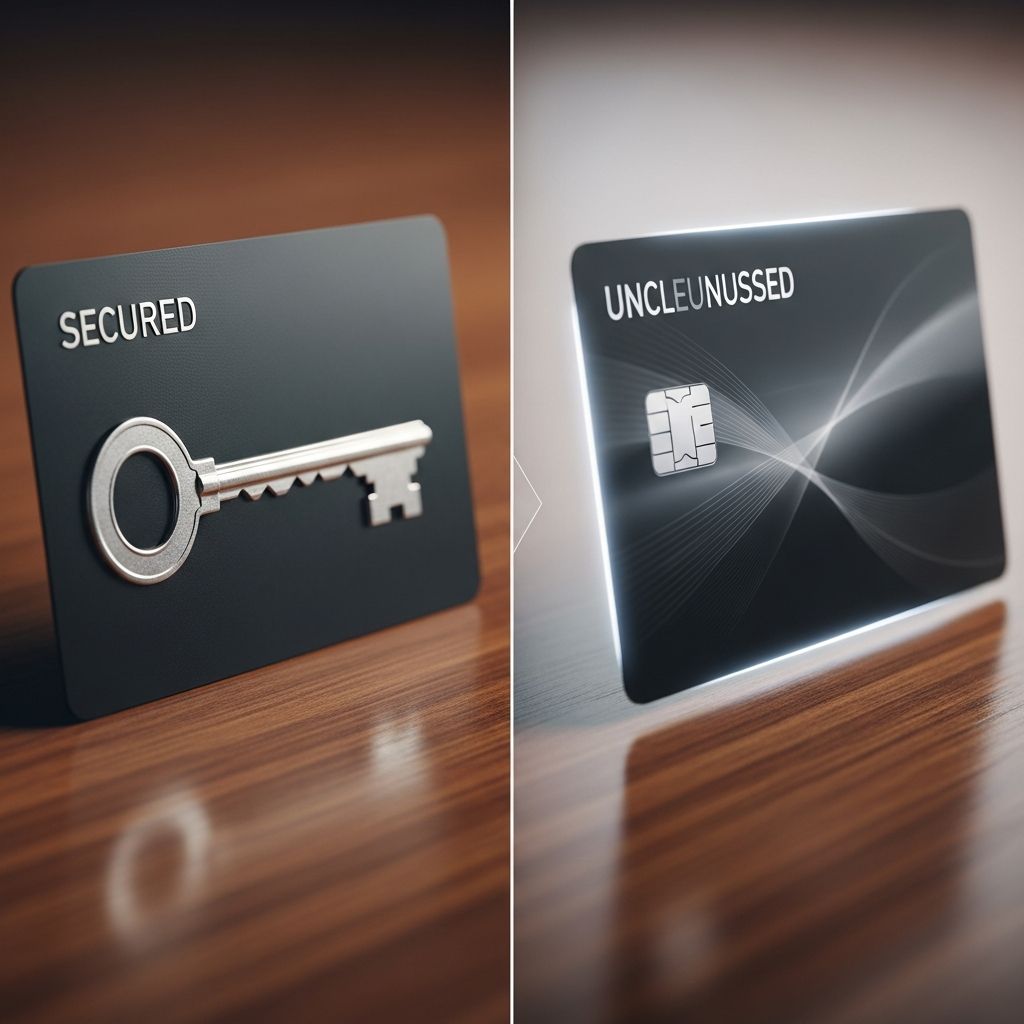
Credit cards come in two primary forms: secured and unsecured. Secured cards demand a refundable deposit as collateral, making them accessible for those with limited or poor credit histories, while unsecured cards offer no such requirement but typically demand stronger credit profiles for approval.
Core Mechanics of Secured Credit Cards
Secured credit cards function like traditional cards but hinge on a security deposit, often ranging from $200 to $5,000, which sets the credit limit. This deposit protects issuers if borrowers default. Funds are held in a savings account, earning minimal interest in some cases, and remain refundable upon account closure in good standing.
For newcomers to credit—such as recent immigrants, students, or those recovering from financial setbacks—secured cards provide an entry point. Approval rarely hinges on credit scores below 670; instead, the deposit mitigates risk. Activity on these cards reports to major bureaus (Experian, Equifax, TransUnion), fostering credit history development if payments stay timely.
Unsecured Credit Cards Explained
Unsecured cards skip deposits entirely, basing approval on credit scores (ideally 670+), income, and debt levels. Credit limits scale with these factors, often exceeding those of secured options. They appeal to consumers seeking rewards like cash back, travel points, or purchase protections.
These cards carry average APRs over 20%, but premium unsecured variants may offer introductory 0% APR periods or superior perks. Annual fees vary, with many no-fee options available for fair-to-good credit holders.
Key Comparisons at a Glance
| Feature | Secured Cards | Unsecured Cards |
|---|---|---|
| Deposit Required | Yes ($200–$5,000) | No |
| Typical Credit Needed | Any or poor (<670) | Fair+ (670+) |
| Credit Limit | Tied to deposit | Based on income/credit |
| APR Range | Often >20%, higher avg. | >20%, varies lower |
| Rewards/Perks | Limited or none | Frequent (cashback, travel) |
| Annual Fees | Sometimes | Sometimes, higher end |
This table highlights contrasts drawn from industry analyses.
Building Credit: Which Card Delivers?
Both types build credit via on-time payments and low utilization (under 30% of limit). Secured cards excel for starters due to lenient approvals; responsible use can lead to limit increases or upgrades to unsecured versions without deposits.
Unsecured cards suit those with established profiles, accelerating score gains through higher limits and diverse usage. However, denials harm scores, unlike secured paths.
- Secured advantage: Easier access builds history from scratch.
- Unsecured edge: Higher limits lower utilization ratios faster.
- Shared tip: Pay balances fully monthly to avoid interest.
Financial Costs and Fees Breakdown
Secured cards often impose higher APRs and fees, offsetting deposit security. Unsecured counterparts may waive fees or offer competitive rates for strong applicants. Always review terms: late payments risk deposit forfeiture on secured cards, plus score damage.
High-end unsecured cards might charge $50–$100+ annually for elite rewards, but no-fee alternatives abound.
Pros and Cons Evaluated
Secured Cards
- Pros: High approval odds; credit-building tool; potential upgrade path.
- Cons: Ties up funds; low limits; elevated rates/fees.
Unsecured Cards
- Pros: No deposit; rewards; flexible limits; intro offers.
- Cons: Strict eligibility; rejection risks; potential high fees.
Strategic Pathways to Choose Wisely
Opt for secured if credit is thin/poor and you can deposit without strain. Aim for issuers reporting to all bureaus and offering deposit refunds or graduations. For good credit, pursue unsecured rewards cards matching spending habits—travel, groceries, etc.
Hybrid approach: Start secured, build six months of perfect history, then apply unsecured. Monitor via free weekly reports from AnnualCreditReport.com.
Real-World Card Examples
| Card Type | Example | Key Features |
|---|---|---|
| Secured | Capital One Quicksilver Secured | $200 min deposit; 1.5% cash back; fair credit. |
| Secured | Discover it Secured | Deposit = limit; rewards; potential cashback match. |
| Unsecured | Capital One Quicksilver | No deposit; 1.5% unlimited cash back; excellent credit. |
| Unsecured | Citi Rewards Options | Various rewards; good credit needed. |
Frequently Asked Questions (FAQs)
Can secured cards offer rewards?
Yes, some like Discover it Secured provide cash back, though less generous than unsecured peers.
How to recover a secured deposit?
Close account in good standing or request upgrade; funds return minus debts.
Do both report to credit bureaus?
Most do, confirming with issuer ensures all three major bureaus receive data.
Which has lower rates?
Unsecured often lower for qualified users; secured higher due to risk profile.
Best first card for students?
Secured if no history; student unsecured (e.g., Discover it Student Cash Back) if fair credit.
Long-Term Credit Mastery Tips
Beyond card type, diversify credit mix (10% of FICO), keep old accounts open for history length (15%), and avoid new inquiries (10%). Pair cards with budgeting apps for utilization control.
For secured holders: Request reviews after 6–12 months for increases/graduation. Unsecured users: Leverage sign-up bonuses ethically, paying off before promo ends.
Ultimately, no card inherently ‘beats’ the other—alignment with your credit stage dictates success. Beginners thrive on secured stability; veterans unlock unsecured value.
References
- What’s The Difference Between Secured And Unsecured Credit Cards? — Bankrate. 2024-10-15. https://www.bankrate.com/credit-cards/building-credit/secured-vs-unsecured-credit-cards/
- Secured vs. Unsecured Credit Card: What’s the Difference? — Experian. 2024-08-20. https://www.experian.com/blogs/ask-experian/is-secured-card-or-unsecured-card-better-for-credit/
- What is a Secured vs. Unsecured Credit Card? — Discover. 2024-11-01. https://www.discover.com/credit-cards/card-smarts/secured-vs-unsecured-credit-card/
- Secured vs. Unsecured Credit Cards — Capital One. 2025-02-10. https://www.capitalone.com/learn-grow/money-management/secured-vs-unsecured-credit-card/
- Secured vs. Unsecured Credit Cards — TD Bank. 2024-09-05. https://www.td.com/us/en/personal-banking/learning/secured-vs-unsecured-credit-card
- Secured vs. Unsecured Credit Card: What’s the Difference? — SoFi. 2024-12-12. https://www.sofi.com/learn/content/secured-credit-card-vs-unsecured-credit-card/
- Secured Credit Cards vs Unsecured Credit Cards — Citi. 2025-01-18. https://www.citi.com/credit-cards/understanding-credit-cards/secured-vs-unsecured-credit-cards
Similar Articles








Read full bio of medha deb