Secured Business Loans: What You Need to Know
Understand how secured business loans work, what collateral lenders want, and how to decide if this type of financing fits your company.

Secured business loans are one of the most common ways for companies to access larger amounts of capital at relatively affordable rates. By pledging business or personal assets as collateral, you reduce risk for the lender and may unlock better terms than you would with unsecured financing.
This guide explains how secured business loans work, what you can use as collateral, the advantages and risks, how they differ from unsecured loans, and the steps to qualify and apply—so you can decide if this type of funding is right for your business.
What Is a Secured Business Loan?
A secured business loan is a loan backed by collateral—an asset the lender can claim if you do not repay the debt as agreed. Collateral can include business property, equipment, inventory, accounts receivable, or even cash in a bank account.
If the business defaults, the lender has a legal right to seize and sell the pledged asset to recover some or all of its losses. Because this reduces the lender’s risk, secured loans typically offer more favorable terms than comparable unsecured options.
Key characteristics of secured business loans
- Require specific collateral or a blanket claim over business assets
- Often offer lower interest rates than unsecured loans
- May provide higher borrowing limits tied to collateral value
- Typically come with more documentation and underwriting
- Can be structured as term loans, lines of credit, equipment loans, commercial mortgages, and more
How Do Secured Business Loans Work?
The basic mechanics of a secured loan are straightforward: you receive funding in exchange for giving the lender a legal claim to an asset. However, lenders follow structured processes to evaluate collateral, set loan terms, and monitor risk over time.
The typical process
- Application: You submit information about your business, finances, and the asset(s) you will pledge as collateral.
- Collateral evaluation: The lender assesses the type, value, and liquidity of the collateral and may order appraisals or review financial statements.
- Loan-to-value (LTV) determination: The lender decides what percentage of the collateral’s value it is willing to lend—often less than the full value to create a safety buffer.
- Underwriting and approval: The lender reviews your credit, cash flow, business history, and collateral analysis to make a decision.
- Loan agreement and security documents: You sign a loan contract plus security agreements that grant the lender a lien on the collateral.
- Funding and repayment: Funds are disbursed, and you make scheduled payments of principal and interest; if you repay as agreed, the lien is removed at the end of the term.
Loan-to-value ratios
Lenders rarely lend 100% of an asset’s value. Instead, they use a loan-to-value (LTV) ratio, which is the loan amount divided by the collateral’s appraised or discounted value.
| Type of collateral | Typical LTV range (illustrative) | Why the range varies |
|---|---|---|
| Cash / savings | Up to ~90% | Highly liquid and stable value |
| Commercial real estate | Up to ~75% | Stable but less liquid than cash |
| Equipment | 50–80% | Depreciation and resale uncertainty |
| Inventory | Often 50% or less | Harder to liquidate; value can change quickly |
Exact LTVs depend on the lender, the asset, and market conditions, but the core principle is the same: more stable and liquid collateral usually supports higher LTVs and better terms.
Common Types of Collateral
Almost any asset with predictable value and clear ownership can serve as collateral, but lenders typically prefer assets they can value and liquidate relatively easily.
Typical collateral used for secured business loans
- Real estate: Commercial property, owner-occupied buildings, or sometimes residential real estate owned by the business owner.
- Equipment and machinery: Vehicles, manufacturing equipment, medical devices, IT hardware, and other durable assets.
- Inventory: Finished goods or sometimes raw materials, especially in retail or distribution businesses.
- Accounts receivable: Unpaid invoices from creditworthy customers, often used in asset-based lending facilities.
- Cash and marketable securities: Business savings accounts or investment portfolios; highly preferred due to liquidity.
Personal guarantees and liens
Even with collateral, many lenders also require additional protections:
- Personal guarantee: A legal commitment that you, as the owner, will personally repay the debt if the business cannot. This can expose your personal assets to collection.
- UCC lien (in the U.S.): A filing that publicly records the lender’s security interest in business assets, often covering all current and future assets rather than just one item.
Types of Secured Business Financing
“Secured loan” is a broad category—many common products use collateral in different ways.
SBA loans
The U.S. Small Business Administration (SBA) guarantees a portion of certain loans issued by banks and authorized lenders. While the SBA guarantee reduces lender risk, most SBA 7(a) loans still require collateral when available, and the SBA defines when a loan is considered fully secured.[10]
- Can be used for working capital, equipment, real estate, or business acquisition
- Offer relatively low rates and long terms compared with many conventional loans[10]
- Require detailed documentation and may involve longer approval times
Term loans
A secured term loan provides a lump sum repaid over a fixed period with regular principal and interest payments. Collateral typically includes real estate, equipment, or a blanket lien on business assets.
Business lines of credit
A secured line of credit works like a credit card with a higher limit: you draw funds as needed and pay interest only on what you borrow. Many banks secure these lines with a lien on inventory, receivables, or other business assets.
Equipment loans
With equipment financing, the equipment itself serves as collateral. If you default, the lender can repossess the asset. This structure can help newer firms or those with weaker credit obtain necessary machinery.
Commercial real estate loans
Commercial mortgages are secured by the property being financed. These loans often feature higher borrowing amounts and longer repayment periods because real estate tends to be a relatively stable form of collateral.
Secured vs. Unsecured Business Loans
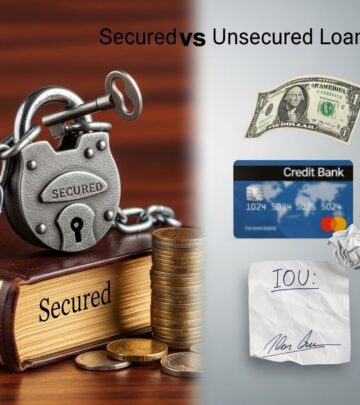
When deciding between secured and unsecured borrowing, the fundamental trade-off is collateral and risk versus speed and flexibility.
| Feature | Secured business loans | Unsecured business loans |
|---|---|---|
| Collateral | Require specified collateral and often a lien on assets | Generally do not require specific assets, but may still use a personal guarantee or general lien |
| Interest rates | Often lower, because collateral reduces lender risk | Typically higher to compensate for greater risk to the lender |
| Loan size | Tends to allow higher borrowing limits tied to collateral value | Usually lower maximum amounts |
| Approval criteria | More flexible on credit if collateral is strong | Stricter focus on creditworthiness and cash flow |
| Risk to assets | High: pledged assets can be seized in default | Lower for specific assets, but personal guarantee still creates risk |
Pros and Cons of Secured Business Loans
Secured financing offers important advantages but also exposes your business—and potentially you personally—to asset risk.
Benefits
- Lower borrowing costs: Collateral often enables lower interest rates and fees compared with unsecured alternatives.
- Higher loan amounts: You may qualify for larger credit limits, particularly when pledging real estate or valuable equipment.
- Longer repayment terms: Many secured loans, especially those backed by property or SBA guarantees, offer extended terms that keep monthly payments manageable.[10]
- Access with moderate credit: Strong collateral can sometimes offset less-than-perfect credit or thinner financial histories.
Drawbacks
- Risk of losing assets: If you default, the lender can seize and liquidate the pledged property, equipment, or other collateral.
- Personal exposure: Personal guarantees can put your home or personal savings at risk even when the collateral is primarily business assets.
- More documentation and time: Appraisals, valuations, and lien filings can make secured loans slower and more paper-intensive than some unsecured options.
- Limited flexibility: Once assets are pledged, they may be tied up and unavailable to support other financing until the loan is repaid or refinanced.
How to Qualify for a Secured Business Loan
Qualifying involves more than just having something to pledge. Lenders also evaluate your ability to repay, your business’s track record, and how well the loan fits your financial profile.
1. Clarify your funding needs
- Determine how much you need, what you will use it for, and how quickly you require the funds.
- Match your need to a product: real estate or equipment purchases often pair best with asset-backed loans; working capital might suit a line of credit.
2. Identify suitable collateral
- List assets the business owns outright or with significant equity (property, equipment, inventory, receivables, cash).
- Estimate market values and note any existing liens or obligations.
- Decide whether you are willing to provide personal assets if needed.
3. Review your financial profile
- Check your business and personal credit scores.
- Prepare up-to-date financial statements, including profit and loss, balance sheet, and cash flow statement.
- Understand your debt service coverage ratio (DSCR)—a key measure of your capacity to make loan payments.
4. Compare lenders and loan options
- Traditional banks and credit unions
- Online business lenders and fintech platforms
- Community development financial institutions (CDFIs) and mission-driven lenders
- Lenders participating in SBA or similar government-backed programs[10]
When comparing, look beyond rate alone; weigh fees, collateral requirements, prepayment terms, and financial covenants.
5. Gather documentation and apply
While exact requirements differ by lender, you should be prepared to provide:
- Basic business information (ownership structure, time in business, industry)
- Business and personal tax returns
- Business and personal bank statements
- Business financial statements and projections
- Details and supporting documents for your collateral (titles, appraisals, invoices)
- Existing debt schedules and key contracts (like leases)
When Does a Secured Business Loan Make Sense?
Secured loans are not automatically the best or only choice, but they are well suited to certain situations.
Potentially good fits
- You are purchasing a long-lived asset (real estate, major equipment) that can secure the loan.
- You need a larger amount of capital than unsecured lenders are willing to provide.
- Your credit profile is fair but you have strong collateral and reliable cash flow.
- You want to reduce borrowing costs over the life of the loan, even if it means more documentation.
When to consider alternatives
- You cannot afford to risk losing key business assets or personal property.
- You need funds extremely quickly and are willing to pay more for speed.
- You only need a small amount of capital that an unsecured credit card or microloan can cover.
- Your collateral is highly specialized or hard to value, which may make secured financing difficult.
Frequently Asked Questions (FAQs)
Q: Can my small business get a secured loan?
Yes, many small businesses qualify for secured loans as long as they can provide acceptable collateral, show sufficient cash flow to service the debt, and meet lender credit and documentation requirements. Options range from SBA-backed loans to equipment financing and asset-based lines of credit.
Q: What do lenders look for in collateral?
Lenders want collateral that is clearly owned by the borrower, relatively stable in value, and reasonably easy to liquidate if necessary. They pay special attention to real estate, equipment with active resale markets, inventory with predictable demand, and cash or marketable securities.
Q: Is a personal guarantee the same as collateral?
No. A personal guarantee is a legal promise that you will personally repay the loan if the business cannot, while collateral is a specific asset the lender can seize if you default. Many secured loans involve both: pledged business assets plus a personal guarantee from the owner.
Q: Do secured loans always have better rates than unsecured loans?
In general, secured loans tend to offer lower interest rates because the lender’s risk is reduced by collateral. However, pricing still depends on your credit, financial strength, loan type, and the quality of the collateral, so you should compare multiple offers.
Q: What happens if I cannot repay a secured business loan?
If you miss payments and the loan goes into default, the lender can enforce its rights under the security agreement, which may include repossessing and selling the collateral. If sale proceeds do not cover the full balance, and you signed a personal guarantee, the lender may pursue you personally for the remaining amount.
References
- Secured Business Loans: Overview and Best Options — NerdWallet. 2024-03-05. https://www.nerdwallet.com/business/loans/learn/secured-business-loans
- What are Secured Business Loans? Here’s What to Know — Stripe. 2023-09-14. https://stripe.com/resources/more/secured-business-loans
- Secured business loans guide — Swoop Funding. 2023-11-02. https://swoopfunding.com/us/business-loans/secured-business-loans/
- Types of 7(a) loans — U.S. Small Business Administration. 2023-05-10. https://www.sba.gov/partners/lenders/7a-loan-program/types-7a-loans
- Chapter 3: Secured Business Loans & Collateral-Based Options — Guidant Financial. 2022-08-18. https://www.guidantfinancial.com/small-business-funding-guide/collateral-and-secured-business-loans/
Similar Articles








Read full bio of medha deb