Second Chance Banking: 5 Top Providers To Regain Access
Discover how second chance banking opens doors for those with rocky financial histories, offering a path to stability and better services.
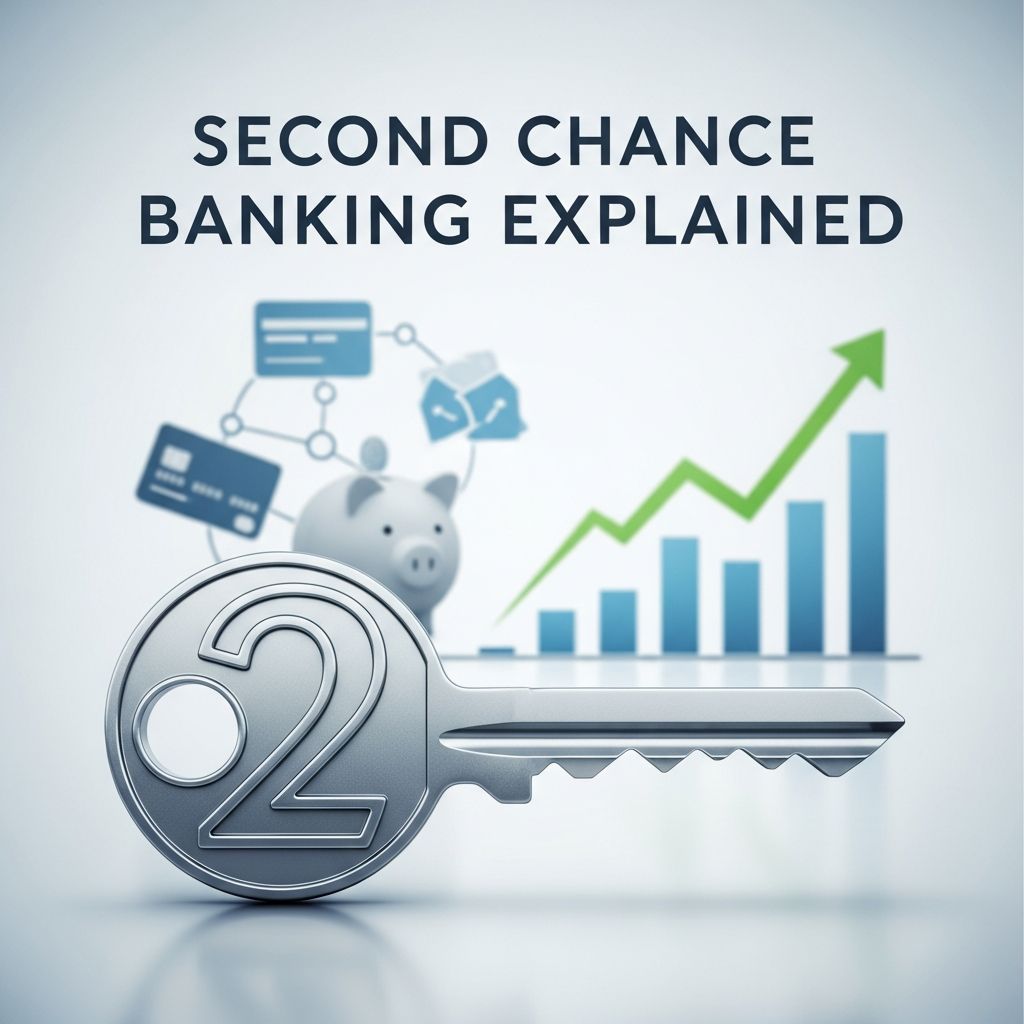
Second Chance Banking Explained
Second chance banking refers to specialized checking accounts tailored for individuals who have faced denials from traditional banks due to prior financial missteps like overdrafts or unpaid fees. These accounts enable users to regain access to core banking functions while demonstrating responsible habits over time.
Understanding the Need for Alternative Banking Options
Millions of Americans struggle without bank accounts, relying on costly alternatives such as check-cashing outlets. Negative entries in consumer reporting systems often block standard account openings, perpetuating a cycle of financial exclusion. Second chance products address this by prioritizing current behavior over past errors.
Key triggers for needing these accounts include involuntary closures from overdrawn balances or fraud suspicions. Without intervention, affected individuals face higher expenses and limited economic participation.
How Second Chance Accounts Function
Providers bypass rigorous checks by not consulting certain reporting agencies or applying lenient criteria. Users typically receive debit cards, direct deposit capabilities, and mobile apps, though with safeguards like no overdraft options to prevent repeats of old issues.
- Account setup mirrors standard processes but skips deep history reviews.
- Monthly monitoring ensures positive usage patterns.
- After 12-24 months of good standing, upgrades to full-service accounts become possible.
This structure promotes gradual reintegration into mainstream finance.
Core Advantages of Choosing Second Chance Banking
These accounts deliver immediate relief from unbanked challenges. Users avoid 1-5% fees on check cashing, preserving more income. FDIC insurance up to $250,000 per depositor safeguards funds, a stark improvement over cash storage risks.
| Feature | Second Chance Benefit | Traditional Alternative Cost |
|---|---|---|
| Direct Deposit | Free payroll receipt | $5-10 per check cashing |
| Debit Card Access | Everyday purchases | Money orders at $1-3 each |
| Online Bill Pay | Convenient payments | High fee services |
| FDIC Protection | Up to $250,000 insured | No protection for cash |
Additional perks include spending trackers and alerts that foster better habits. For underserved groups, this means equitable access to digital payments and savings growth.
Potential Drawbacks and Limitations
While helpful, these accounts often carry hurdles. Monthly fees range from $5-15, and features like paper checks or overdraft protection may be absent. Minimum balance requirements, though lower, still demand attention.
- Higher service charges compared to free standard accounts.
- Limited ATM networks increase out-of-network costs.
- No interest earnings on balances in most cases.
Weighing these against alternatives reveals net savings, but informed selection is crucial.
Who Qualifies and Benefits Most
Ideal candidates include those with ChexSystems flags, low-income households, or recent justice system returnees. Programs like Bank On certify accounts meeting affordability standards, aiding unbanked populations.
Communities of color and low-wage earners disproportionately benefit, as barriers like ID issues or fee sensitivity affect them more. Formerly incarcerated individuals gain vital reentry tools.
Top Providers and Account Comparisons
Options span banks, credit unions, and fintechs. Here’s a selection based on features and accessibility:
| Provider | Monthly Fee | Key Features | Upgrade Path |
|---|---|---|---|
| Chime | $0 | SpotMe overdraft, savings tools | Automatic after good history |
| Varo | $0 | No minimums, high-yield savings | 12 months positive activity |
| PNC | $7.50 | Debit card, mobile app, Zelle | Review after 12 months |
| Wells Fargo (Clear Access) | $5 | Direct deposit, ATM access | Upgrade eligible post-period |
| Netspend | Varies | Prepaid with banking-like tools | Path to traditional via history |
Fee waivers often apply via direct deposit. Research current terms as offerings evolve.
Steps to Open and Manage Successfully
- Review your banking report via annual free disclosures.
- Compare providers using certified lists like Bank On.
- Gather ID, SSN, and initial deposit.
- Set up direct deposit to waive fees.
- Monitor via app; avoid maxing balances to dodge issues.
Track progress toward graduation from second chance status.
Building Toward Traditional Banking
Consistent use clears reports over time. Pair with budgeting apps and secured cards for credit repair. Many providers notify when eligible for upgrades featuring rewards, higher yields, and full perks.
Aim for 12 months without incidents; request report updates if needed.
Frequently Asked Questions
Does second chance banking affect my credit score?
No, banking reports differ from credit bureaus. Responsible use may indirectly aid via secured products.
Are these accounts FDIC insured?
Yes, when offered by qualifying banks or through pass-through insurance.
How long until I can switch to a regular account?
Typically 12-24 months of positive activity, varying by provider.
Can I get a loan with a second chance account?
Limited initially; focus on history building first.
What’s the difference from prepaid cards?
Second chance offers true deposit accounts with reporting, unlike reloadable prepaid without history impact.
Long-Term Financial Empowerment
Beyond basics, these accounts integrate with savings round-ups and early paycheck access. Transitioning users report reduced stress and increased savings rates. Financial inclusion drives economic mobility, making second chance banking a pivotal tool.
Explore certified options to start your journey securely.
References
- What Is Second-chance Banking? — Netspend. 2023. https://www.netspend.com/blog/what-is-second-chance-banking
- What is Second Chance Banking? Checking Accounts for Bad Credit — Business Insider. 2024-01-15. https://www.businessinsider.com/personal-finance/banking/what-is-second-chance-banking
- What Is Second Chance Banking? — Experian. 2024. https://www.experian.com/blogs/ask-experian/what-is-second-chance-banking/
- What Is Second Chance Banking? — PNC Insights. 2023-11-20. https://www.pnc.com/insights/personal-finance/spend/what-is-second-chance-banking.html
- What is Second Chance Banking and Second Chance Checking? — Chase. 2024. https://www.chase.com/personal/banking/education/basics/second-chance-banking
- What Is Second Chance Banking? Guide to Fresh Starts — Chime. 2024-02-10. https://www.chime.com/blog/what-is-second-chance-banking/
- What Is a Second Chance Checking Account? — SoFi. 2023-12-05. https://www.sofi.com/learn/content/second-chance-checking-account/
Similar Articles







Read full bio of Sneha Tete