Seasonal Adjustment: Definition and Economic Impact
Understanding seasonal adjustment: removing seasonal patterns from economic data for accurate analysis.
What Is Seasonal Adjustment?
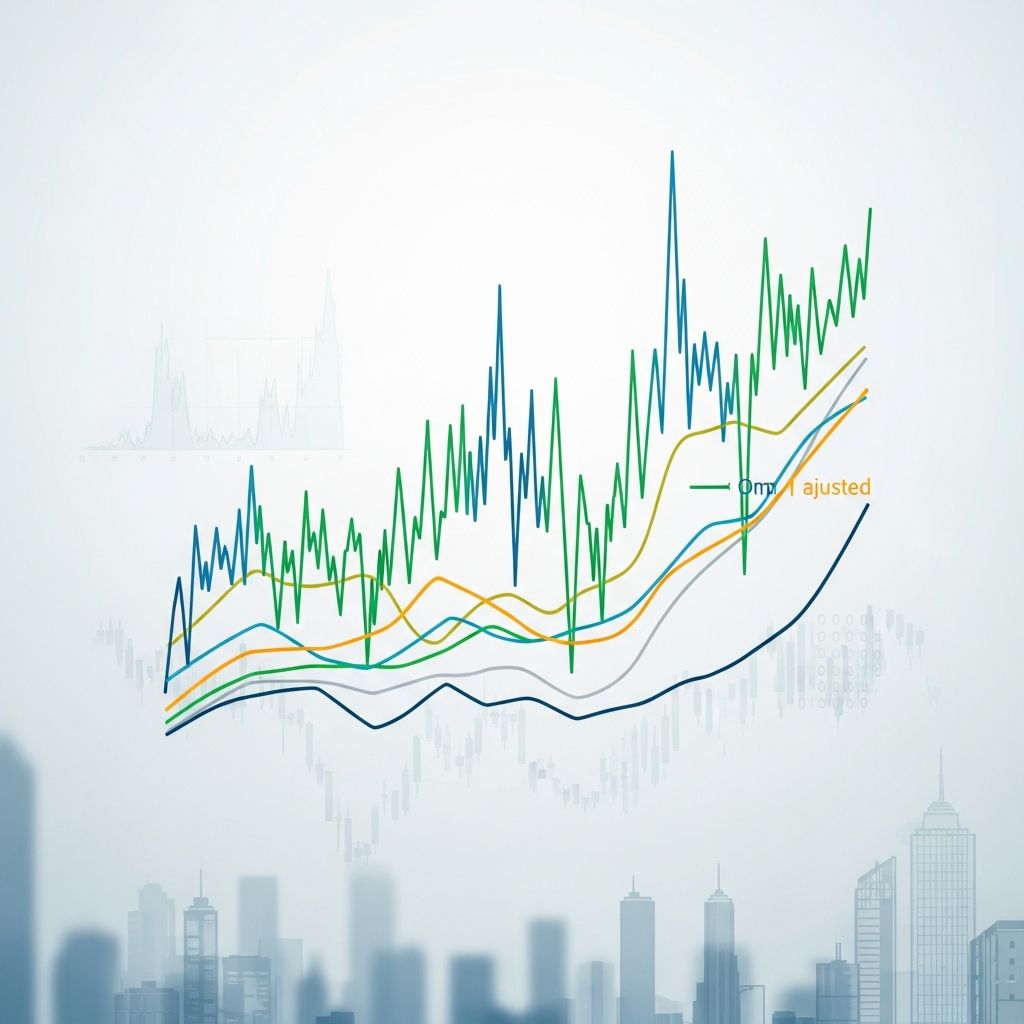
Seasonal adjustment is a statistical technique used in economics and data analysis that removes the effects of recurring seasonal influences from economic time series data. These seasonal patterns are predictable fluctuations that occur at regular intervals throughout the year, such as increased retail spending during the holiday season, higher agricultural production in harvest months, or elevated construction activity during warmer weather months. By eliminating these cyclical variations, analysts and policymakers can better identify underlying economic trends and make more accurate comparisons between different time periods.
The primary purpose of seasonal adjustment is to facilitate clearer economic analysis by filtering out noise caused by predictable seasonal patterns. When seasonal factors are removed, the resulting data becomes smoother and easier to interpret, allowing economists, investors, and business leaders to focus on genuine changes in economic activity rather than being distracted by expected seasonal movements.
Understanding Seasonal Patterns in Economic Data
Economic data is inherently influenced by seasonal factors that repeat at predictable times each year. Retail employment surges in October through December in preparation for holiday shopping, construction employment peaks during spring and summer months, and energy consumption fluctuates with temperature changes across seasons. Without accounting for these predictable variations, comparing January employment figures to December figures would be misleading because part of the observed change would simply reflect normal seasonal hiring and firing patterns rather than genuine economic growth or contraction.
Seasonal adjustment allows data analysts to separate these recurring patterns from the underlying trend. The unadjusted, or “not seasonally adjusted” (NSA), data reflects actual reported figures, while seasonally adjusted data represents what the numbers would look like if seasonal factors were eliminated. Both versions of the data serve important purposes depending on the analytical objective.
Terminology and Notation
Seasonally adjusted data are referred to using several interchangeable terms in economic literature and reports. Common designations include “adjusted,” “seasonally adjusted,” and the abbreviation “SA.” Conversely, unadjusted data may be labeled as “not seasonally adjusted,” “unadjusted,” or “NSA.” Understanding this terminology is essential when reviewing economic reports and data from government agencies, as the distinction between seasonally adjusted and unadjusted figures can significantly impact interpretation and analysis.
Why Seasonal Adjustment Matters
The primary value of seasonal adjustment lies in its ability to enhance data comparability and facilitate trend recognition. By removing the seasonal component from a data series, analysts can make meaningful comparisons between observations across different months or quarters without the distortion caused by predictable seasonal patterns. This smoothing effect makes it substantially easier for data users to identify genuine changes in underlying economic trends.
For example, comparing total employment in January to total employment in February without seasonal adjustment would likely show lower February figures, not because the economy actually contracted but because seasonal hiring following the holiday season has reversed. Seasonally adjusted data would show whether employment actually changed by removing the expected seasonal adjustment from both figures, allowing for a true comparison of underlying economic momentum.
Seasonally Adjusted vs. Unadjusted Data: Which Is Better?
A common misconception is that seasonally adjusted data is inherently superior to unadjusted data. In reality, neither version is universally better; rather, the appropriate choice depends on the specific analytical question being addressed. Different analyses require different approaches.
If your goal is to understand seasonal hiring patterns in department stores and you want to analyze how October-to-December employment changes have evolved over recent years, unadjusted data would likely be more appropriate. In this case, you specifically want to observe seasonal hiring patterns, and seasonal adjustment would actually obscure the information you seek.
Conversely, if you’re interested in understanding the most recent monthly fluctuations in the Consumer Price Index (CPI) or identifying whether inflation is accelerating or decelerating, seasonally adjusted data would provide clearer insights. In this scenario, removing predictable seasonal price movements allows you to focus on underlying inflation trends.
Common Applications of Seasonal Adjustment
Seasonal adjustment finds widespread application across numerous economic metrics and datasets. Government agencies including the U.S. Bureau of Labor Statistics regularly publish both seasonally adjusted and unadjusted versions of major economic indicators. Key applications include:
- Employment statistics and unemployment rates
- Retail sales and consumer spending data
- Manufacturing output and industrial production
- Consumer price indices and inflation measures
- Housing starts and construction activity
- International trade data and import/export statistics
The Seasonally Adjusted Annual Rate (SAAR)
A related concept to seasonal adjustment is the Seasonally Adjusted Annual Rate, or SAAR, which adjusts data to account for typical seasonal fluctuations and expresses the result as an annual total. The SAAR is particularly useful when comparing quarterly or monthly data on an annualized basis, making it easier to assess the trajectory of economic activity if a particular trend were to continue for a full year.
The SAAR calculation involves dividing the unadjusted rate for a specific period by its seasonality factor, then multiplying by 12 for monthly data or by 4 for quarterly data to annualize the figure. This approach is especially common in automotive sales reporting, where seasonal fluctuations are substantial. Sales figures might show significantly higher activity in certain months, but comparing raw monthly numbers can be misleading. SAAR allows analysts to compare monthly sales on a comparable annualized basis.
Other industries frequently using SAAR include ski resort occupancy rates, which peak in winter months, and ice cream sales, which surge during summer months. By standardizing these figures to an annual rate, stakeholders can more easily compare performance across different seasons and years.
How Seasonally Adjusted Data Are Calculated
The process of creating seasonally adjusted data involves sophisticated statistical methodology and computer programs. Several different programs and methodological variations exist for constructing seasonally adjusted series, each with particular strengths for different types of data and applications. The methodology must identify the seasonal pattern, quantify its magnitude, and then remove it from the original data.
One widely used program at the U.S. Bureau of Labor Statistics is X-12-ARIMA, which was developed by the U.S. Census Bureau. This program represents an advanced approach to seasonal adjustment that combines traditional seasonal adjustment methods with ARIMA (AutoRegressive Integrated Moving Average) modeling. ARIMA components help the program identify and project seasonal patterns even when data patterns change over time or when irregular events disrupt normal seasonal patterns.
The calculation process typically involves several steps: first, analysts identify the seasonal pattern by examining historical data to determine typical variations for each month or quarter; second, they quantify the magnitude of seasonal effects relative to the overall trend; third, they apply adjustment factors to remove these seasonal components from current data. The sophistication of modern methods allows for flexibility in handling changing seasonal patterns, which is important because seasonal effects can shift over time due to changes in consumer behavior, business practices, or economic structure.
Advantages and Limitations of Seasonal Adjustment
Seasonal adjustment provides substantial benefits for economic analysis and trend identification. The primary advantage is enhanced clarity in understanding underlying economic movements. By filtering out predictable seasonal noise, seasonally adjusted data allows policymakers, investors, and analysts to identify true economic changes more readily. This capability is especially valuable for central banks making monetary policy decisions, as they need to distinguish between seasonal and fundamental economic changes.
However, seasonal adjustment also has limitations. The process relies on historical patterns to predict and remove seasonal effects, which can become problematic during unusual economic periods or when seasonal patterns shift. Additionally, the choice of methodology and adjustment parameters can influence results, potentially leading to different conclusions depending on the specific techniques employed. Users should understand that seasonally adjusted data represents an estimate of what figures would look like without seasonal effects, not a direct measurement.
Interpreting Economic Reports: Seasonally Adjusted vs. Unadjusted
When reviewing economic reports from government agencies or financial institutions, careful attention to whether figures are seasonally adjusted or unadjusted is essential. Monthly employment reports, for instance, typically headline the seasonally adjusted unemployment rate and job creation figures, as these provide clearer indicators of underlying labor market trends. However, the reports also include unadjusted figures, which can reveal seasonal hiring patterns.
Retail sales reports similarly provide both versions, allowing analysts to understand both the seasonal shopping patterns and underlying consumer spending trends. During the holiday shopping season, unadjusted retail sales surge dramatically, but seasonally adjusted figures provide a more accurate picture of whether consumers are actually spending more or whether the increase simply reflects normal holiday patterns.
Real-World Examples of Seasonal Patterns
Understanding specific examples of seasonal patterns helps illustrate why seasonal adjustment matters. Holiday season retail hiring represents one of the most pronounced seasonal patterns in the U.S. economy. Department stores, shipping companies, and warehouses dramatically increase employment in October, November, and December to handle holiday shopping, then reverse these hires in January. Without seasonal adjustment, comparing December employment to November employment would appear to show dramatic job growth, when in reality it reflects predictable seasonal hiring.
Construction activity shows clear seasonal patterns driven by weather. Spring and summer months see significantly higher construction employment and output as weather permits outdoor work, while winter months show reduced activity in many regions. Agricultural production follows seasonal patterns corresponding to planting and harvest cycles. Energy consumption fluctuates based on heating and cooling needs corresponding to temperature variations across seasons.
Frequently Asked Questions
Q: What is the difference between seasonally adjusted and not seasonally adjusted data?
A: Seasonally adjusted data has recurring seasonal patterns removed to reveal underlying trends, while not seasonally adjusted data reflects actual reported figures including all seasonal variations. The appropriate choice depends on your analytical objective.
Q: When should I use seasonally adjusted data versus unadjusted data?
A: Use seasonally adjusted data when analyzing underlying economic trends and monthly fluctuations. Use unadjusted data when you specifically want to examine seasonal patterns or compare seasonal variations across years.
Q: What does SAAR mean?
A: SAAR stands for Seasonally Adjusted Annual Rate, which adjusts data for seasonal fluctuations and expresses the result as an annual total, making it easier to compare periods on a standardized basis.
Q: How is seasonal adjustment calculated?
A: Seasonal adjustment uses statistical programs like X-12-ARIMA to identify seasonal patterns in historical data, quantify their magnitude, and remove them from current data using adjustment factors.
Q: Why do economists use seasonal adjustment?
A: Seasonal adjustment allows economists to distinguish between predictable seasonal changes and underlying economic trends, enabling clearer analysis of economic momentum and more accurate policy decisions.
References
- Seasonal Adjustment — U.S. Bureau of Labor Statistics. Accessed 2025-11-29. https://www.bls.gov/opub/hom/topic/seasonal-adjustment.htm
- Seasonally Adjusted Annual Rate — Wikipedia. https://en.wikipedia.org/wiki/seasonally_adjusted_annual_rate
Similar Articles








Read full bio of medha deb