Savings Vs Money Market Accounts: Which Is Best For You
Discover key differences between savings and money market accounts to optimize your savings strategy with higher yields and smart access options.
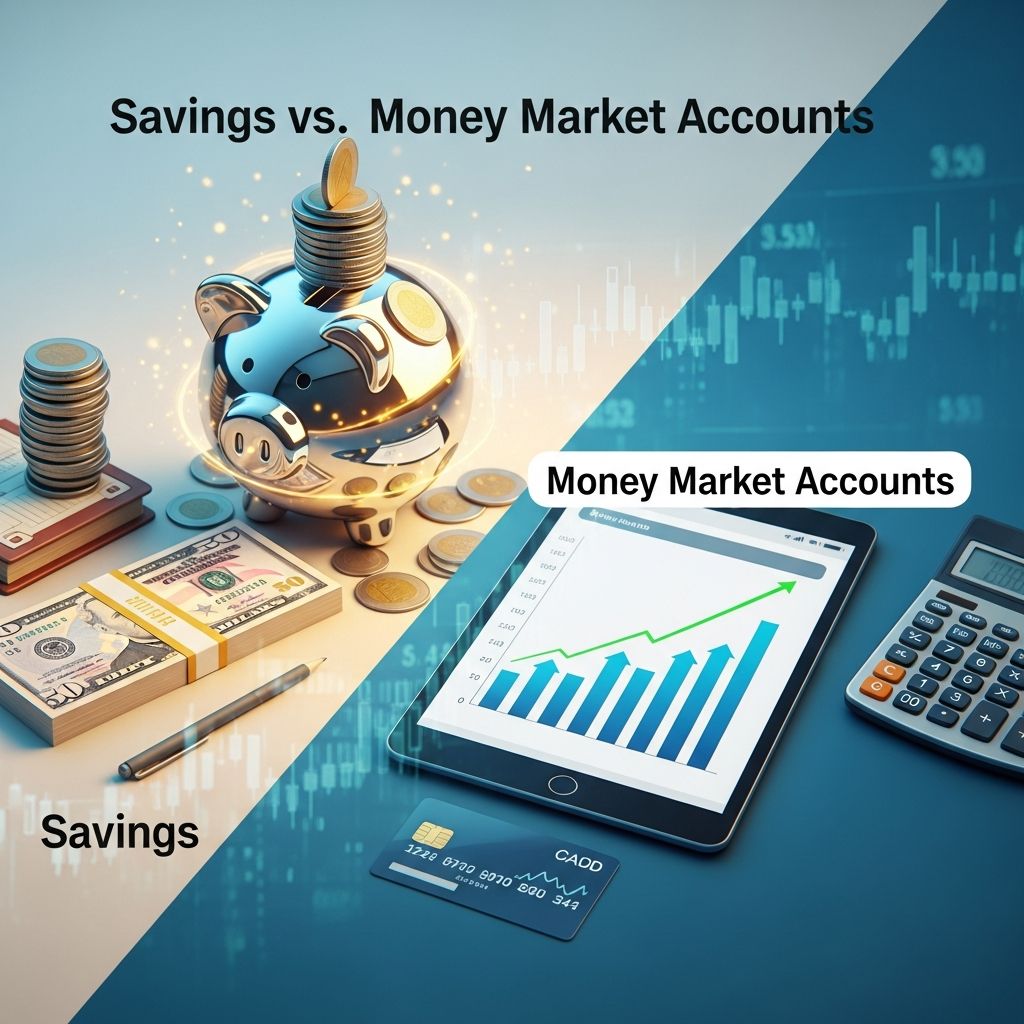
Navigating the world of deposit accounts can feel overwhelming, but understanding the distinctions between traditional savings accounts and money market accounts empowers you to make informed choices for growing your money safely. Both options provide
FDIC insurance
up to $250,000 per depositor per institution, ensuring principal protection while earning interest. This guide breaks down their features, benefits, drawbacks, and ideal use cases to help you decide which aligns with your financial objectives.Core Features at a Glance
Savings accounts prioritize simplicity and accessibility, making them ideal for beginners or those building emergency funds. Money market accounts (MMAs), on the other hand, blend savings growth with limited checking-like conveniences, appealing to users needing occasional direct access.
| Feature | Savings Account | Money Market Account |
|---|---|---|
| Earns Interest | Yes | Yes |
| Typical APY (High-Yield) | 4.00%-4.20% | 4.00%-4.20% |
| FDIC Insured | Yes, up to $250,000 | Yes, up to $250,000 |
| Debit Card Access | Rare | Often Available |
| Check-Writing | No | Limited (e.g., 6 per month) |
| Minimum Balance | Low or None | Often Higher ($1,000+) |
| Transaction Limits | Typically 6/month | Typically 6/month |
This comparison highlights how MMAs offer more flexibility at the potential cost of stricter requirements. High-yield variants from online banks often outperform traditional brick-and-mortar options, where rates hover near 0.01% APY.
Delving into Savings Accounts: Simplicity and Reliability
A savings account serves as a foundational tool for anyone looking to set money aside without complexity. These accounts earn interest on deposits, with high-yield versions from online institutions delivering competitive returns that outpace inflation in many cases.
Advantages of Savings Accounts
- Effortless Setup: Opening requires minimal documentation and often no minimum deposit, allowing quick starts even with small sums.
- Flexible Access: Transfer funds easily to checking via ACH, apps, or ATMs, subject to federal limits of six convenient transactions per month.
- No Frills Security: Full FDIC coverage provides peace of mind, protecting against bank failure.
- Rate Potential: High-yield options yield 4.00%-4.20% APY, significantly better than legacy accounts at big banks.
Potential Drawbacks
- Rate Volatility: Interest is variable, fluctuating with Federal Reserve policies and market conditions.
- Limited Tools: No debit cards or checks mean reliance on transfers for spending.
- Fee Risks: Watch for maintenance or low-balance charges, though many online accounts waive them.
For example, parking $10,000 in a 4.20% APY high-yield savings account could generate about $420 annually, compounding daily or monthly depending on the bank.
Money Market Accounts: Bridging Savings and Spending
Money market accounts elevate basic savings by incorporating investment-like yields and transaction perks. Banks invest pooled deposits in short-term, low-risk securities like Treasury bills, enabling slightly elevated rates while maintaining liquidity.
Key Benefits
- Enhanced Yields: Competitive MMAs match or exceed high-yield savings at 4.00%-4.20% APY, with tiered rates rewarding larger balances.
- Convenience Features: Many include debit cards, check-writing (up to six/month), and ATM access for direct payments.
- Insurance Protection: FDIC-backed, just like savings accounts.
- Perks for Loyalists: Existing customers may enjoy fee waivers or seamless transfers.
Challenges to Consider
- Balance Thresholds: Minimums from $1,000 to $10,000+ to avoid fees or earn top rates.
- Access Restrictions: Same six-transaction limit applies, with potential fees for excess.
- Rate Sensitivity: Yields tie closely to money markets, varying frequently.
Ideal for those with substantial savings needing occasional outflows, like covering irregular expenses without dipping into checking.
Interest Rates: Chasing the Best Returns
Neither account guarantees fixed rates; both are variable. Currently, top high-yield savings and MMAs hover at 4.00%-4.20% APY, far surpassing traditional savings at 0.01%-0.44%. MMAs may edge out via tiers—e.g., higher balances earning bonuses—but shop around using APY for true comparisons, as it accounts for compounding.
Factors influencing rates include:
- Federal funds rate set by the Fed.
- Institution type: Online banks/credit unions lead.
- Balance tiers for MMAs.
Traditional banks lag due to overhead costs, underscoring the value of online options.
Fees, Limits, and Safety Nets
Both accounts cap “convenient” transactions at six per month under Regulation D (though enforcement varies post-2020). Exceeding may incur fees or conversion to checking. MMAs often carry higher minimums, triggering maintenance fees if unmet. Many modern accounts, especially online, eliminate these hurdles.
Safety is paramount: FDIC insures both up to $250,000, safeguarding against insolvency—not market losses, as these aren’t investments. Contrast with money market funds, which lack FDIC coverage despite similar names.
| Fee Type | Savings Account | MMA |
|---|---|---|
| Monthly Maintenance | Often Waived | Common if Below Min |
| Excess Transactions | $5-$25 | $5-$25 |
| Low Balance | Rare | Frequent |
Strategic Decision Framework
Selecting the right account hinges on your habits and goals. Use this three-step quiz:
- Need Check/Debit Access? Yes → MMA; No → Savings.
- Balance Size? Under $5,000 → High-yield savings (fewer restrictions); Larger → MMA for tiers.
- Purpose? Emergency/pure savings → Savings; Hybrid buffer → MMA.
Most individuals benefit from high-yield savings for its purity and top rates without temptation.
Use Case Scenarios
- Emergency Fund: High-yield savings—simple, high APY, no spending lure.
- Goal-Oriented Savings (e.g., Vacation): Savings for discipline.
- Large Bills Buffer: MMA for direct payments.
- Investment Parking: MMA if checks needed; otherwise, consider funds (non-FDIC).
Frequently Asked Questions
Which has higher rates: Savings or MMA?
Competitive versions tie at 4.00%-4.20% APY; high-yield savings often win for low balances.
Are MMAs safe?
Yes, FDIC-insured like savings, protecting principal up to $250,000.
Can rates drop suddenly?
Yes, variable rates adjust with markets; no principal loss risk.
MMA vs. Money Market Fund?
MMAs are bank accounts (FDIC); funds are investments (no FDIC, slight liquidity edge).
How to maximize earnings?
Compare APYs online, avoid big-bank lows, maintain balances for tiers.
Next Steps for Your Savings Journey
Review current rates, assess your balance and access needs, and open an account with an FDIC-member online bank for optimal growth. Regularly monitor APYs and adjust as goals evolve—your future self will appreciate the discipline.
References
- Money Market Account vs. Savings Account: What’s the Difference? — Ally Bank. 2023. https://www.ally.com/stories/save/money-market-account-vs-savings-account/
- Money Market Account Vs. Savings Account: What’s The Difference? — Bankrate. 2024-02-01. https://www.bankrate.com/banking/money-market-account-vs-savings-account/
- Which is Better: High-Yield Savings Accounts vs. Money Market Accounts — Leader Bank. 2023. https://www.leaderbank.com/blog/high-yield-savings-accounts-vs-money-market-accounts
- Money Market Vs Savings Account — Santander Bank. 2023. https://www.santanderbank.com/personal/resources/checking-savings/money-market-vs-savings
- Money Market Account vs. Savings Account: Key Differences — CCU. 2024. https://www.ccu.com/learn/banking-basics/money-market-account-vs-savings-account/
- High-yield savings accounts vs. CDs vs. money market funds — Vanguard. 2024-01-15. https://investor.vanguard.com/investor-resources-education/article/high-yield-savings-vs-cd-vs-money-market
Similar Articles








Read full bio of medha deb