Savings vs Debt: Smart Strategies Revealed
Discover when to tap savings for debt relief and when to build your safety net first for lasting financial freedom.
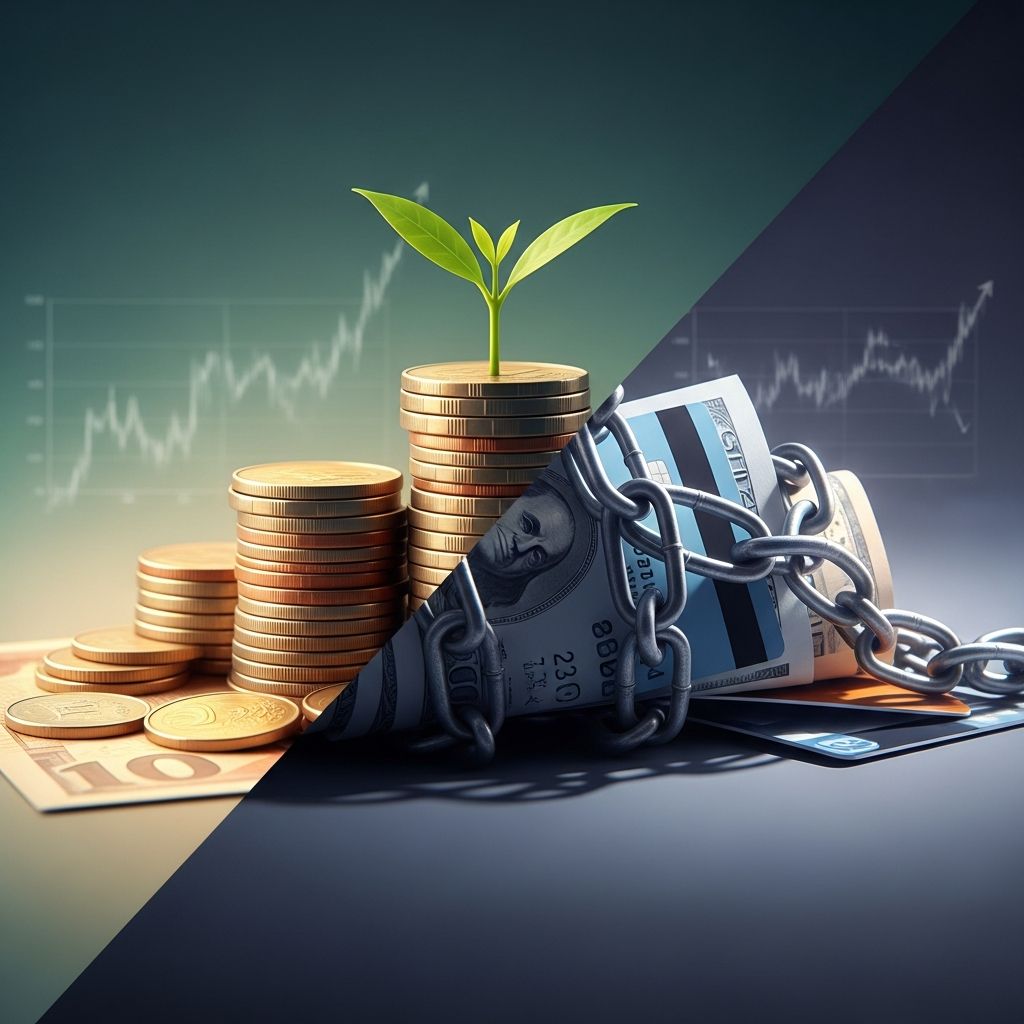
Balancing the urge to eliminate debt with the need for financial security is a common dilemma. While paying off debt frees up cash flow, depleting savings leaves you vulnerable to emergencies. This article breaks down key considerations, strategies, and tools to make informed choices.
Understanding the Debt-Savings Dilemma
High-interest debts like credit cards can accrue costs faster than savings grow, but without a cash buffer, unexpected expenses force reliance on borrowing. Prioritizing both requires evaluating interest rates, debt types, and personal circumstances.
For instance, credit card APRs often exceed 20%, outpacing typical savings yields of 1-5%. Yet, financial experts emphasize an emergency fund covering 3-6 months of expenses before aggressive debt payoff.
Key Factors Influencing Your Decision
Several elements determine if dipping into savings makes sense:
- Interest Rate Comparison: If debt APR surpasses savings APY, payoff saves money long-term.
- Emergency Fund Status: Maintain 3 months’ expenses minimum; avoid touching this.
- Debt Type: High-rate (credit cards) vs. low-rate (mortgages).
- Cash Flow: Ensure bills are covered before extra payments.
| Factor | Pay Debt First | Save First |
|---|---|---|
| Debt APR | >10% | <5% |
| Savings APY | < Debt APR | > Debt APR |
| Emergency Fund | Fully Funded | Below 3 Months |
| Monthly Budget | Surplus | Tight |
Advantages of Paying Off Debt with Savings
Using excess savings on debt yields immediate benefits:
- Interest Savings: Eliminate high-rate accrual; e.g., 20% APR debt costs far exceed 4% savings growth.
- Improved Credit: Lower utilization boosts scores.
- Psychological Relief: Reduced bills lower stress.
- More Disposable Income: Redirect payments to savings post-payoff.
Once debt-free, former payment amounts accelerate savings growth.
Risks and Drawbacks of Draining Savings
However, pitfalls abound:
- No Safety Net: Emergencies lead to new high-interest debt.
- Missed Growth: Savings compound over time.
- Lifestyle Cuts: Budget tightening may be unsustainable.
- Low-Rate Debt Trap: Premature payoff misses better investment returns.
Without reserves, job loss or repairs recreate debt cycles.
Strategic Approaches to Debt Repayment
Employ proven methods post-emergency fund:
Debt Avalanche Method
Target highest-interest debts first while minimum-paying others. Saves maximum interest.
Debt Snowball Method
Clear smallest balances first for motivation, then roll payments upward.
Example: $10k at 22% APR vs. $5k at 15%—avalanche prioritizes the 22%.
Building a Hybrid Plan: Debt and Savings Together
Experts advocate balance:
- Fund 3-month emergency first.
- Allocate 50% extra to high-interest debt, 50% to savings.
- Automate transfers for consistency.
For low-interest debt (e.g., student loans <5%), save aggressively as returns may exceed costs.
Practical Tools and Calculators
Use online calculators to compare scenarios. Input debt amount, APR, savings rate—see net savings from payoff vs. growth.
- Payoff Simulator: Projects interest saved.
- Savings vs. Debt: Visualizes opportunity costs.
Real-Life Scenarios and Outcomes
Scenario 1: High-Interest Credit Card
Jane has $15k at 24% APR, $10k savings at 4% APY, full emergency fund. Payoff saves ~$3,600/year interest.
Scenario 2: No Emergency Fund
Mike lacks reserves, $8k debt at 18%. Build $9k (3 months) first, then attack debt.
Scenario 3: Low-Rate Auto Loan
4% APR loan—save/invest instead, as stock averages ~7-10% historically (though risky).
Frequently Asked Questions (FAQs)
Should I pay off debt or save for retirement?
Prioritize high-interest debt (>8%) over retirement if no emergency fund; otherwise, contribute minimally to 401(k) for matches.
Is 0% APR debt worth saving over?
Yes—focus savings, as no interest accrues.
How much emergency savings is enough?
3-6 months expenses; more if job unstable.
Does paying debt improve credit faster than saving?
Yes, via utilization drop and payment history.
What if I have multiple debts?
Use avalanche for efficiency.
Long-Term Financial Wellness Tips
Sustain progress:
- Track spending with apps.
- Increase income via side gigs.
- Avoid new debt.
- Review annually.
Debt reduction and savings compound for wealth-building.
References
- Pros and Cons of Using Your Savings to Pay Off Credit Card Debt — McCarthy Law. 2021-06-30. https://mccarthylawyer.com/2021/06/30/pros-and-cons-of-using-your-savings-to-pay-off-credit-card-debt/
- The Pros and Cons of Paying Off Debt vs. Saving More — LGE Community Credit Union. N/A. https://lgecu.org/blog-main/the-pros-and-cons-of-paying-off-debt-vs-saving-more
- Should You Save or Pay Off Debt First? — Chase Bank. N/A. https://www.chase.com/personal/credit-cards/education/build-credit/saving-or-paying-off-debt-first
- Is It Better to Save or Pay Off Debt? — Regions Bank. N/A. https://www.regions.com/insights/personal/infographic/is-it-better-to-save-or-pay-off-debt
- When to Focus on Debt vs. Savings — Broadway Bank. N/A. https://broadway.bank/newsroom/stories/when-to-focus-on-debt-vs-savings
- Is It Better to Save or Pay Off Debt? — PNC Insights. N/A. https://www.pnc.com/insights/personal-finance/save/save-or-pay-debt.html
- Paying Down Debt is Saving — Southern Energy Credit Union. N/A. https://www.southernenergycu.org/paying-down-debt-is-saving/
Similar Articles








Read full bio of Sneha Tete