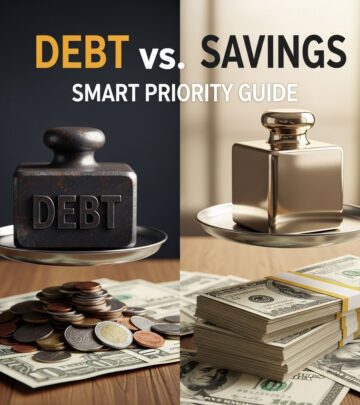
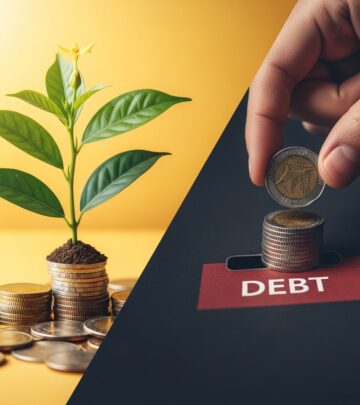
Savings vs Credit Card Debt: Smart Choice?
Discover whether dipping into savings to clear credit card balances is wise, balancing emergency funds against high-interest debt for lasting financial health.

In today’s economy, many face the dilemma of high credit card balances clashing with slim emergency reserves. One-third of Americans report more credit card debt than savings, a trend worsened by inflation and stagnant wages. This article examines whether raiding savings to eliminate credit card debt makes sense, providing a roadmap to balance both priorities for long-term security.
The Reality of Debt Outpacing Savings
America’s financial landscape reveals a stark imbalance: credit card debt often surpasses emergency savings. Surveys show 33% of adults have higher credit card balances than liquid savings, up significantly since 2011, driven by post-pandemic inflation. This gap leaves households vulnerable to unexpected costs like medical bills or repairs, forcing reliance on high-interest cards and deepening the cycle.
High credit card APRs, typically 18-30%, compound balances rapidly. For instance, a $5,000 balance at 17% interest with minimum payments could accrue over $2,627 in interest over a decade. Meanwhile, savings accounts yield far less, making debt growth outpace savings effortlessly.
Why This Imbalance Persists
Several factors fuel this trend:
- Rising Costs vs. Flat Incomes: Expenses for housing, food, and fuel have surged, while wages lag, pushing families to credit for basics.
- Credit Accessibility: Easy approvals and rewards lure users into habitual spending, masking interest costs.
- Emergencies Drain Reserves: Job losses or repairs quickly deplete any savings, leading back to cards.
- Lifestyle Creep: Income boosts often fund upgrades rather than buffers.
Demographics amplify risks: 42% of millennials and 39% of Gen Xers carry more debt than savings.
Financial Risks of Neglecting Either Priority
Choosing between debt payoff and saving carries consequences. High debt erodes budgets via interest, stresses mental health, harms credit scores, and delays goals like homebuying. No savings means crises trigger new debt, perpetuating vulnerability.
| Scenario | Debt-First Risks | Savings-First Risks |
|---|---|---|
| Unexpected Expense | No buffer; new high-interest debt | Debt interest grows unchecked |
| Credit Score Impact | Improves with payoff | Worsens with rising utilization |
| Long-Term Cost | Savings interest lost | High APR compounds debt |
Paying minimums on $21,000 average household card debt sustains high costs.
Core Strategies: Debt or Savings First?
Financial experts prioritize high-interest debt over savings due to APR disparities. Yet, a hybrid approach builds a minimal buffer first. Here’s a step-by-step plan:
- Secure a Starter Fund: Aim for $500-$1,000 to cover minor emergencies, preventing new charges.
- Attack High-APR Debt: Use avalanche (highest interest first) or snowball (smallest balances first) methods.
- Budget Ruthlessly: Track spending to cut waste and redirect funds.
- Automate Both: Transfer to savings and extra debt payments post-bills.
- Boost Income: Side gigs fund progress without lifestyle cuts.
Mathematical Comparison: Payoff vs. Save
Consider a $3,000 card balance at 22% APR and 1% monthly savings yield. Minimum payments extend payoff to years, costing thousands extra. A $500 savings dip accelerates payoff, saving interest despite lost yield.
- Debt First: Clears balance faster; rebuild savings post-payoff.
- Savings First: Protects against relapse but lets interest accrue.
Tools like calculators help quantify: debt payoff often wins mathematically.
Building Sustainable Habits
Beyond choice, habits matter. Freeze cards during payoff, negotiate rates, consolidate via balance transfers. Target 3-6 months’ expenses in savings long-term. Millennials, hit hardest, benefit from early action.
Track progress monthly: reduce dining out, cancel unused subs, shop sales. Consistency turns deficits into surpluses.
Real-World Scenarios
Scenario 1: Recent Graduate
With $10,000 debt and $200 savings, build to $1,000 first, then avalanche payoff while interning extra shifts.
Scenario 2: Family of Four
$15,000 debt, paycheck-to-paycheck. Starter fund via grocery cuts, then debt focus with dual incomes.
Scenario 3: Mid-Career Professional
Manageable debt but no buffer. Automate $200/month to savings alongside minimums, then accelerate.
Psychological and Credit Benefits
Debt reduction boosts scores by lowering utilization, aiding loans. Small wins via snowball build momentum, reducing stress. Savings provide security, curbing impulse spends.
Advanced Tactics for Acceleration
- Balance transfers to 0% intro APR cards.
- Debt management plans from nonprofits.
- Windfalls (tax refunds) split 50/50 debt/savings.
- High-yield savings post-emergency fund.
Frequently Asked Questions
Is it ever okay to use savings for debt?
Yes, after a $1,000 buffer, if APR exceeds savings yield significantly.
How much emergency savings is enough?
3-6 months of essentials; start small.
What if I can’t afford both?
Prioritize debt minimums, then micro-savings, extra to high-interest debt.
Does paying debt improve credit faster than saving?
Yes, via utilization drops.
Gen Z vs. Boomers: Who struggles more?
Millennials lead at 42%, but all generations affected.
Path to Financial Freedom
Reverse the trend by starting small: budget, automate, prioritize high-interest debt post-buffer. With 53% now having savings over debt, progress is possible. Discipline yields freedom from cycles.
References
- Why Americans Have More Credit Debt Than Savings — DebtHelper. 2025. https://debthelper.com/credit-card-debt-vs-emergency-savings/
- One Third of Americans Have More Credit Card Debt Than Savings — Statista. 2025. https://www.statista.com/chart/17018/more-credit-card-debt-than-savings-us/
- 33% of Americans have more credit card debt than emergency savings — Marketplace. 2025-02-14. https://www.marketplace.org/story/2025/02/14/a-third-of-americans-have-more-credit-card-debt-than-emergency-savings-poll-finds
- Should You Save or Pay Off Debt First? — Chase Bank. 2025. https://www.chase.com/personal/credit-cards/education/build-credit/saving-or-paying-off-debt-first
- Should I Pay Off Debt or Save First? — Centier Bank. 2025. https://www.centier.com/resources/articles/article-details/should-i-pay-off-debt-or-save-first
- Should you pay down debt or save money? — Fulton Bank. 2025. https://www.fultonbank.com/Education-Center/Saving-and-Budgeting/Should-you-pay-down-debt-or-save-money
- High percentage of Americans have more credit card debt than emergency savings — KATV. 2025. https://katv.com/news/nation-world/high-percentage-of-americans-have-more-credit-card-debt-than-emergency-savings-united-states-inflation-federal-reserve-bank-of-new-york-money-budget-emergency-fund-expenses-millenials
Similar Articles








Read full bio of medha deb