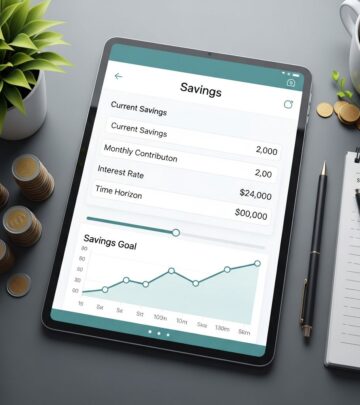
Savings Withdrawal Calculator: Plan Your Withdrawals
Plan how long your savings will last with regular withdrawals using our savings income calculator.

Planning Your Financial Future: The Savings Withdrawal Calculator
When you’ve worked hard to build a nest egg, one of the most critical questions becomes: how long will my savings last? Whether you’re planning for retirement, taking a sabbatical, or working toward financial independence, understanding your withdrawal strategy is essential. A savings withdrawal calculator can help you answer this question accurately and develop a sustainable plan for accessing your hard-earned money.
The savings withdrawal calculator is a powerful financial planning tool designed specifically for individuals who are transitioning from a savings phase to a withdrawal phase. Unlike calculators that help you grow your wealth, this tool focuses on the equally important challenge of making your wealth last throughout your desired time horizon.
What is a Savings Withdrawal Calculator?
A savings withdrawal calculator is an online financial tool that helps you model different withdrawal scenarios from your accumulated savings. The calculator takes into account your current savings balance, the interest your money continues to earn, and your planned withdrawal amounts to determine how long your funds will sustain your desired lifestyle.
This calculator serves two primary functions. First, it can tell you how many months or years your current savings will last if you withdraw a specific amount each month. Second, it can calculate the maximum monthly withdrawal amount you can safely take while ensuring your savings last for a predetermined time period. This dual functionality makes it invaluable for retirement planning and other long-term financial scenarios.
Key Inputs for Your Savings Withdrawal Calculator
To use a savings withdrawal calculator effectively, you’ll need to gather several pieces of information about your financial situation:
Your Current Savings Amount
Begin by entering the total amount of money you currently have available for withdrawals. This should represent the actual balance in your savings accounts, investment portfolios, or other liquid assets you plan to draw from. Be accurate with this figure, as it forms the foundation for all subsequent calculations.
Expected Annual Interest Rate
Your savings will continue to earn interest or investment returns even as you make withdrawals. Research current rates available from high-yield savings accounts, certificates of deposit, or other investment vehicles, and enter your expected annual percentage yield (APY). This rate will be applied to your remaining balance each period, helping your money grow while you withdraw from it.
Desired Monthly Withdrawal Amount
Specify how much money you plan to withdraw each month. This is the amount you’ll need to cover your living expenses or other regular financial obligations. Be realistic about this figure, as it directly impacts how long your savings will last.
Time Horizon for Your Funds
Indicate how long you need your money to last, measured in months or years. This might be until a specific age, a predetermined number of years, or until you qualify for other income sources like Social Security.
How the Calculator Works
The savings withdrawal calculator uses mathematical formulas to project your account balance over time. Each calculation cycle, the calculator performs these steps:
First, it applies your expected interest rate to your current account balance, simulating the earnings for that period. Next, it subtracts your planned monthly withdrawal from the balance plus interest. This process repeats for each month or year in your projection, creating a month-by-month or year-by-year breakdown of your account balance.
The calculator continues this process until either your specified time horizon is reached or your account balance reaches zero. If your account depletes before your target date, the calculator alerts you to this shortfall. If your account still has funds remaining at your target date, the calculator shows you the surplus amount.
Two Ways to Use the Calculator
The savings withdrawal calculator offers flexibility in how you approach your planning:
Determining How Long Your Savings Will Last
If you know how much you want to withdraw monthly, you can use the calculator to discover exactly how many months or years your current savings will sustain that withdrawal rate. This helps you understand if your planned lifestyle is financially feasible or if you need to adjust your expectations.
Calculating Your Safe Monthly Withdrawal Amount
Alternatively, if you have a specific time period you need your money to last, the calculator can determine the maximum monthly withdrawal amount you can safely take. This approach is particularly useful for retirement planning, where you might want your savings to last until age 95 or through a 30-year retirement.
Factors That Impact Your Results
Several variables significantly influence the outcomes your calculator produces:
Interest Rates and Investment Returns
Higher interest rates mean your money continues to grow faster, even as you withdraw from it. This can substantially extend how long your savings last. Even small differences in interest rates can result in significant variations in your results over decades of withdrawals. Research current rates for high-yield savings accounts and compare them to ensure you’re using realistic figures in your calculations.
Withdrawal Amount
The size of your monthly withdrawals directly determines your account longevity. Larger withdrawals deplete your balance faster, while smaller withdrawals allow your money to last longer. Finding the right balance between your current lifestyle needs and long-term financial security is crucial.
Starting Balance
Your initial savings amount is the most important factor in determining how long your money will last. A larger starting balance provides more cushion and extends your withdrawal period. If your calculations show concerning results, increasing your starting balance through additional savings before you begin withdrawals can make a significant difference.
Time Horizon
The longer you need your money to last, the more important it becomes to balance your withdrawal amounts against your growth. Planning for a 40-year retirement requires more careful consideration than planning for a 10-year sabbatical.
Real-World Applications of the Savings Withdrawal Calculator
Retirement Income Planning
The primary use case for savings withdrawal calculators is retirement planning. By entering your retirement savings, expected investment returns, and desired retirement lifestyle, you can determine if you’re on track to maintain your desired standard of living throughout retirement. Many retirees use this calculation to verify that their savings will last until age 95 or beyond.
Career Transitions
If you’re considering changing careers, taking time off for education, or starting a business, a savings withdrawal calculator helps you understand how your emergency fund or savings will support you during this transition period. You can model different scenarios to see how long your savings will last under various withdrawal rates.
Early Retirement or Financial Independence
Those pursuing financial independence or early retirement often use withdrawal calculators extensively. The famous 4% rule suggests that withdrawing 4% of your portfolio annually provides a reasonable balance between accessing your money and preserving its longevity. The calculator helps you verify whether this strategy works for your specific situation.
Sabbaticals and Extended Leave
If you’re planning an extended travel period, career break, or sabbatical, the calculator shows exactly how long your savings will sustain you at your anticipated spending level.
Complementary Financial Tools
The savings withdrawal calculator works best as part of a comprehensive financial planning toolkit. Consider using these related tools alongside your withdrawal calculator:
Simple Savings Calculator: Use this to understand how much you can accumulate before your withdrawal phase begins. Enter your starting amount, monthly contributions, interest rate, and timeframe to see your projected savings growth.
Savings Rate Calculator: Determine what percentage of your income you’re saving. This helps you understand your financial discipline and can inform your pre-retirement savings goals.
Retirement Income Calculator: This specialized tool calculates the monthly retirement income you could generate from your specific savings using your annual savings contributions, expected rate of return, and current age.
Save Money Calculator: If you have a specific financial goal you want to achieve before you begin withdrawals, this calculator determines how much you need to save monthly to reach that target.
Retirement Calculator: This comprehensive tool estimates your total retirement savings needs and tracks whether you’re accumulating enough to meet your spending goals during retirement.
Maximizing Your Savings Longevity
Beyond simply using the calculator, several strategies can help extend how long your savings last:
Optimize Your Interest Rate: Shop for high-yield savings accounts that offer competitive rates. Even a 0.5% difference in annual yield can add up to thousands of dollars over decades of withdrawals.
Reduce Unnecessary Expenses: Review your spending during the withdrawal phase. Small reductions in your monthly withdrawal amount can dramatically extend your account longevity.
Maintain Flexibility: If market returns are lower than expected or if you experience health issues requiring larger expenses, be prepared to adjust your withdrawal amounts temporarily.
Continue Working Part-Time: Even modest part-time income can supplement your withdrawals and preserve your principal balance.
Common Questions About Savings Withdrawal
Q: What interest rate should I use in my calculations?
A: Research current rates for the specific accounts or investments where you’ll hold your money. For high-yield savings accounts, rates typically range from 4% to 5% APY. For conservative investments, use rates between 2% and 4%. Be conservative rather than optimistic in your projections.
Q: Should I account for inflation in my withdrawals?
A: Yes, inflation significantly impacts long-term planning. Many calculators allow you to specify inflation rates, which typically average around 3% annually. Some people increase their monthly withdrawal amount each year by the inflation rate to maintain purchasing power.
Q: What if I have multiple income sources during withdrawal phase?
A: The calculator focuses specifically on your savings withdrawals. You can adjust your required monthly withdrawal amount downward to account for Social Security, pensions, or other income sources. For example, if you need $5,000 monthly but expect $2,000 from Social Security, enter $3,000 as your withdrawal amount.
Q: How often should I recalculate my projections?
A: Revisit your calculations annually or whenever significant life changes occur. Market performance, interest rate changes, unexpected expenses, or life expectancy adjustments may all warrant updating your projections.
Q: What happens if my account balance reaches zero before my target date?
A: This indicates you need to adjust your strategy. Either increase your starting balance through additional savings, reduce your monthly withdrawal amount, extend your timeline for reaching your target, or increase your expected returns through more aggressive investments.
Q: Can I adjust my withdrawal amount during retirement?
A: Absolutely. Your withdrawal amount doesn’t need to remain static. Many retirees adjust annually for inflation, while others reduce withdrawals during market downturns and increase them during strong market years.
Q: What’s the 4% rule and should I follow it?
A: The 4% rule suggests withdrawing 4% of your portfolio in the first year of retirement, then adjusting that amount for inflation annually. While this is a useful starting point, your specific situation may warrant different withdrawal rates based on your account size, time horizon, and risk tolerance.
Getting Started with Your Withdrawal Strategy
Begin using a savings withdrawal calculator by gathering your current financial information. Know your exact savings balance, research realistic interest rates for your investment vehicles, and honestly assess your monthly spending needs. Input these figures and run several scenarios, testing different withdrawal amounts and interest rates to understand how sensitive your results are to changes in these variables.
The calculator provides a starting point for your planning, but consider consulting with a financial advisor to ensure your strategy aligns with your complete financial picture, including taxes, insurance, healthcare costs, and legacy planning goals.
References
- Savings Withdrawal Calculator — Bankrate. 2025. https://www.bankrate.com/banking/savings/savings-income-calculator/
- Simple Savings Calculator — Bankrate. 2025. https://www.bankrate.com/banking/savings/simple-savings-calculator/
- Retirement Income Calculator — Bankrate. 2025. https://www.bankrate.com/retirement/retirement-plan-income-calculator/
- Personal Savings Rate Calculator — Bankrate. 2025. https://www.bankrate.com/banking/savings/personal-savings-rate/
- Retirement Calculator: Estimate How Much You Need To Save — Bankrate. 2025. https://www.bankrate.com/retirement/retirement-plan-calculator/
Similar Articles








Read full bio of medha deb