Savings Bonds: What They Are And How To Cash Them
Complete guide to U.S. savings bonds: types, rates, benefits, and how to redeem them safely.
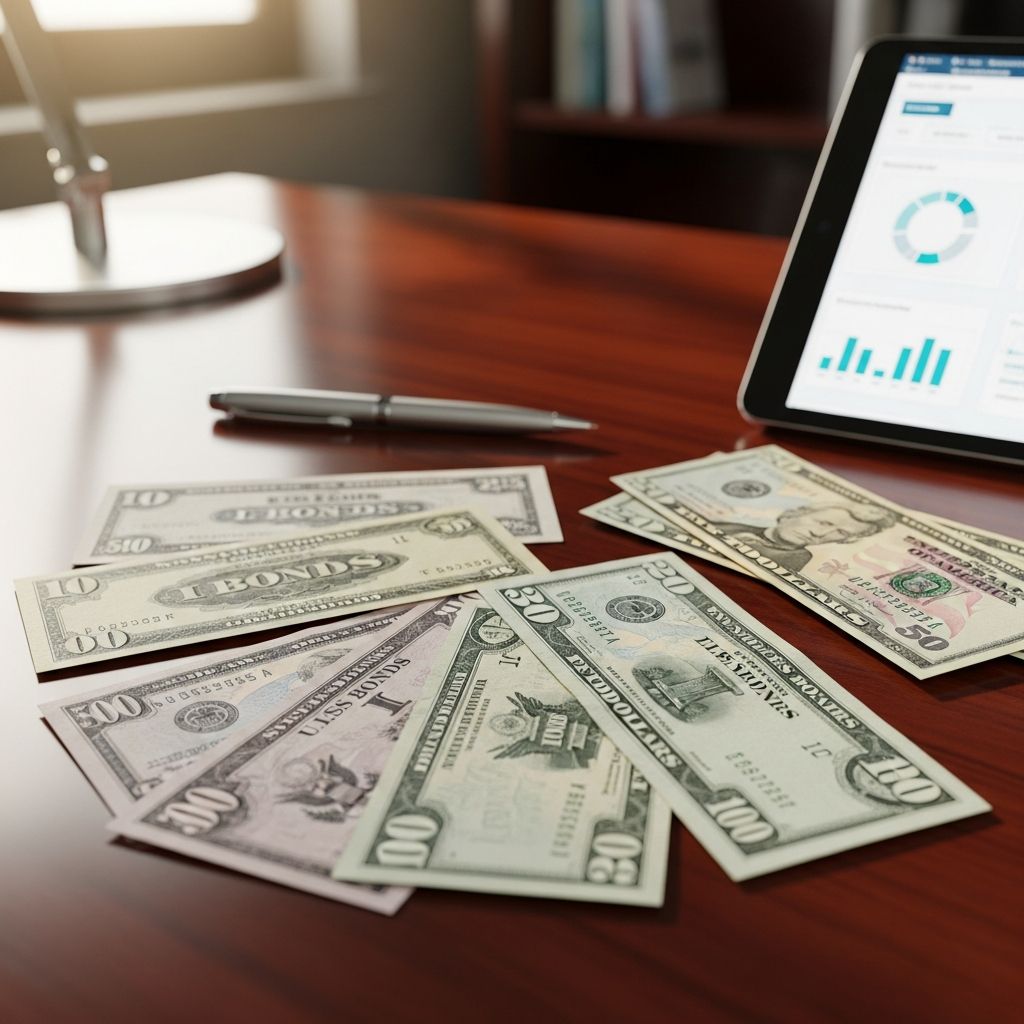
U.S. savings bonds represent one of the safest and most accessible investment options available to American savers. These zero-coupon bonds are issued directly by the U.S. Treasury and backed by the full faith and credit of the federal government, making them an exceptionally secure choice for conservative investors. Whether you’re looking to protect your wealth from inflation, build a long-term investment portfolio, or simply earn a guaranteed return on your money, savings bonds offer a straightforward path to achieving these goals.
Unlike traditional bonds that are bought and sold on secondary markets, savings bonds can only be purchased directly from the government through TreasuryDirect and can only be redeemed directly with the government. This unique structure eliminates counterparty risk and ensures that your investment remains in the hands of the most creditworthy borrower in the world. In this comprehensive guide, we’ll explore everything you need to know about savings bonds, including the different types available, how they work, current interest rates, and the procedures for cashing them in.
Understanding Savings Bonds Fundamentals
Savings bonds are essentially loans that individuals make directly to the U.S. government. When you purchase a savings bond, you’re lending money to the Treasury, which in return pays you interest over a specified period. The bonds are issued at a discount to their face value, meaning you purchase them for less than what they’re worth, and the difference represents your interest earnings.
The appeal of savings bonds lies in their combination of safety, simplicity, and government backing. The Treasury Department has never defaulted on its obligations, making these bonds virtually risk-free from a credit perspective. Additionally, the interest earned on federal savings bonds is exempt from state and local taxes, though it remains subject to federal income tax. This tax advantage can make savings bonds particularly attractive for residents of high-tax states.
One of the most significant characteristics of savings bonds is their extended earning period. Most savings bonds continue to earn interest for up to 30 years, providing a lengthy window for your investment to grow. However, there are important restrictions on when you can access your money without penalty.
Key Features and Benefits
Savings bonds offer several compelling features that distinguish them from other investment vehicles:
Safety and Government Backing
Every savings bond is backed by the full faith and credit of the U.S. government. This means your principal investment is protected regardless of economic conditions. The government’s status as the most creditworthy borrower in the world makes savings bonds one of the safest investments available.
Extended Earning Period
Savings bonds can earn interest for up to 30 years. This extended timeline allows your investment to compound significantly over time, particularly for Series EE bonds that are held to maturity.
Tax Advantages
Interest earned on savings bonds is exempt from state and local income taxes, which can result in meaningful tax savings for those in higher tax brackets or residing in states with significant income taxes.
Flexible Purchase Amounts
For electronic bonds, you can purchase savings bonds in any amount from $25 up to your annual purchase limit, and you can buy in increments down to the cent. This flexibility allows investors to customize their purchases to their specific financial situations.
Series EE Bonds: The Traditional Choice
Series EE bonds are the most common type of savings bond and have been issued continuously since 1980. They represent a straightforward, predictable investment option for savers seeking guaranteed returns.
How Series EE Bonds Work
Series EE bonds are purchased at a discount and accrue interest monthly. The bonds mature after 20 years, at which point the U.S. Treasury guarantees that investors will have at least doubled their money. This doubling guarantee is a unique feature that appeals to many conservative investors seeking certainty.
Bonds issued after May 2005 earn a fixed interest rate that remains constant throughout their holding period. Bonds issued before May 2005 have variable interest rates that adjust periodically. For bonds issued between May 1, 2025, and October 31, 2025, the current rate is 2.70 percent annually.
Extended Earning Potential
While Series EE bonds mature after 20 years, they continue earning interest for an additional 10 years, extending the total earning period to 30 years. This means holders who keep their bonds for the full 30-year period can accumulate significantly more interest than those who cash them in at the 20-year mark.
Interest Calculation Example
Consider a Series EE bond issued in October 1994 with a $100 denomination purchased at $50: After accumulating $114.12 in total interest over its holding period, the bond’s total value reaches $164.12. A $1,000 denomination bond purchased at $500 would accumulate $1,141.20 in interest for a total value of $1,641.20, demonstrating how the investment grows over time.
Series I Bonds: Inflation Protection
Series I bonds provide enhanced protection against inflation by combining a fixed interest rate with a variable rate that adjusts based on inflation indicators.
How Series I Bonds Combat Inflation
Series I bonds utilize a two-component rate structure. The fixed rate remains constant throughout the bond’s life, while the inflation rate adjusts every six months based on the Consumer Price Index. This combination ensures that your purchasing power is protected even as inflation fluctuates. For bonds issued between May 1, 2025, and October 31, 2025, Series I bonds pay 3.98 percent, which includes a fixed portion of 1.1 percent.
Current Rate Environment
In recent years, Series I bonds have attracted significant attention as inflation has surged. The rates on I bonds reached their highest levels in approximately 40 years, with rates climbing to 9.62 percent for bonds issued between May and October 2022 and 6.89 percent for bonds issued between November 2022 and April 2023. These historically high rates reflected the elevated inflation environment that characterized the post-pandemic period.
Comparing Series I and Series EE Bonds
| Feature | Series EE Bonds | Series I Bonds |
|---|---|---|
| Current Interest Rate | 2.70% (fixed) | 3.98% (fixed 1.1% + inflation variable) |
| Rate Adjustment | Fixed (after May 2005) | Adjusts semi-annually |
| Inflation Protection | None | Yes, through variable component |
| Maturity Guarantee | Doubles in 20 years | No doubling guarantee |
| Maximum Annual Purchase | $10,000 electronic | $10,000 electronic |
Savings Bonds Versus Corporate Bonds
While both savings bonds and corporate bonds serve similar investment purposes, they differ significantly in several key areas:
| Aspect | Savings Bonds | Corporate Bonds |
|---|---|---|
| Yield | Typically 3-4% annually | 4-5.5% or higher depending on issuer |
| Liquidity | Can cash after 1 year; forfeit 3 months interest if redeemed within 5 years | Can be sold before maturity but may lose face value |
| Safety | Backed by U.S. government | Dependent on company’s creditworthiness |
| Tax Treatment | Federal tax only; state/local exempt | Fully taxable at federal, state, and local levels |
Purchasing Savings Bonds
Purchasing savings bonds has become increasingly simple with the availability of electronic bonds through TreasuryDirect.
Where to Buy
Savings bonds are purchased exclusively through TreasuryDirect, the official government website for buying Treasury securities. You must create an account and link a bank account for electronic purchases. Electronic bonds are held securely in your TreasuryDirect account and can be viewed and managed online at any time.
Purchase Limits and Requirements
For electronic bonds, you can purchase up to $10,000 per calendar year per bond series. However, there’s an additional strategy available through federal tax returns. If you have a federal income tax refund, you can use IRS Form 8888 to purchase up to $5,000 in paper Series I bonds. This means an individual could potentially purchase up to $15,000 in I bonds annually if their tax refund is large enough to maximize the paper bond portion.
Minimum Investments
The minimum investment for electronic bonds is $25. For amounts over $25, you can purchase in any increment down to the cent. For example, you could purchase a bond for exactly $76.53 if desired. This granular purchasing flexibility allows investors to optimize their purchase amounts based on their financial situations.
Redemption and Cashing In Savings Bonds
Understanding the redemption process is crucial before investing in savings bonds, as there are important restrictions and penalties associated with early withdrawals.
Holding Period Requirements
Savings bonds must be held for at least one year before they can be redeemed. If you attempt to cash in a bond before this one-year mark, the transaction will be rejected. This minimum holding period discourages impulse selling and encourages long-term investing.
Early Redemption Penalty
If you redeem a savings bond before five years have elapsed, you will forfeit the last three months of interest. This penalty can significantly reduce your total return, particularly for bonds held for shorter periods. For example, if a bond has accrued $100 in interest but is redeemed after two years, you would lose three months of interest, resulting in a lower payout.
Cashing Paper Bonds
Paper savings bonds must be cashed for their entire face value. You cannot cash only a portion of a paper bond. The most common method for cashing paper bonds is to bring them to your bank. However, banks vary in their policies regarding savings bond redemptions. Some banks may limit the amount they will cash at one time, and some may not cash them at all. The Secret Service recommends bringing bonds only to banks where you’ve maintained an account for at least 12 months to facilitate processing.
Cashing Electronic Bonds
Electronic bonds held in your TreasuryDirect account can be redeemed directly through the online platform. The redemption process is straightforward: log into your account, select the bonds you wish to cash, and initiate the redemption. The proceeds are deposited directly into your linked bank account.
Tax Considerations on Redemption
When you cash in a savings bond, you must report the interest earned as income for federal tax purposes. You have the option to report the interest in the year you redeem the bond or to report it annually on your tax return. This tax deferral feature allows investors to potentially manage their tax liability more effectively.
Determining Bond Values
If you’re unsure about the current value of your savings bonds, the government provides tools to help you determine their worth. The TreasuryDirect website offers a Savings Bond Calculator that allows you to input your bond’s issue date, series, and denomination to calculate its current value. Even if you have paper bonds, you can check their value online as long as you have the issue date, series, and denomination information available.
Knowing your bond’s current value is particularly important when deciding whether to hold the bond longer or cash it in. In some cases, waiting a few more months or years can result in significantly higher interest earnings, especially for bonds approaching their maturity dates.
Frequently Asked Questions
Q: Can I sell my savings bond to another investor?
A: No. Unlike traditional bonds, savings bonds cannot be sold to other investors. They can only be redeemed directly with the government through TreasuryDirect or at your bank.
Q: What happens if I lose a paper savings bond?
A: Paper bonds can be replaced through the Treasury Department. You’ll need to complete appropriate documentation and provide proof of purchase or ownership. Contact TreasuryDirect for specific instructions on replacement procedures.
Q: Are there any annual contribution limits I should know about?
A: Yes. You can purchase up to $10,000 in electronic bonds per series per calendar year. Additionally, you can purchase up to $5,000 in paper Series I bonds using your federal tax refund, potentially allowing up to $15,000 in total I bond purchases annually.
Q: Which is better for me: Series EE or Series I bonds?
A: This depends on your inflation expectations. Series EE bonds offer guaranteed returns and a doubling guarantee, making them suitable for conservative investors. Series I bonds provide inflation protection, making them ideal if you expect inflation to remain elevated or are concerned about purchasing power erosion.
Q: How do savings bonds compare to high-yield savings accounts?
A: Savings bonds typically offer better returns than high-yield savings accounts, but your money is less accessible due to the one-year holding requirement and potential penalties for early redemption. Savings accounts offer immediate liquidity but lower interest rates.
Bottom Line
Savings bonds represent an excellent investment vehicle for those seeking safety, predictability, and government backing. Whether you choose Series EE bonds for their doubling guarantee and fixed returns or Series I bonds for inflation protection, savings bonds offer a straightforward way to grow your wealth while minimizing risk. The combination of tax advantages, extended earning periods, and federal backing makes them particularly attractive for conservative investors, retirees, and those looking to preserve capital. By understanding how these bonds work, knowing the current rates, and following proper redemption procedures, you can effectively incorporate savings bonds into a diversified investment strategy.
References
- How To Buy Series I Bonds — Bankrate. 2025-05-01. https://www.bankrate.com/investing/inflation-government-series-i-savings-bonds/
- About U.S. Savings Bonds — TreasuryDirect (U.S. Department of the Treasury). 2025-11-01. https://treasurydirect.gov/savings-bonds/
- Savings Bonds: What They Are And How To Cash Them In — Bankrate. 2025. https://www.bankrate.com/investing/savings-bonds-guide/
- Check or calculate the value of a savings bond online — Bankrate. 2025. https://www.bankrate.com/investing/check-value-of-savings-bond-online/
- Cash EE or I savings bonds — TreasuryDirect (U.S. Department of the Treasury). 2025. https://www.treasurydirect.gov/savings-bonds/cashing-a-bond/
- What to do with a savings bond from your childhood — Bankrate. 2025. https://www.bankrate.com/banking/savings/what-to-do-with-savings-bonds-from-childhood/
Similar Articles








Read full bio of Sneha Tete