Savings Account Essentials
Master the key terms and features of savings accounts to optimize your financial growth and security.

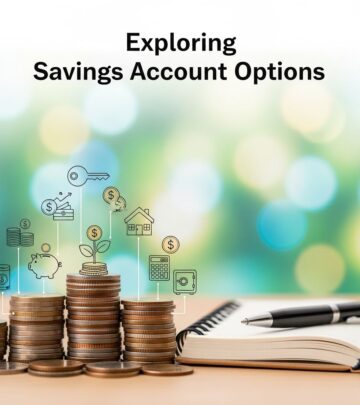
Savings accounts serve as foundational tools for building financial stability, offering secure places to park money while earning interest. Understanding the terminology associated with these accounts empowers individuals to select options that align with their goals, whether for emergency reserves or specific future purchases.
Core Building Blocks of Savings Terminology
At the heart of any savings account are basic concepts that define how funds grow and remain protected.
Annual Percentage Yield (APY)
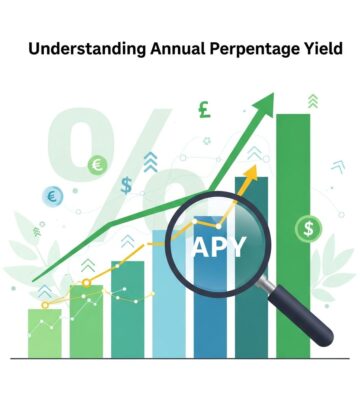
measures the real rate of return on savings, accounting for compounding interest over a year. Unlike simple interest, APY reflects earnings on both principal and accumulated interest, making it a critical metric for comparison.**FDIC insurance**, provided by the Federal Deposit Insurance Corporation, safeguards deposits up to $250,000 per depositor, per insured bank, for each account ownership category. This protection ensures that even if a bank fails, account holders recover their funds, fostering confidence in the banking system. Credit unions offer equivalent coverage through the National Credit Union Share Insurance Fund (NCUSIF).
Another key term is
minimum balance
, the lowest amount required to avoid fees or qualify for advertised rates. Falling below this threshold often triggers maintenance charges, so savers must monitor their holdings closely.Interest Mechanics Explained
Interest in savings accounts accrues through two primary methods: simple and compound. Simple interest applies only to the initial deposit, calculated as principal times rate times time. Compound interest, however, adds earned interest back to the principal periodically—daily, monthly, or quarterly—accelerating growth over time.
**Variable rates** fluctuate with market conditions, often tied to the Federal Reserve’s benchmark. This means APYs can rise or fall, rewarding savers during high-rate periods but introducing uncertainty. In contrast,
fixed rates
, common in time-bound products, lock in earnings for predictability.| Interest Type | Description | Example Impact |
|---|---|---|
| Simple Interest | Calculated only on principal | $1,000 at 1% for 1 year = $10 |
| Compound Interest (Monthly) | On principal + prior interest | $1,000 at 1% compounds to ~$10.05 |
| Variable Rate | Changes with Fed rates | APY from 0.01% to 4.66% |
Navigating Account Restrictions and Access
Federal regulations historically limited certain withdrawals from savings accounts to six per month, promoting saving over spending. Recent changes by the Federal Reserve have relaxed this, but many institutions maintain similar policies to classify accounts properly. Exceeding limits may incur fees or account conversion to checking.
**Transaction limits** vary by account type, with basic savings allowing easy transfers but restricting checks or debit card use. This structure encourages disciplined saving while providing liquidity for needs.
Types of Savings Accounts Demystified
Different accounts cater to varied needs, each with distinct terms.
- Traditional Savings: Basic option with low barriers—minimal balances and APYs around 0.01%-0.38%. Ideal for beginners building habits.
- High-Yield Savings: Online-focused with APYs up to 4.66%, no fees, and full liquidity. Perfect for maximizing growth on emergency funds.
- Money Market Accounts: Hybrid with higher rates (1%-3%), check-writing (limited), and debit access, but higher minimums ($2,500+).
- Certificates of Deposit (CDs): Fixed-term deposits with guaranteed rates (4.10%-4.30%), penalizing early withdrawals to enforce long-term commitment.
Specialized variants include
health savings accounts (HSAs)
for medical expenses with tax advantages, andcash management accounts
blending checking flexibility with savings yields.Fees and Charges to Watch
**Maintenance fees** apply if balances dip below minima, while
withdrawal fees
penalize excess transactions.Excessive transaction fees
reinforce limits, and some accounts charge for inactivity. Online high-yield options often waive these, prioritizing competitiveness.To minimize costs, opt for no-fee accounts or automate deposits to sustain balances. Always review fee schedules during account selection.
Comparing Popular Options
| Account Type | Typical APY | Min Balance | Access Features | Best For |
|---|---|---|---|---|
| Traditional | 0.01%-0.1% | $0-$50 | Transfers only | Short-term access |
| High-Yield | 3.70%-4.66% | None | Online transfers | Growth-focused saving |
| Money Market | 1%-3% | $2,500+ | Limited checks/debit | Balanced liquidity |
| CD | 4.10%-4.30% | Varies | Locked term | Long-term goals |
Strategies for Effective Saving
Leverage
automation
by setting recurring transfers from checking to savings, harnessing dollar-cost averaging for consistent growth.Laddering CDs
staggers maturities for steady access and rate optimization. Pair high-yield accounts with budgeting apps to track progress toward goals like home down payments or vacations.Monitor
rate environments
; in rising rate periods, variable APYs shine, while falling rates favor locking in CDs. Diversify across institutions to maximize FDIC coverage.Tax Implications of Savings Interest
All interest earned is taxable as ordinary income, reported via Form 1099-INT if exceeding $10 annually. HSAs and IRAs offer tax-deferred or deductible contributions, blending savings with retirement planning. Consult IRS guidelines for specifics.
Frequently Asked Questions
What is APY and why does it matter?
APY is the annualized yield including compounding, providing a standardized way to compare accounts beyond nominal rates.
Is my money safe in a savings account?
Yes, up to $250,000 per depositor via FDIC or NCUA insurance at participating institutions.
How often should I shop for better rates?
Quarterly or after Fed rate changes, as online banks often lead with competitive APYs.
Can I lose money in a savings account?
No, principal is protected, but inflation may erode purchasing power if rates lag.
What’s the difference between APY and interest rate?
Interest rate is the base percentage; APY factors in compounding frequency for true earnings.
Choosing the Right Account for Your Goals
Align features with needs: liquidity for emergencies, yields for growth, or restrictions for discipline. Start with high-yield for most, transitioning to CDs for known timelines. Regular reviews ensure alignment as finances evolve.
References
- The Different Types of Savings Accounts: Which One is Best for You? — Bank of South Texas. 2023-07-05. https://www.bankofsouthtexas.com/blog/types-of-savings-accounts
- 7 Types of Savings Accounts — Experian. 2025-06. https://www.experian.com/blogs/ask-experian/types-of-savings-accounts/
- The Pros and Cons of Different Types of Savings Accounts — First Merchants Bank. 2023-07-05. https://www.firstmerchants.com/resources/learn/blogs/blog-detail/resource-library/2023/07/05/the-pros-and-cons-of-different-types-of-savings-accounts
- 8 Best Savings Accounts for March 2026 — NerdWallet. 2026-03. https://www.nerdwallet.com/banking/best/savings-accounts
- Types of Savings Accounts — PNC Insights. N/A. https://www.pnc.com/insights/personal-finance/save/types-of-savings-accounts.html
- Different Types of Savings Accounts, Explained — Chase Bank. N/A. https://www.chase.com/personal/banking/education/basics/types-of-savings-accounts
- Understanding the Different Types of Savings Accounts — Simmons Bank. N/A. https://www.simmonsbank.com/learning-center/understanding-the-different-types-of-savings-accounts
Similar Articles








Read full bio of Sneha Tete