Should You Save or Pay Off Debt to Prepare for a Recession?
Facing recession fears? Learn expert strategies to balance saving money and paying off debt for financial security.

A recession can disrupt personal finances through job losses, rising prices, and economic uncertainty. Recent economic signals, including tariffs driving up costs and widespread layoffs, have heightened concerns. With limited budgets, individuals must decide whether to prioritize building savings or accelerating debt repayment to weather potential downturns.
The optimal approach often involves balancing both goals, allocating extra funds to emergency savings while steadily reducing debt. This dual strategy provides liquidity for unexpected needs and lowers ongoing expenses.
Saving vs. Paying Off Debt Before a Recession
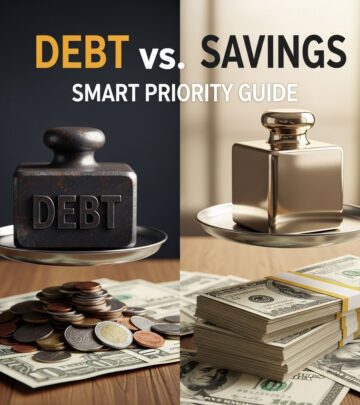
No universal rule dictates whether to save or pay off debt during recession fears. Financial experts recommend assessing personal circumstances, such as job stability, debt interest rates, and current savings levels. Typically, aim for a three- to six-month emergency fund covering essential expenses like housing, food, and utilities before aggressively tackling debt.
A robust emergency fund offers critical protection: it extends job search time if laid off and prevents premature withdrawals from retirement accounts, avoiding taxes, penalties, and losses from selling depreciated assets. Conversely, debt reduction—especially high-interest obligations—frees monthly cash flow and cuts interest costs. As of October 2025, average credit card APRs exceeded 24%, making payoff a high-return move.
| Offer | Why We Like It | What You Need to Do |
|---|---|---|
| The Penny Hoarder Auto Insurance Tool | Save ~$500 per year | Provide some basic information |
| AmOne | Save on interest payments with a personal loan | Answer 10 quick qualifying questions |
| Balance Transfer Credit Cards | Cancel Your Interest Payments Until 2026 | Apply for a 0% Interest Credit Card |
| Upside | Save $40/month on Gas | Download this free app |
These tools can help stretch your budget further, providing immediate savings to fuel either debt payoff or emergency fund growth.
When Saving More Makes Sense
Prioritize savings in these scenarios while maintaining minimum debt payments:
- You don’t have at least three months’ worth of savings. Start here to build a baseline cushion. A three-month fund covers essentials during job transitions; extend to six or twelve months based on family size, health, or industry volatility.
- You’re worried you’re about to lose your job. Industries like hospitality, retail, and real estate face higher layoff risks. Ramp up savings to bridge income gaps.
- You don’t have high-interest debt. Low-rate debts (e.g., mortgages at under 5%, federal student loans, or car loans) yield less urgency than savings, as their interest is often manageable.
High-yield savings accounts maximize returns on these funds. Federal Deposit Insurance Corporation (FDIC) data shows rates up to 5% APY in 2025 for online banks, far surpassing traditional accounts.
When Paying Off Debt Makes More Sense
Shift focus to debt reduction under these conditions:
- You’re already behind on payments. Catch up immediately to preserve credit scores, which tighten during recessions when lenders scrutinize more.
- You have credit card debt. With APRs over 24%, these erode wealth fastest. Post-emergency fund, use debt avalanche—target highest rates first—for maximum savings.
- You’re comfortable with your savings level. A solid three- to six-month fund plus job security allows redirecting funds to debt for lower bills and psychological relief.
Additional Recession-Proofing Strategies
Beyond the save-vs-debt dilemma, fortify your finances holistically:
- Build a Leaner Budget. Track spending, cut non-essentials like dining out and subscriptions. Consumer confidence dips signal broader cutbacks.
- Pay Down High-Interest Debt Strategically. Debt avalanche prioritizes APRs; inventory all obligations for a clear plan.
- Reassess Investments. Shift toward low-risk options like CDs, Treasury bonds, or high-yield savings. Maintain long-term plans despite market volatility.
- Shop Smart. Buy bulk essentials, shop secondhand via thrift stores or apps like ThredUp, and stockpile non-perishables.
U.S. Bureau of Labor Statistics reports unemployment can spike 2-5% in recessions, underscoring emergency fund necessity. Federal Reserve data confirms high-interest debt burdens households most during downturns.
Emergency Fund Guidelines
Tailor your fund size:
- Single, stable job: 3 months.
- Dual-income or variable pay: 6 months.
- Single parent or high medical costs: 9-12 months.
Automate transfers from paychecks to high-yield accounts for steady growth.
Debt Management Tactics
Debt Avalanche vs. Snowball:
| Method | Focus | Best For |
|---|---|---|
| Avalanche | Highest interest first | Math-maximizers in recessions |
| Snowball | Smallest balance first | Motivation seekers |
In recessions, avalanche saves more on interest.
Consider balance transfers to 0% APR cards for 12-21 months, but watch fees. Personal loans via platforms like AmOne can consolidate at lower rates.
Frequently Asked Questions (FAQs)
What is the minimum emergency fund size?
Three months of expenses is the baseline; adjust upward for risks like job instability.
Should I stop debt payments to save?
No—maintain minimums to avoid penalties and credit damage.
Are credit cards always priority debt?
Yes, due to 24%+ APRs vs. lower rates on mortgages or student loans.
How to build savings fast?
Automate transfers, use high-yield accounts, cut discretionary spending.
What if I have both high savings and low debt?
Invest conservatively in Treasuries or CDs for yield without risk.
Real-World Examples
Consider Sarah, a retail worker with $5,000 credit card debt at 25% APR and $1,000 savings. She builds to $4,500 (3 months) first, then avalanches debt, saving $1,250 yearly in interest.
Tom, a healthcare professional with $20,000 low-rate student loans and no savings, prioritizes six months’ expenses before extra loan payments.
These illustrate personalized balancing.
References
- Should You Save or Pay Off Debt to Prepare for a Recession? — The Penny Hoarder. 2025-10-01. https://www.thepennyhoarder.com/debt/save-or-pay-down-debt-for-recession/
- 8 Recession Indicators and What They Mean for Your Money — The Penny Hoarder. 2025. https://www.thepennyhoarder.com/save-money/recession-indicators/
- Your Money’s Worth: Thriving in Good Times and Bad — Federal Reserve Bank of St. Louis. 2024-06-15. https://www.stlouisfed.org/publications/page-one-economics/2024/06/15/your-moneys-worth-thriving-in-good-times-and-bad
- Consumer Credit – G.19 — Board of Governors of the Federal Reserve System. 2025-11-07. https://www.federalreserve.gov/releases/g19/current/
- High-Yield Savings Accounts — Federal Deposit Insurance Corporation (FDIC). 2025-12-01. https://www.fdic.gov/resources/consumers/consumer-news/2025-12.html
Similar Articles








Read full bio of medha deb