Here Are 12 Ways to Save Money on International Travel
Discover 12 proven strategies to slash costs on your next international adventure without sacrificing the experience.
Travel is booming, with Europe and Canada leading as top destinations—London seeing a 350% booking surge over last year, followed by Rome, Paris, Dublin, Barcelona, Vancouver, Toronto, and Calgary. “Travel is in full swing and bookings are incredibly strong, so it pays to plan ahead,” says Debbie Haas, vice president of travel for AAA-The Auto Club Group. Whether dreaming of European cobblestones or Asian temples, these 12 tips help you explore the world without debt.
12 Ways to Save on International Travel
1. Travel During the Offseason
The offseason—when fewer tourists visit—offers massive savings on flights, hotels, and fewer crowds. Timing depends on destination: Europe’s offseason runs November through March (avoiding summer peaks); Southeast Asia’s is June through October; North America varies by region, like shoulder seasons in popular spots. Airlines drop prices 20-50% off-peak, hotels offer discounts up to 40%, and attractions have shorter lines. Check historical data on sites like Google Flights for patterns. For instance, flying to Paris in January can save $300+ per ticket versus July. Plan around major holidays, but shoulder months like late fall provide ideal balance of savings and decent weather.
2. Choose a Good Travel Credit Card
Select a travel credit card with no foreign transaction fees—standard 3% fees add $30 per $1,000 spent abroad. Top cards like Chase Sapphire Preferred or Capital One Venture earn points for free flights, hotels, and perks like primary rental car insurance, trip delay coverage (meals, lodging for delays over 6 hours), baggage delay reimbursement, and trip cancellation up to $10,000. Rewards accelerate: 2-5x points on travel purchases. Pay off monthly to avoid interest. Compare via Bankrate or NerdWallet for current offers; annual fees often offset by first-year bonuses worth $500+ in travel.
3. Avoid Airport Parking
Airport parking drains budgets—$10-30/day at major hubs like JFK or LAX totals $100-300 for 10 days. Alternatives: ride with friends (free), public transit (e.g., NYC subway to JFK ~$10), or rideshares like Uber/Lyft (use estimators for quotes; often $50-80 roundtrip vs. parking). Off-site lots with shuttles cut costs 50%, but verify reliability. For international trips, factor multi-week stays—parking could exceed $500. Pro tip: combine with public transport from city centers for seamless savings.
4. Research All Your Lodging Options
Don’t limit to hotels—explore Airbnb, VRBO, hostels, guesthouses, and apartments for 30-60% savings. Hostels suit solo travelers ($20-50/night shared); family suites on Airbnb include kitchens, saving $100+/day on meals. Use Booking.com or Hotels.com for filters like free cancellation. Location matters: stay outside tourist zones, walk or bus in. Read recent reviews for safety, amenities. Loyalty programs like Marriott Bonvoy redeem points earned from credit cards.
5. Be Smart When Converting Currency
Avoid airport exchange kiosks—high fees (5-15%) and poor rates cost 10%+ extra. Use bank ATMs abroad (notify your bank first to avoid blocks), or cards with no-fee withdrawals like Charles Schwab. Apps like Wise or Revolut offer mid-market rates, low fees (~0.5%). Exchange minimal cash pre-trip at your bank. Track rates via XE.com; convert in destination country for best value. For example, $1,000 at airport kiosk might net $850 actual value versus $970+ via ATM.
6. Skip the Tourist Traps
Tourist traps inflate prices 2-3x—eat at local markets, use public transport over taxis. In Rome, skip $30 tourist menus for $10 trattoria pasta; Bangkok street food beats $50 hotel buffets. Apps like Citymapper for transit, HappyCow for budget eats. Book free walking tours via GuruWalk (tip-based). Venture off main drags for authentic, cheaper experiences—locals pay less everywhere.
7. Consider Travel Insurance
Travel insurance safeguards your investment—premiums 4-10% of trip cost ($100-300 for $3,000 trip). Covers cancellation (illness, weather), medical emergencies (U.S. residents need it abroad; $50,000+ coverage), evacuation. Credit cards offer basic, but standalone like Allianz or World Nomads fill gaps (adventure activities). Compare via InsureMyTrip. Essential for internationals: without it, emergencies cost thousands out-of-pocket. U.S. State Department recommends for all overseas travel.
8. Pack Light
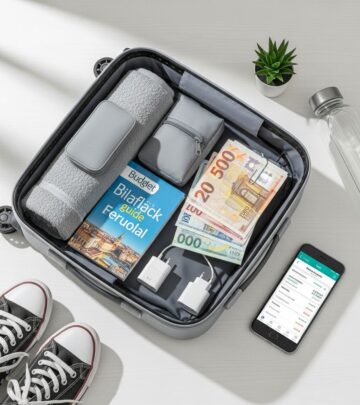
Pack light with carry-ons to dodge $50-200 checked bag fees per flight (worse on connections). Aim for versatile clothes: mix/match layers, neutral colors, wrinkle-free fabrics. Wear bulkiest items onboard. Toiletries in 100ml TSA bottles; buy there if needed. Use packing cubes, compress bags. Personal item: backpack holding daypack. Saves time, money, and hassle—international flights enforce strictly.
9. Book Flights Smartly
Timing is key: book international flights 70-180 days out—Europe 120-160 days, Asia 90-120, South America 70-100, Australia 120-180 per CheapAir studies. Tuesdays/Wednesdays cheapest; red-eyes save lodging. Tools: Google Flights, Kayak alerts. Budget carriers like Norse Atlantic for transatlantic. Avoid weekends, book separately for groups to skip seat fees. Factor extras: bags, seats.
10. Take the Red-Eye on a Weekday
Red-eye flights midweek (Tue-Thu) slash fares 20-40% versus weekend mornings. Covers a hotel night, maximizes destination time. Prep: eye mask, neck pillow, melatonin. Eat/drink pre-boarding. Ideal for long-hauls—sleep en route, arrive rested. Examples: LAX-London red-eye ~$400 vs. $700 daytime.
11. Use Public Transportation
Ditch taxis/Uber for buses, trains, metros—90% cheaper. Europe’s Eurail passes unlimited travel; Asia’s Grab buses. Download offline maps (Maps.me), buy multi-day passes. Safe, scenic, authentic. In Tokyo, subway beats $50 taxi for $2/ride.
12. Save Early and Often for Your Trip
Build a sinking fund: target budget (e.g., $3,000), divide by months ($125/month for 24 months). High-yield savings (5% APY via Ally) grows it. Automate transfers post-payday. No trip? Revolving fund for future. Couples saved $40k+ this way for world trips. Track via YNAB or Excel.
Frequently Asked Questions (FAQs)
What’s the best time to book international flights?
Book 70-180 days ahead: Europe 120-160 days, Asia 90-120 days. Tuesdays/Wednesdays for lowest fares.
Do I need travel insurance for international trips?
Yes—covers medical, cancellation. 4-10% of trip cost; check credit card perks first.
How can I avoid foreign transaction fees?
Use no-fee travel cards like Capital One Venture. Avoid cash advances.
Is packing light worth the effort?
Absolutely—saves $100+ in fees, simplifies travel.
What’s a sinking fund for travel?
Dedicated savings account for trips—automate to hit goals effortlessly.
References
- International Air Transportation Association (IATA) Economic Reports — IATA. 2025-06-15. https://www.iata.org/en/publications/economics/
- Consumer Financial Protection Bureau (CFPB) Credit Card Foreign Transaction Fees Guide — U.S. CFPB. 2024-11-20. https://www.consumerfinance.gov/consumer-tools/credit-cards/foreign-transaction-fees/
- U.S. Department of State Travel Insurance Recommendations — U.S. State Department. 2025-01-10. https://travel.state.gov/content/travel/en/international-travel/before-you-go/your-health-abroad.html
- CheapAir Annual Airfare Study 2024 — CheapAir. 2024-08-05. https://www.cheapair.com/blog/annual-airfare-study/
- Bankrate Vacation Cost Survey 2024 — Bankrate. 2024-07-12. https://www.bankrate.com/travel/vacation-costs/
Similar Articles








Read full bio of Sneha Tete