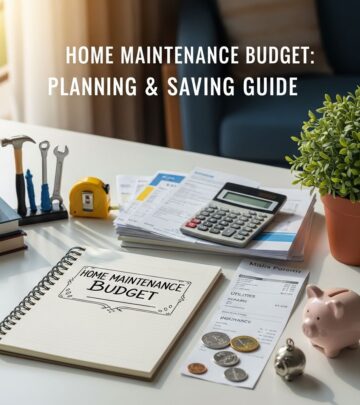
17 Homeowner Expenses To Budget For And How To Plan
Beyond your mortgage: Master budgeting for 17 essential homeowner costs to avoid financial surprises and secure your dream home.

Buying a home marks a major milestone, but the financial responsibilities extend far beyond the monthly mortgage payment. New homeowners often face unexpected costs that can strain budgets if not planned for properly. This comprehensive guide outlines 17 essential homeowner expenses, drawing from reliable financial insights to help you prepare. By understanding these costs upfront, you can budget effectively, avoid surprises, and enjoy homeownership stress-free.
Property taxes, insurance premiums, maintenance reserves, and utilities are just the start. According to financial experts, ongoing expenses can add thousands annually. For a $300,000 home, anticipate setting aside 1%-2% of its value yearly for maintenance alone. Proper planning ensures long-term financial stability.
1. Property Taxes
Property taxes are a recurring must-pay expense based on your home’s assessed value and local millage rates. These funds support public services like schools and roads. Rates vary widely by location—check public records for historical data on your property. Taxes can fluctuate annually due to reassessments or rate changes, so budget conservatively. Payments are often escrowed into your mortgage or billed semiannually.
Pro Tip: Use online tools from county assessor offices to estimate future bills. For example, a $300,000 home in a moderate-tax area might incur $3,000-$6,000 yearly, or $250-$500 monthly.
2. Homeowners Insurance
Standard homeowners insurance protects against perils like fire, theft, and storms, covering your dwelling, personal property, and liability. Premiums average $1,200-$2,000 annually, depending on location, home size, and coverage levels. Shop multiple quotes and bundle with auto insurance for discounts up to 25%.
Escrow it into your mortgage for seamless payments. Factors like high-risk areas (e.g., hurricane zones) inflate costs—review policies annually for adjustments.
3. Private Mortgage Insurance (PMI)
If your down payment is under 20%, lenders require PMI to protect them against default. Costs range from 0.22% to 2.25% of the loan amount, added monthly to your mortgage—typically $50-$200 for many borrowers. Request cancellation once you reach 20% equity via payments or appreciation.
FHA loans use mortgage insurance premiums (MIP) instead: an upfront fee of 1.75% and annual premiums. Avoid by saving for 20% down.
4. FHA Mortgage Insurance
For FHA-backed loans popular with first-timers, MIP includes a 1.75% upfront fee (UFMIP) and ongoing annual premiums (0.15%-0.75%). Pay UFMIP at closing or finance it into the loan, slightly raising monthly payments. Unlike PMI, FHA MIP may last the loan’s life for low down payments.
Ideal for credit-challenged buyers but factor in lifelong costs.
5. Title Insurance
Title insurance safeguards against ownership disputes or liens from prior records. Expect $1,000 average per policy, varying by state and home price. Lender’s policy is required; buy an owner’s policy for personal protection. One-time closing cost, but essential for peace of mind.
6. Flood Insurance
Standard policies exclude floods—separate coverage via FEMA’s National Flood Insurance Program (NFIP) or private insurers costs $500-$1,500 yearly. Required in high-risk zones; optional elsewhere but wise near water. Coverage caps at $250,000 for structures—supplement if needed.
Check FEMA flood maps; shop for best rates as premiums rose post-reforms.
7. Home Maintenance and Repairs
The mantra ‘an ounce of prevention is worth a pound of cure’ applies here. Budget 1%-2% of home value annually ($3,000-$6,000 for $300K home) for big-ticket items:
- HVAC system replacement ($5,000-$10,000 every 10-15 years)
- Roof ($8,000-$15,000 every 20-30 years)
- Plumbing/electrical updates
- Appliance repairs
Stash in a high-yield savings account. Alternatives: home warranties ($400-$600/year plus $75-$125 service calls) cover systems/appliances—compare vs. self-funding.
8. Utilities
Homeownership amplifies utility bills vs. renting, especially in larger spaces. Budget $200-$400 monthly for:
- Electricity/gas: $150-$300
- Water/sewer: $50-$100
- Trash/internet/cable: $50-$100
Audit for efficiency: LED bulbs, programmable thermostats save 10%-20%. Track seasonally.
9. HOA or Condo Fees
If applicable, these cover shared amenities/maintenance: $200-$500 monthly average. Review bylaws for increases, special assessments. Factor into affordability from day one.
10. Pest Control
Termites, rodents cost $1,500+ to remediate. Annual contracts ($300-$500) prevent issues, especially in humid climates.
11. Lawn Care and Landscaping
Weekly mowing ($40-$80/service) or seasonal full-service ($1,000-$3,000/year). DIY saves but time-intensive; budget tools/supplies.
12. Home Security
Systems ($25-$60/month monitored) deter crime, lower insurance 5%-20%. Smart cameras/doorbells add convenience.
13. Cleaning Services
Biweekly pros ($100-$200/session) maintain sanity post-move. Self-manage or hire as-needed.
14. Closing Costs
2%-5% of purchase price ($4,000-$10,000 on $200K home): appraisals, inspections, fees. Not monthly but upfront hit.
| Cost Type | Average Range | % of Home Price |
|---|---|---|
| Appraisal | $300-$500 | 0.2% |
| Inspection | $300-$450 | 0.2% |
| Title/Attorney | $1,000-$2,000 | 1% |
| Taxes/Prepaids | $1,500-$3,000 | 1.5% |
15. Renovations
Fixer-uppers demand budgets/loans (FHA 203k). Allocate 10%-20% extra for overruns.
16. Emergency Fund
3-6 months expenses ($10,000+ for families). Homeownership amplifies needs—prioritize liquid savings.
17. Miscellaneous (Buffer)
Unexpected: 5%-10% annual home value buffer for surprises.
Budgeting Strategies for Homeownership
Follow the 25% rule: housing ≤25% take-home pay. For $7,000 monthly net, cap at $1,750. Build reserves pre-purchase: 20% down, 3%-6% closing, 1%-2% yearly maintenance.
Fannie Mae identifies top costs: utilities, taxes, improvements. Track via apps; review quarterly.
Homeownership Expenses FAQs
What are monthly housing expenses beyond mortgage?
Include taxes, insurance, HOA fees, maintenance savings, utilities.
What are the largest homeowner expenses?
Utilities, property taxes, home improvements per Fannie Mae.
How much to save for home maintenance?
1%-2% of home value yearly ($2,000-$4,000 for $200K home).
Do I need flood insurance?
Required in flood zones; recommended near water regardless.
Can I avoid PMI?
Yes, with 20%+ down payment.
References
- Homeowners Protection Act of 1998 (GAO Report) — U.S. Government Accountability Office. 2023-05-15. https://www.gao.gov/products/gao-23-105634
- Fannie Mae National Housing Survey — Fannie Mae. 2025-09-01. https://www.fanniemae.com/research-and-insights/surveys/national-housing-survey
- Flood Insurance Manual — Federal Emergency Management Agency (FEMA). 2025-01-10. https://www.fema.gov/flood-insurance
- Consumer Financial Protection Bureau Mortgage Guide — CFPB. 2024-11-20. https://www.consumerfinance.gov/owning-a-home/mortgage-options/
- Property Tax Data Portal — U.S. Census Bureau. 2025-03-01. https://www.census.gov/programs-surveys/property-taxes.html
Similar Articles








Read full bio of medha deb