Save Money: 10 Practical Ways To Go Green And Cut Costs
Discover 10 practical ways to cut costs on everyday expenses while protecting the planet for a greener, thriftier lifestyle.

Adopting eco-friendly habits doesn’t have to cost a fortune—in fact, it can significantly reduce your expenses. By making small changes in your daily routine, you can lower utility bills, minimize waste, and contribute to a healthier planet. This article outlines
10 practical ways
to save money while going green, drawing from reliable strategies that balance frugality with sustainability.1. Install a Programmable Thermostat
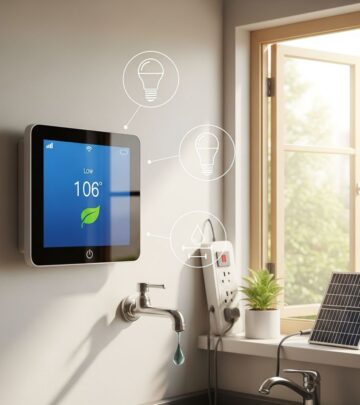
One of the easiest ways to cut energy costs is by using a programmable thermostat. These devices automatically adjust your home’s temperature based on your schedule, ensuring you don’t waste energy heating or cooling an empty house. According to the U.S. Department of Energy, homeowners can save up to 10% annually on heating and cooling costs—potentially $80 to $180 per year for an average household.
Models like Nest or Ecobee learn your habits over time, optimizing settings for maximum efficiency. Installation is straightforward, often taking under 30 minutes, and many utility companies offer rebates. Beyond savings, this reduces carbon emissions from fossil fuel-based power plants, aiding environmental conservation.
- Choose ENERGY STAR-certified models for proven efficiency.
- Set winter temperatures to 68°F when home and 64°F when away.
- Summer settings: 78°F when home and 85°F when away.
2. Switch to LED Bulbs
Replacing incandescent bulbs with
LED lighting
is a no-brainer for savings. LEDs use up to 90% less energy and last 25 times longer than traditional bulbs. The U.S. Department of Energy reports that switching all household bulbs could save a family $225 per year.With prices dropping below $2 per bulb, the payback period is just months. LEDs also produce less heat, reducing air conditioning needs in summer. Environmentally, this cuts electricity demand, lowering greenhouse gas emissions from power generation.
| Bulb Type | Energy Use (Watts) | Lifespan (Hours) | Annual Cost (3 hrs/day) |
|---|---|---|---|
| Incandescent | 60 | 1,000 | $8.50 |
| LED | 10 | 25,000 | $1.50 |
3. Unplug Electronics When Not in Use
“Vampire energy” from standby mode on TVs, chargers, and appliances accounts for 10% of home electricity use. Unplugging or using power strips eliminates this waste. The Natural Resources Defense Council estimates average households can save $100 yearly.
Smart power strips automatically cut power to idle devices. This simple habit reduces energy consumption and prevents unnecessary wear on outlets, extending appliance life.
4. Use Rain Barrels for Outdoor Watering
Capture free rainwater with barrels connected to your gutters. The average U.S. family spends $1,000 yearly on water, with 30-60% for outdoor use. A single barrel (55 gallons) fills with just 1/4 inch of rain on a 1,000 sq ft roof, saving $30-$60 monthly on hoses and sprinklers.
Over 10 years, savings reach $3,600-$7,200. Check local rebates—San Diego offers up to $400. This conserves municipal water supplies and prevents stormwater runoff pollution. Ensure screens prevent mosquitoes and debris.
5. Opt for Reusable Items Over Single-Use
Swap disposable bags, bottles, and coffee cups for reusables. Americans discard 500 billion single-use straws yearly, contributing to landfill waste. Reusables cost $10-$30 upfront but save $500+ annually by avoiding purchases.
Cloth shopping bags, stainless steel bottles, and ceramic mugs reduce plastic pollution in oceans and landfills. Many stores offer discounts for bringing your own bag, amplifying savings.
- Invest in durable, BPA-free reusables.
- Wash with eco-friendly detergents.
- Carry a kit: bag, utensils, napkin.
6. Improve Home Insulation
Poor insulation leads to 20-30% energy loss. Adding weatherstripping, caulk, and attic insulation costs $200-$500 but saves $200+ yearly on utilities, per ENERGY STAR.
DIY audits using infrared cameras or free apps identify leaks. This lowers energy bills and reduces fossil fuel reliance, cutting CO2 emissions equivalent to planting 100 trees per home.
7. Eat More Plant-Based Meals
Reducing meat consumption saves money and resources. Beef production uses 2,500 gallons of water per pound, versus 300 for vegetables. Plant-based meals cost 20-50% less and lower grocery bills by $1,000 yearly for a family of four.
Environmentally, it slashes methane emissions from livestock. Start with Meatless Mondays using affordable beans, lentils, and grains.
8. Line-Dry Clothes Instead of Using a Dryer
Clothes dryers consume 6% of household energy. Air-drying saves $80 yearly and extends clothing life. Indoor racks work in any weather, reducing microfiber pollution from synthetic fabrics.
Combine with cold-water washes (90% dryer energy savings) for double benefits.
9. Shop Secondhand and Repair Items
Thrift stores and apps like Facebook Marketplace offer quality goods at 50-80% off retail. Repairing electronics or clothing via YouTube tutorials avoids $500+ yearly replacement costs.
This keeps items out of landfills, conserving resources. The EPA notes textiles alone account for 11 million tons of U.S. waste annually.
10. Use Public Transportation or Bike
Driving solo costs $0.60/mile in fuel and maintenance. Public transit or biking saves $9,000 yearly for commuters. Apps like Transit track options; e-bikes extend range affordably.
Reduces traffic congestion and tailpipe emissions, improving urban air quality.
Frequently Asked Questions (FAQs)
Can these tips really save hundreds of dollars?
Yes, combining them yields $500-$2,000 annual savings, backed by EPA and DOE data.
Are rain barrels legal everywhere?
Yes, in all U.S. states, though local rules vary. Check for incentives.
How do I start small?
Begin with LEDs and unplugging—low-cost, high-impact changes.
Do reusables really help the environment?
Absolutely; lifecycle analyses show they reduce waste by 80% over disposables.
What’s the biggest savings area?
Energy (thermostats, LEDs) and water (rain barrels) top the list.
References
- WaterSense and Energy Star Guidelines — U.S. Environmental Protection Agency / U.S. Department of Energy. 2024-01-15. https://www.epa.gov/watersense
- Ghost Loads: Home Electronics Energy Use — Natural Resources Defense Council. 2023-05-20. https://www.nrdc.org/stories/ghost-loads-home-electronics-energy-use
- Single-Use Plastics Reduction — U.S. Food and Drug Administration. 2024-03-10. https://www.fda.gov/food/food-ingredients-packaging/single-use-plastics
- Agricultural Water Use Factsheet — U.S. Geological Survey. 2023-11-01. https://www.usgs.gov/special-topics/water-science-school/science/agricultural-water-use
- National Overview: Facts and Figures on Materials, Wastes and Recycling — U.S. Environmental Protection Agency. 2024-06-12. https://www.epa.gov/facts-and-figures-about-materials-waste-and-recycling/national-overview-facts-and-figures-materials
- Transportation Energy Consumption — U.S. Department of Energy. 2024-02-28. https://www.energy.gov/eere/vehicles/articles/fotw-1260-february-28-2024-transportation-sector-accounted-29-percent-us-primary
Similar Articles








Read full bio of Sneha Tete