Save A Million Dollars Calculator: Complete Guide To $1M
Master your path to millionaire status with our comprehensive saving calculator guide.

Save A Million Dollars Calculator: Your Path to Financial Success
Saving a million dollars is a significant financial milestone that many people dream about but few believe they can achieve. However, with the right tools, strategies, and consistent effort, reaching this goal is more attainable than you might think. A save-a-million-dollar calculator serves as an invaluable resource to help you understand what it will actually take to reach this ambitious financial target. By breaking down your goal into manageable monthly contributions and factoring in the power of compound interest, you can transform this seemingly impossible dream into a concrete, achievable plan.
Understanding Your Save a Million Calculator
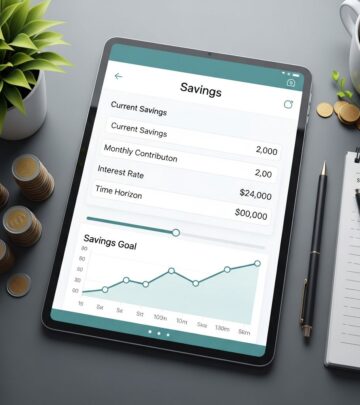
A save-a-million-dollar calculator is a financial planning tool designed to help you determine the specific steps needed to accumulate one million dollars. This calculator takes several critical variables into account to provide you with a realistic projection of your path to millionaire status. Rather than being an abstract concept, the calculator transforms your financial goal into concrete numbers that show exactly what you need to do each month to reach your target.
The fundamental premise of the calculator is straightforward: it takes your current financial situation, your intended savings timeline, and your investment strategy, then projects whether and when you’ll reach your million-dollar goal. This makes the entire process less overwhelming and more actionable, allowing you to see the direct impact of your financial decisions on your long-term wealth.
How to Use This Calculator
Using a save-a-million-dollar calculator effectively requires understanding the key inputs and what they mean for your financial future. Here are the main components you’ll need to input:
Your Current Age and Target Age
The first critical inputs are your current age and the age at which you want to become a millionaire. The earlier you start saving, the less you’ll need to contribute monthly to reach your goal, thanks to the remarkable power of compound interest. For example, someone who wants to become a millionaire by age 40 will need a very different savings strategy than someone targeting age 55. The time horizon dramatically affects how much you need to save each month.
Existing Savings and Monthly Contributions
The calculator requires you to input your current investment total and your planned monthly savings amount. For the most accurate projection, include only liquid financial assets such as savings accounts, retirement accounts (401(k)s, IRAs), and investment accounts rather than home equity or personal property. Your monthly contribution amount is assumed to be added to your account at the beginning of each month, which allows for slightly more favorable compounding results.
Expected Rate of Return
One of the most important inputs is your expected annual rate of return on investments. This is the anticipated annually compounded return from your investment portfolio. The calculator displays pre-tax returns, so if you pay taxes on interest, dividends, or capital gains, you may want to enter your after-tax rate of return for greater accuracy. Historical context shows that the S&P 500 has delivered approximately 9.8% average annual returns from 2015 to 2025, and around 10.5% for the long-term period from 1970 to 2025. A balanced portfolio of 60% stocks and 40% bonds has historically returned around 7-8% annually, while more conservative investments like bonds and high-yield savings accounts typically yield 3-5%. Remember that past performance doesn’t guarantee future results, and higher potential returns generally come with higher risk.
Expected Inflation Rate
The calculator also factors in inflation, which erodes the purchasing power of your money over time. This means that while you might save one million dollars in nominal terms, that million dollars won’t buy what it does today. The average inflation rate over the past 25 years has been approximately 2.58% according to the U.S. Bureau of Labor Statistics. By accounting for inflation in your calculations, you get a more realistic understanding of what your million dollars will actually be worth in the future.
Key Definitions and Calculator Components
Your Age
Your current age in years is the starting point for all calculations. The principle here is straightforward: the earlier you start saving, the less you need to save monthly because compound interest has more time to work its magic. Someone starting at age 25 has 40 years for their investments to grow, while someone starting at age 45 only has 20 years, which significantly changes the monthly savings required.
Millionaire Target Age
This is the age you want to achieve millionaire status. For instance, if your goal is to become a millionaire by age 40, you would enter 40 in this field. This target age works backward with your current age to determine your time horizon, which is critical for calculating your required monthly contributions.
Amount Currently Invested
Enter the total value of all your current investments here. For accuracy, include only liquid financial assets like savings accounts, retirement accounts (including 401(k)s and IRAs), and investment accounts. Exclude home equity, personal property, and other illiquid assets from this calculation.
Savings Per Month
This represents the amount you will contribute monthly to your investments. The calculator assumes all savings are added at the beginning of each month. If you’re unsure how much you can afford to save monthly, consider using Bankrate’s budget calculator to identify areas where you can cut expenses and redirect funds toward your million-dollar goal.
Expected Rate of Return
This annually compounded rate represents your anticipated investment returns. Historical data provides useful context: the S&P 500 returned approximately 9.8% annually from 2015-2025 and 10.5% from 1970-2025. A balanced 60/40 portfolio has historically returned 7-8% annually, while conservative investments yield 3-5%. Remember that higher returns typically correlate with higher risk.
Expected Inflation Rate
Long-term average inflation has been around 2.58% over the past 25 years. This input helps adjust your future million dollars for inflation’s purchasing power erosion, giving you a more realistic picture of your goal’s actual value.
How to Accelerate Your Path to $1 Million
Increase Your Savings Rate
The most direct way to reach your million-dollar goal faster is to save more each month. Start by reviewing your monthly expenses to identify areas where you can reduce spending. Look for opportunities to increase your income through raises, promotions, or side hustles. When you receive windfalls such as tax refunds, bonuses, or inheritances, put this money directly into your investment accounts rather than spending it. Even small increases in your monthly savings can significantly reduce the time it takes to reach your goal.
Maximize Your Investment Returns
Your investment strategy plays a crucial role in building wealth. Ensure your portfolio is properly diversified across stocks, bonds, and other asset classes based on your time horizon and risk tolerance. For long-term savings goals, certificates of deposit can offer higher fixed returns than regular savings accounts, allowing you to lock in today’s rates. Consider exploring Bankrate’s selection of the best CD rates available. Working with a financial advisor can help you develop an investment strategy tailored to your specific situation and goals.
Leverage Compound Interest
The power of compound interest becomes increasingly effective with time. This is why starting early is so important—your money has decades to grow exponentially. Using Bankrate’s compound interest calculator, you can visualize exactly how your money can grow over time and see the dramatic difference that small monthly contributions make when given sufficient time to compound. For example, if you invested $1,000 in the S&P 500 at a historically average 10% annual return and added $100 monthly for 40 years, your nest egg could exceed $576,000. Without the additional contributions, that initial $1,000 could still grow to $45,000 over 40 years, demonstrating the remarkable power of compound interest.
Strategic Approaches to Wealth Building
Start Saving Early
Time is your most valuable asset when building wealth. Let’s examine a practical example: if you start saving $6,000 annually in a 401(k) at age 22 and continue until age 67, assuming a 6% annual return, you could accumulate approximately $1.45 million by your full retirement age. Starting just ten years later dramatically changes this outcome. This illustrates why beginning your savings journey as early as possible, even with modest amounts, can lead to significant wealth accumulation.
Build Up Your Savings Rate Gradually
If you’re currently saving a small percentage of your income, you don’t need to make drastic changes immediately. Consider the 1% retirement savings challenge: increase your savings rate by 1% each year. For example, if you’re currently saving 3% of your salary, increase it to 4% next year, 5% the year after, and so forth. This gradual approach is psychologically easier to manage than making a large increase all at once, and it’s more budget-friendly. Many 401(k) providers allow you to automate these annual increases.
Save Your Raises
When you receive a raise or bonus, allocate at least a portion of it to your retirement savings. Since this is money you’re not accustomed to receiving, you likely won’t miss it from your regular budget. Even if your raise is only 2%, directing that percentage increase toward your retirement savings can meaningfully accelerate your progress toward your million-dollar goal.
Frequently Asked Questions
Q: What is the most important factor in reaching a million dollars?
A: Time is the most critical factor. The earlier you start saving, the less you need to contribute monthly because compound interest has more time to work. Starting even ten years earlier can reduce your required monthly savings by 50% or more.
Q: How much should I expect to earn on my investments?
A: This depends on your asset allocation. Conservative investments yield 3-5% annually, balanced portfolios return 7-8%, and stock-heavy portfolios have historically returned around 10%. However, past performance doesn’t guarantee future results, and higher returns come with higher risk.
Q: Does inflation really matter for my million-dollar goal?
A: Yes, inflation significantly affects purchasing power. A million dollars today won’t buy the same amount in 20 or 30 years. With average inflation around 2.58% annually, you should factor this into your calculations to understand the true value of your goal.
Q: Can I reach a million dollars without investing?
A: While it’s technically possible through pure savings in a high-yield savings account earning 3-5%, it would take significantly longer and require much larger monthly contributions. Investing allows your money to grow faster through compound returns, making the goal more achievable.
Q: What if I can’t save very much each month?
A: Even small monthly contributions compound significantly over time. The key is consistency and starting early. Using the calculator, you can experiment with different monthly amounts and target ages to find a realistic plan for your situation.
Q: Should I include my home equity in my savings goal?
A: No, the calculator specifically asks for liquid financial assets only. Home equity shouldn’t be included because it’s not readily accessible for emergencies or investments without selling your home.
Conclusion
Reaching a million dollars is an ambitious but achievable goal when you have the right tools and strategy. The save-a-million-dollar calculator helps transform this large goal into concrete, actionable steps. By understanding the key variables—your age, target timeline, monthly contributions, investment returns, and inflation—you can create a personalized roadmap to wealth. Remember that the most important factors are starting early, saving consistently, maximizing your investment returns through proper diversification, and leveraging the power of compound interest. Whether your goal is to retire comfortably or achieve financial independence, using this calculator and implementing these strategies can put you firmly on the path to millionaire status.
References
- Save A Million Dollars Calculator — Bankrate. 2025. https://www.bankrate.com/banking/savings/save-a-million-calculator/
- How To Save For Retirement: Key Strategies To Know — Bankrate. 2025. https://www.bankrate.com/retirement/how-to-save-for-retirement/
- The 1% Retirement Savings Challenge: How To Save Slowly To Retirement — Bankrate. 2025. https://www.bankrate.com/retirement/the-1-percent-retirement-savings-challenge/
- Inflation Calculator Data — U.S. Bureau of Labor Statistics. 2025. https://www.bls.gov/
- S&P 500 Historical Returns — S&P Dow Jones Indices. 2025. https://www.spglobal.com/spdji/
Similar Articles








Read full bio of Sneha Tete