Save First or Crush Debt: Smart Money Moves
Discover whether building savings or eliminating debt should be your top priority to achieve lasting financial freedom.

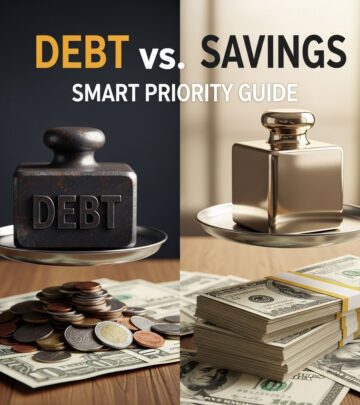
Deciding between building an emergency fund and aggressively tackling debt often creates a financial crossroads for many individuals. The right choice depends on interest rates, debt amounts, income stability, and personal discipline. High-interest debts typically demand immediate attention to minimize long-term costs, while low-interest obligations might allow room for savings growth through compound interest.
Understanding the Core Dilemma: Savings vs. Debt Repayment
Your financial health hinges on balancing liquidity needs with interest minimization. Savings provide a safety net against unexpected expenses, preventing reliance on high-interest borrowing during crises. Conversely, unpaid debt accrues interest that can outpace savings returns, eroding net worth over time. Financial experts recommend assessing debt interest rates against potential savings yields; if debt rates exceed 7-8%, repayment often yields higher effective returns than most savings accounts.
Consider your risk tolerance and job security. Those with unstable income should prioritize 3-6 months of expenses in savings before extra debt payments. Stable earners might accelerate debt payoff to free up future cash flow sooner.
Key Factors Influencing Your Decision
- Interest Rate Comparison: Debts above 10% APR usually warrant priority over savings at 4-5% APY.
- Debt Type: Credit cards (average 20%+ APR) vs. mortgages (3-5% APR).
- Emergency Fund Status: Aim for $1,000 minimum before aggressive payoff.
- Psychological Impact: Quick wins from small debt elimination boost motivation.
DIY Debt Repayment Strategies: Take Control Yourself
Self-managed approaches avoid fees and build discipline. Two proven methods stand out for their simplicity and effectiveness.
The Debt Avalanche: Target High-Interest First
This mathematical powerhouse focuses extra payments on the highest-interest debt while maintaining minimums on others. Once cleared, roll payments to the next highest rate. It minimizes total interest paid, ideal for math-oriented individuals.
| Pros | Cons |
|---|---|
| Saves most on interest | Slower visible progress |
| Faster overall payoff | Requires organization |
The Debt Snowball: Build Momentum with Small Wins
Order debts by balance size, smallest first, for psychological boosts. Minimum payments continue on all; extras attack the tiniest balance. Momentum from rapid eliminations sustains long-term effort.
| Pros | Cons |
|---|---|
| Quick motivation | Potentially higher interest costs |
| Simple tracking | Less mathematically optimal |
Debt Consolidation: Simplify and Potentially Save
Combine multiple debts into one loan or card with lower rates. Personal loans or 0% balance transfers reduce payments and interest, provided you avoid new spending.
- Single payment eases budgeting.
- Fixed rates prevent surprises.
- Qualification needs good credit.
Pros include faster payoff potential and credit building via on-time payments. Cons: Fees, qualification hurdles, and temptation to rack up old accounts.
Debt Management Plans: Professional Guidance
Non-profit agencies negotiate lower rates (often 5-9%) and consolidate payments into one affordable monthly amount. Best for unsecured revolving debt like cards.
Clients commit 3-5 years, closing cards during the plan. Counseling includes budgeting tools. Savings from reduced interest often exceed fees ($20-50/month).
| Advantages | Drawbacks |
|---|---|
| Lower rates/fees waived | 3-5 year commitment |
| One payment | Close credit accounts |
| Credit counseling | Setup/monthly fees |
Hybrid Approach: Savings and Debt in Tandem
Many succeed by splitting extra funds: 50% to debt, 50% to savings. Build to $1,000-$2,000 emergency fund, then avalanche high-interest debt. Once debts under 6% APR, pivot heavily to savings/investments. This balances security and efficiency.
Real-World Scenarios: Which Path Fits?
Scenario 1: High-Interest Credit Card Spiral
$15,000 at 22% APR across cards. Prioritize avalanche after $1,000 savings. Saves thousands in interest vs. saving first.
Scenario 2: Low-Interest Student Loans
$50,000 at 4% federal loans. Save aggressively or invest, as returns likely exceed interest.
Scenario 3: Unstable Income
Irregular freelance pay. Build 6-month fund first; debt minimums only to avoid penalties.
Common Pitfalls to Avoid
- Neglecting minimum payments: Harms credit, adds fees.
- Closing paid accounts prematurely: Raises utilization, drops scores.
- Ignoring behavioral changes: New debt undoes progress.
- Overlooking tax implications: Forgiven debt may be taxable.
Tools and Trackers for Success
Use apps like YNAB for budgeting, Undebt.it for payoff simulations. Track net worth monthly to visualize gains.
Frequently Asked Questions (FAQs)
Should I save or pay off debt if unemployed?
Prioritize any income to essentials and minimal debt payments; build savings aggressively once stable.
Is 0% balance transfer worth it?
Yes, if you pay off within promo period; fees (3-5%) are offset by interest savings.
How does debt payoff affect credit score?
Short-term dip from closures/utilization; long-term boost from reduced balances and on-time payments.
Can I mix snowball and avalanche?
Hybrid: Avalanche high-rate debt over $1,000; snowball small balances first for wins.
What if I can’t afford minimums?
Contact creditors for hardship plans or seek non-profit counseling before settlement.
Long-Term Financial Freedom Blueprint
Post-debt: Automate savings (20% income), invest in retirement/index funds. Review annually; adjust for life changes. Consistency compounds into wealth.
Ultimately, blend strategies to your situation. High-interest debt acts like a wealth leak; plug it while buffering against shocks. Discipline and tracking turn decisions into results.
References
- Weighing the Pros and Cons of 5 Top Strategies to Pay Off Debt — NoMoreDebts.org. N/A. https://nomoredebts.org/blog/dealing-with-debt/weighing-the-pros-and-cons-of-5-top-strategies-to-pay-off-debt
- Debt Relief Programs: The Pros and Cons of Each Type — NFCC. N/A. https://www.nfcc.org/blog/debt-relief-programs-the-pros-and-cons-of-each-type/
- The Pros And Cons Of Debt Relief Programs — Bankrate. N/A. https://www.bankrate.com/personal-finance/debt/pros-cons-of-debt-relief/
- Pros and Cons of Using a Debt Management Plan — Money Management International. N/A. https://www.moneymanagement.org/debt-management/pros-and-cons-of-using-a-debt-management-plan
- Pros and Cons of Debt Consolidation — Experian. N/A. https://www.experian.com/blogs/ask-experian/pros-and-cons-of-debt-consolidation/
Similar Articles








Read full bio of Sneha Tete